10 Intense Sci-Fi Shows You Need To Watch Again To Fully Understand


Diego Pineda has been a devout storyteller his whole life. He has self-published a fantasy novel and a book of short stories, and is actively working on publishing his second novel.
A lifelong fan of watching movies and talking about them endlessly, he writes reviews and analyses on his Instagram page dedicated to cinema, and occasionally on his blog. His favorite filmmakers are Andrei Tarkovsky and Charlie Chaplin. He loves modern Mexican cinema and thinks it's tragically underappreciated.
Other interests of Diego's include reading, gaming, roller coasters, writing reviews on his Letterboxd account (username: DPP_reviews), and going down rabbit holes of whatever topic he's interested in at any given point.
Sign in to your Collider account
There are pretty much countless ways for a science fiction TV show to be intense. High emotional stakes, strict logical rules, and a constant sense of mystery are a few of the things that make masterpieces like The Expanse and Lost some of the most intense genre shows that the small screen has ever seen. There are some sci-fi shows, however, that on top of being intense, are also so complicated to understand that they pretty much demand a rewatch.
A second viewing journey can do absolute wonders in terms of understanding these shows, which are some of the most intricately plotted, thematically layered, and downright mind-bending in the history of science fiction television. In order to qualify for this list, a show must have already had its series finale air; and by the point viewers get there, they're going to want to go right back to the pilot immediately.
10 'The Expanse' (2015–2022)
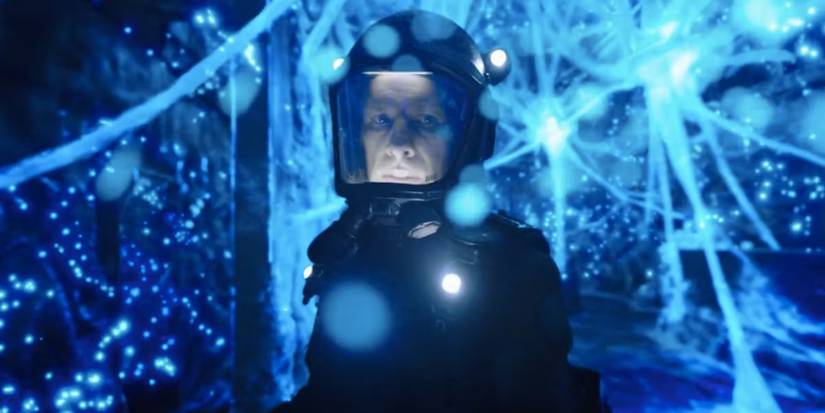
Based on the book series of the same name by James S. A. Corey (the pen name of Daniel Abraham and Ty Franck), The Expanse is one of those rare sci-fi shows with no weak episodes whatsoever. From pilot to series finale, this remained one of the most consistently high-quality sci-fi shows on television, even in spite of being canceled by Syfy halfway through and later moving to Prime Video for its final three seasons.
The show runs for six seasons and a grand total of 62 episodes, some of which are powerfully yet undeniably slow-burning. As such, it's definitely not the easiest sci-fi series to rewatch—but boy, is it worth it. It's a dense, intense political thriller full of layered geopolitics, complex character motivations, and shifting plot details that are difficult to fully catch on one's first time watching The Expanse.
9 'Fringe' (2008–2013)

While working together on 2009's Star Trek, J. J. Abrams, Alex Kurtzman, and Roberto Orci came up with the idea to combine the elements of a traditional procedural drama with a cult sci-fi mythology akin to that of Abrams' own Lost. From that idea came Fringe, and though it started out as more of an episodic clone of The X-Files, it gradually transformed into a much more heavily serialized and entirely unique sci-fi procedural.
It's undoubtedly one of the best spooky cop shows of all time, and one of the most re-watchable sci-fi series that broadcast television ever offered. Its narrative feels like an emotionally and intellectually riveting tapestry of twists and multiversal elements, making it pretty much necessary to watch Fringe twice in order to get a more well-rounded appreciation of that incredibly complex tapestry. Likelier than not, a second re-watch will become inevitably tempting.
8 'Maniac' (2018)

Based very loosely on the Norwegian 2015 TV series of the same name, and inspired by several other films, Patrick Somerville's Maniac was directed by Cary Joji Fukunaga, and it's one of the most underappreciated sci-fi miniseries in recent memory. Starring Emma Stone and Jonah Hill at their very best, it's an enthralling tale about trauma, mental illness, and human connections.
People looking for sci-fi miniseries better than much longer shows ought to take a look at Maniac, whose raw psychological depth lends it a deeply intimate intensity which the genre doesn't often see. The whole series is structured as a kind of psychological puzzle box full of surrealist elements and mind-bending moments, making it so that you can't really fully appreciate all of its thematic layers without rewatching its 10 episodes at least once.
7 'Russian Doll' (2019–2022)

After Amy Poehler pitched the idea of an endless, inescapable party loop to Natasha Lyonne, they got together with Leslye Headland and started developing the concept for Russian Doll, which has gone down in history as one of the best time loop shows the world has ever seen. Structured like a temporally intricate puzzle box, it's another one of those shows that pretty much demand at least one rewatch.
The number of elements from this world, the number of layers from the most important character arcs, and the many philosophical metaphors that you end up discovering while rewatching Russian Doll are all more than enough to make this one of those series that you simply must rewatch, emotionally intense though it may sometimes be. It's also one of those mind-bending sci-fi shows that never gave fans all the answers, which makes it all the more special and worth revisiting.
6 'Legion' (2017–2019)

Set in a universe parallel to the X-Men film series, Legion has aged like fine wine and is nowadays remembered not only as one of the best Marvel TV shows in history, but also as one of the most underrated superhero shows of all time. It's still one of the best three-season shows without a single flaw, one that pretty much anyone and everyone who loves surrealist science fiction—regardless of how they typically feel about Marvel or superheroes more generally—should check out at least once.
Since the show's protagonist is a godlike mutant struggling with severe mental illness and a parasitic psychic entity, Legion as a whole is a masterful exercise in mind-bending surrealism and unreliable narration which demands a second watch in order to be properly understood. Watching Legion again almost feels like entirely rewriting the story in your own head, and its delightfully twisty intensity is made all the more effective.
Collider Exclusive · Sci-Fi Survival Quiz Which Sci-Fi World Would You Survive? The Matrix · Mad Max · Blade Runner · Dune · Star Wars
Five universes. Five completely different ways the future went wrong — or sideways, or up in flames. Only one of them is the world your instincts were built for. Eight questions will figure out which dystopia, galaxy, or desert wasteland you'd actually make it out of alive.
💊The Matrix
🔥Mad Max
🌧️Blade Runner
🏜️Dune
🚀Star Wars
01
You sense something is deeply wrong with the world around you. What do you do? The first instinct is often the truest one.
02
In a world of scarcity, what resource do you guard most fiercely? What we protect reveals what we believe survival actually requires.
03
What kind of threat keeps you up at night? Fear is useful data — if you're honest about what you're actually afraid of.
04
How do you deal with authority you don't trust? Every dystopia has a power structure. Your approach to it determines everything.
05
Which environment could you actually endure long-term? Survival isn't just tactical — it's physical, psychological, and very much about where you are.
06
Who do you want in your corner when things fall apart? The company you keep is the clearest signal of who you actually are.
07
Where do you draw the line — if you draw one at all? Every survivor eventually faces a moment that tests what they're actually made of.
08
What would actually make survival worth it? Staying alive is one thing. Having a reason to is another.
Your Fate Has Been Calculated You'd Survive In…
Your answers point to the world your instincts were built for. This is the universe your temperament, your survival instincts, and your particular brand of stubbornness were made for.
The Matrix
You took the red pill a long time ago — probably before anyone offered it to you. You're a systems thinker who can't help but notice the seams in things.
- You're drawn to understanding how the system works before figuring out how to break it.
- You'd find the Resistance, or it would find you — your instinct for spotting constructed realities is the machines' worst nightmare.
- You function best when you have access to information and the freedom to act on it.
- The Matrix built an airtight prison. You'd be the one probing the walls for the door.
Mad Max
The wasteland doesn't reward the clever or the well-connected — it rewards those who are hard to kill and harder to break. That's you.
- You don't need comfort, community, or a cause larger than the next horizon.
- You need a vehicle, a clear threat, and enough fuel to outrun it — and you're good at all three.
- You are unsentimental enough to survive that world, and decent enough — just barely — to be something more than another raider.
- In the wasteland, that distinction is everything.
Blade Runner
You'd survive here because you know how to exist in moral grey areas without losing yourself completely.
- You read people accurately, keep your circle small, and ask the questions others prefer not to answer.
- In a city where humanity is a legal designation rather than a feeling, you hold onto something that keeps you functional.
- You're not a hero. But you're not lost, either.
- In Blade Runner's world, that distinction is everything.
Dune
Arrakis is the most hostile environment in the known universe — and you are precisely the kind of person it rewards.
- Patience, discipline, and political awareness are your core strengths — and on Arrakis, they're survival tools.
- You understand that the long game matters more than any single victory.
- Others come to Dune and are consumed by it. You'd learn its logic and earn its respect.
- In time, you wouldn't just survive Arrakis — you'd begin to reshape it.
Star Wars
The galaxy far, far away is vast, loud, and in a constant state of violent political upheaval — and you wouldn't have it any other way.
- You find meaning in being part of something larger than yourself — a cause, a crew, a rebellion.
- You'd gravitate toward the Rebellion, or the fringes, or whatever pocket of the galaxy still believes the Empire's grip can be broken.
- You fight — not because you have to, but because standing aside isn't something you're capable of.
- In Star Wars, that willingness is what makes all the difference.
5 'Devs' (2020)

TV series and miniseries created by filmmakers can result in exquisitely special shows—something, for instance, somewhat akin to what Alex Garland did with Devs. It's one of the best sci-fi shows with eight episodes or fewer, a heavily philosophical thriller exploring the tension between free will and determinism. It's a phenomenal companion piece to Garland's Ex Machina, but also an entirely worthwhile watch in and of itself.
The show's plot revolves entirely around quantum mechanics and quantum computing, but Garland is far more interested in their philosophical implications than in how to use them as a cool sci-fi gimmick. It's such an intellectually complex show that even the title packs in nuances that can only be fully appreciated on rewatch, and it's so emotionally intense that it becomes remarkably easy to revisit.
4 'Lost' (2004–2010)

Though there are those who may argue that Lost jumped the shark as it approached its conclusion, one thing remains undeniable: It's one of the most influential and groundbreaking mystery box shows in the history of fantasy and science fiction, a pop-cultural juggernaut whose importance to the history of 21st-century genre television cannot be overstated.
Throughout its entire run, Lost remained one of the most ambitious TV shows of all time, one whose constant sense of mystery and endless barrage of jaw-dropping twists keep it irresistibly intense even when rewatching it. Part of that aura of mind-bending mystery, however, means that several of the show's deeper thematic and narrative intricacies can only be fully appreciated when it isn't one's first time exploring this story.
3 'Counterpart' (2017–2019)

Counterpart is one of those forgotten thriller shows that are nearly perfect, a genre-bending high-concept espionage thriller that's unlike anything else that the small screen has seen at any point during the 21st century. For people who love the psychological density and intensity of John le Carré's iconic spy thrillers but feel that they don't have nearly enough parallel universe sci-fi, Counterpart should prove to be an absolute blast.
Paranoia, excitement, and tragedy are the order of the day when watching Counterpart. But while it's definitely quite an intense experience from start to finish, it's also one whose abundance of plot-related intricacies (such as butterfly effects and doppelgänger twists) makes it so that you can't really understand everything fully on your first time experiencing the series. Then again, it's so good that a second watch doesn't feel like a chore, but rather like a real treat.
2 '12 Monkeys' (2015–2018)

With Terry Gilliam's 1995 time travel thriller Twelve Monkeys being one of the greatest and most beloved sci-fi cult classics of the 1990s, fans were understandably a little bit skeptical going into 12 Monkeys, Syfy's television adaptation of the movie. Quickly enough, though, 12 Monkeys proved itself worthy of its source material's legacy; and soon after that, it established a creative voice all of its own.
It's one of those rare sci-fi shows that get time travel right, an intricately plotted and intensely paced thriller that's pretty much designed to be re-watched over and over again. It's a truly airtight, four-season temporal puzzle box that should satisfy any and all fans of time travel sci-fi stories. Perfectly planned out so that it's full of infinitely rewarding foreshadowing and so that there are virtually no temporal plot holes to speak of, it's perfect both for people who love the 1995 film and for those who have never even heard of it.
1 'Dark' (2017–2020)

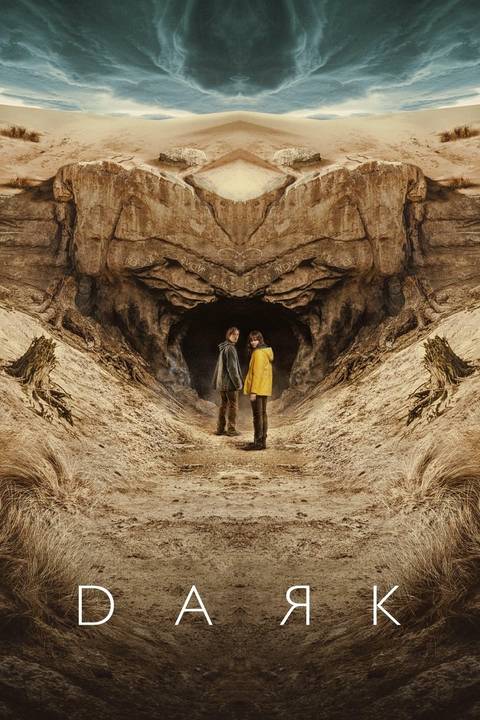
Netflix's first-ever attempt at a German-language original series was Dark, and on top of being a triumphant first attempt, it ended up proving itself to be one of the greatest time travel and multiverse sci-fi series of not just the 21st century, but all time. Exquisitely creative and meticulously plotted from top to bottom, it's a must-see masterpiece for anyone who wants to gain a full appreciation of what the 21st century has had to offer so far in terms of science fiction television.
Dark really is one of the most suspenseful shows since 2010, an absolute masterclass in how to write a profoundly layered parallel universe story without any substantial plot holes or frustrating paradoxes. It's such an intellectually complex and challenging series that you practically need a notebook by your side—and, of course, a rewatch or two—in order to fully grasp all of its plot points, character arcs, and thematic layers. In the end, however, every bit of effort is worth it.
Dark
- Release Date
- 2017 - 2020-00-00
- Network
- Netflix
- Showrunner
- Jantje Friese
- Directors
- Baran bo Odar
KioskNews shows a cleaned-up reading view extracted from the publisher’s page — the original always lives on their site, not ours.