India's Big Ambition: An Artificial Sun By 2042
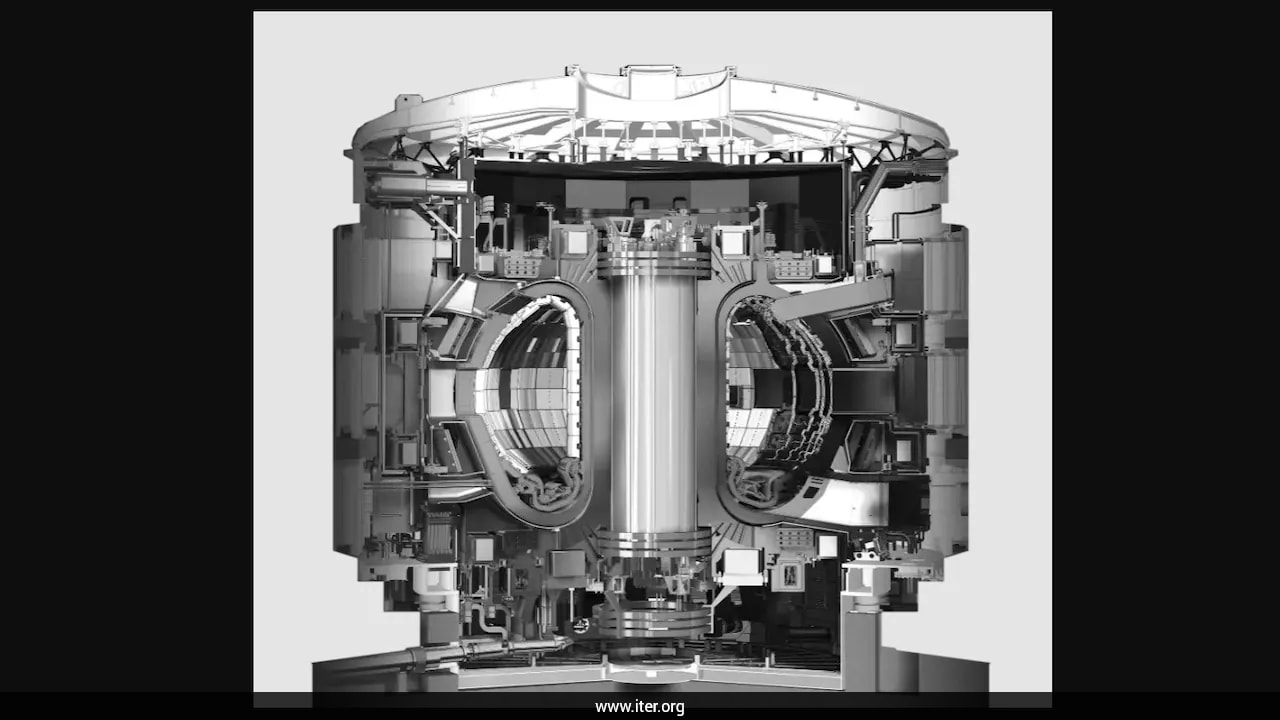
Every ray of sunlight warming the Earth and sustaining life on this planet is born from a cosmic furnace powered by nuclear fusion. Deep within the core of the Sun, immense gravitational pressure and scorching temperatures force light hydrogen atoms to slam together and merge into heavier helium atoms, releasing colossal bursts of clean energy. For decades, scientists across the globe have dreamed of replicating this stellar reaction on Earth, effectively building a miniature Sun inside a laboratory to power human civilization. Yet, bottling a star has proven to be one of the most formidable engineering challenges in history. To date, no country, laboratory, or private enterprise anywhere in the world has generated a single watt of electricity using nuclear fusion.
Against this backdrop of daunting scientific hurdles, India has stepped onto the global stage with its most concrete fusion timeline yet.
Speaking at the Third High Level Meeting of the International Atomic Energy Agency (IAEA) World Fusion Energy Group in Vienna on November 12, Ajit Kumar Mohanty, Chairman of the Atomic Energy Commission (AEC) and Secretary of the Department of Atomic Energy (DAE), announced that "India aims to build a demonstrative fusion pilot plant capable of generating 100 to 150 megawatts of net electricity by 2040 to 2042". Essentially, to bottle the Sun, India has set a very bold 2042 target for demonstrating commercial fusion energy.
Industry leaders are applauding the fact that India now has a clear road map for harnessing nuclear fusion energy. "The 2040-2042 date is tight but not unrealistic; the hard part is engineering and procurement, not plasma physics. It holds only if the project is sanctioned early and the engineering industry is part of this project from the early stage," said Prof Prabhat Ranjan, Former Scientist, Institute of Plasma Research, Gandhinagar and Founder, Agnira Sanlayan Pvt Ltd (ASPL), a fusion energy startup based in New Delhi.
Addressing heads of delegations and global nuclear leaders in Vienna, Dr. Mohanty underscored a decisive shift in how the world views fusion technology. "Fusion energy production is no longer just a scientific experiment. It has clearly moved towards engineering reality," Dr. Mohanty told the gathering in Vienna. Outlining New Delhi's transition from foundational plasma physics to power generation, he added, "As a next step of our National Fusion Programme, we plan to build a Demonstrative Project, which will be an intermediate, tokamak-based fusion pilot plant to generate 100 to 150 MWe of net electricity by 2040 to 2042".
Tokamaks are often described as 'miniature Suns' or an 'artificial Sun' on Earth.
To understand why this announcement matters, it is important to look at why nuclear fusion is widely regarded as the ultimate holy grail of clean energy. Unlike conventional nuclear power plants, which rely on nuclear fission to split heavy uranium or plutonium atoms, fusion works in reverse by joining light atomic nuclei, typically isotopes of hydrogen such as deuterium and tritium. This reaction yields nearly limitless, carbon-free energy from abundant fuel sources like seawater, while producing no long-lived, high-level radioactive waste and carrying zero risk of a runaway meltdown. However, achieving fusion on Earth requires heating plasma to temperatures exceeding 100 million degrees Celsius, hotter than the core of the Sun, and suspending that superheated gas inside powerful magnetic cages known as Tokamaks so it does not melt the reactor walls.
At the IAEA Vienna conference, it was stated that private sector fusion has raised US $21.9 billion in committed capital, more than 90% of it in the past five years. Investment has continued to accelerate in 2026, with annual funding projected to reach a record US $7.6 billion if the current pace continues, which means the buzz is that electricity from fusion energy could be a reality sooner rather than later.
India is no newcomer to this complex frontier. For decades, the Institute for Plasma Research (IPR) in Gandhinagar, operating under the Department of Atomic Energy, has spearheaded domestic fusion studies through indigenous experimental fusion machines like the ADITYA tokamak, ADITYA-Upgrade, and the Steady State Superconducting Tokamak (SST-1). While these facilities yielded valuable data on plasma confinement and diagnostics, this marks the first time the head of India's Atomic Energy Commission has laid down a firm, time-bound target for delivering net electricity from a domestic fusion reactor. Dr. Mohanty noted that the upcoming pilot project will deploy technologically demanding High Temperature Superconducting (HTS) magnets, drawing upon domestic expertise, Indian start-ups, and lessons from international collaborations.
Central to that international effort is ITER, the massive 35-nation megaproject under construction at Cadarache in southern France, which aims to prove the scientific and technological feasibility of fusion power. At ITER, India is one of the seven full members. Even ITER, however, is purely an experimental facility and is not designed to feed electricity into the power grid. India is a key partner in this global endeavour, and Mohanty highlighted New Delhi's substantial hardware contributions in Vienna.
"With regard to the ITER project, India has already completed the delivery of more than 75% of its in-kind commitments complying with the safety and quality standards of ITER," he stated, noting that the global fusion community eagerly awaits the start of research operations at the French site.
India's newly unveiled fusion target also complements its broader, immediate push to expand conventional nuclear fission power. Under its ambitious nuclear energy mission, the government has set a target of scaling India's nuclear power capacity to 100 gigawatts by 2047, the centenary of Indian independence, to drive the vision of Viksit Bharat and achieve Net Zero emissions by 2070. To unlock private investment and modernize governance for that 100 GW fission expansion, Parliament recently enacted the Sustainable Harnessing and Advancement of Nuclear Energy for Transforming India Act, known as the SHANTI Act. While the SHANTI Act primarily overhauls the legal framework for commercial fission reactors and small modular reactors, Mohanty revealed that draft rules and regulations framed under the new legislation already incorporate provisions relevant to deuterium-tritium fusion facilities.
According to government reports, India currently operates 24 nuclear power reactors that tap nuclear fission with a total installed capacity of 8.78 GW. Nine reactor units, with a combined capacity of 7.5 GW, are under construction. The Government has also approved 10 indigenous Pressurized Heavy Water Reactors (PHWRs) in fleet mode and pre-project activities for two 500 MW Fast Breeder Reactors (FBRs). Recent policy initiatives, including the Nuclear Energy Mission (2025-26) and the SHANTI Act, 2025, are accelerating capacity expansion, strengthening domestic manufacturing, promoting innovation and enabling greater private sector participation. Together, these initiatives are creating a resilient nuclear ecosystem that supports sustainable development and advances India's goal of achieving 100 GW of nuclear power capacity by 2047.
Building a commercial-scale mini Sun by 2042 remains an extraordinarily steep climb, requiring breakthroughs in materials science, tritium breeding, and sustained plasma stability that have eluded the world's top physicists for seventy years. Yet, by pairing its established fission roadmap with a clear deadline for a 150 MW fusion pilot plant, India has signalled its determination to be among the first nations to turn starlight into electricity and create a mini Sun in Bharat.
KioskNews shows a cleaned-up reading view extracted from the publisher’s page — the original always lives on their site, not ours.