R.E.M.’s Mike Mills on 25 years of ‘Reveal’, reunion rumours and political activism: “I don’t mind creating enemies”
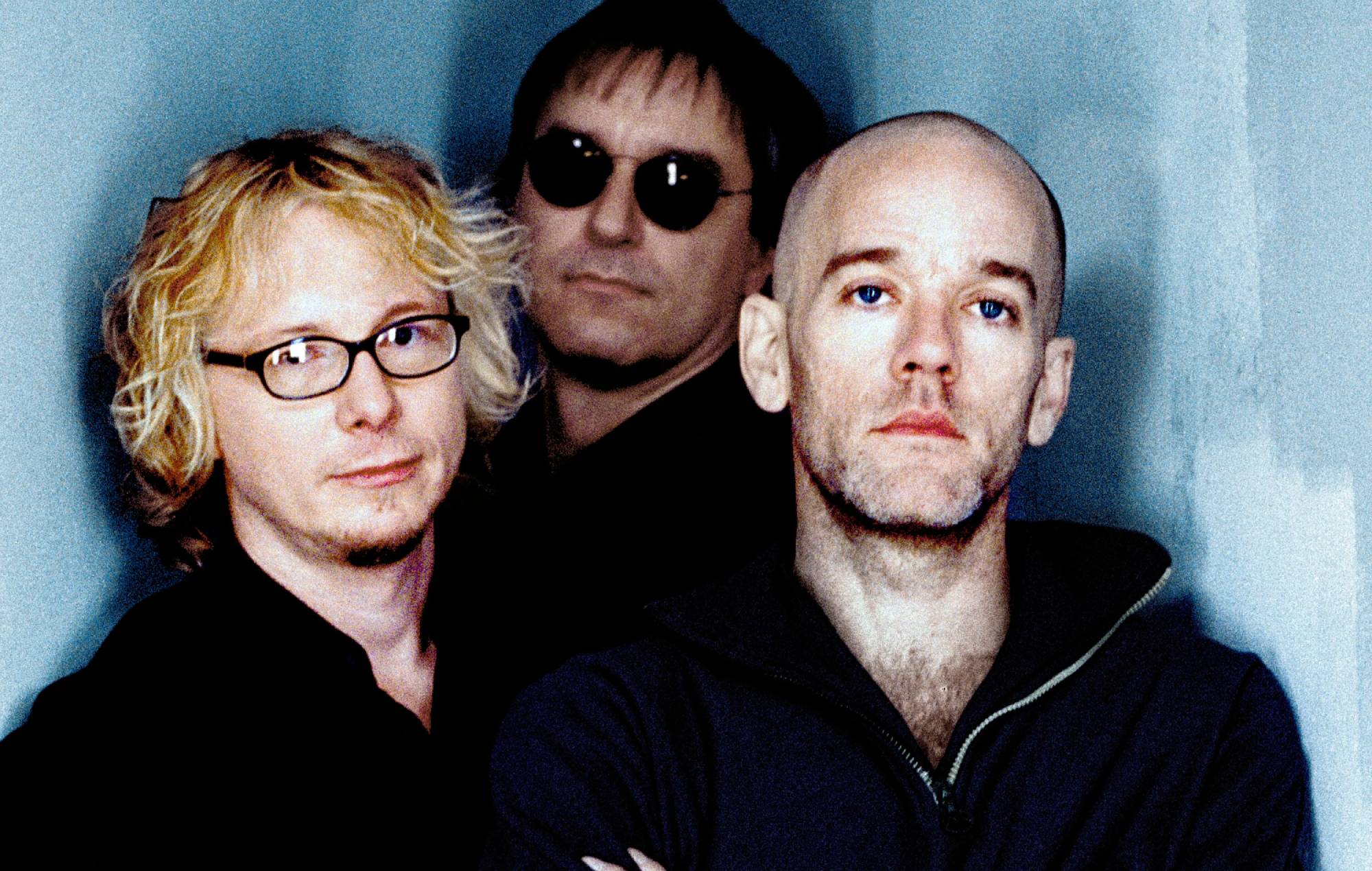
R.E.M.‘s Mike Mills has spoken to NME about the 25th anniversary of ‘Reveal‘ – and how the band emerged from upheaval to make what he still considers their most underrated record.
The alt-rock legends are marking their now-classic 2001 album’s anniversary with an expanded reissue, arriving Friday (November 20). For all its hazy, sun-dappled warmth, the band’s 12th album was born out of one of the most uncertain periods in the band’s history. Founding drummer Bill Berry’s departure in 1997 had shaken the famously close-knit band, and the making of 1998’s experimental ‘Up’ had been overshadowed by their struggle to adapt to life as a three-piece.
“We’d all been through one of the worst things that can happen to a band,” Mills told NME. By the time they reconvened to make ‘Reveal’, however, there was a renewed sense of optimism. He recalled looking out of the studio window in Dalkey, Ireland, on an unusually sunny day and thinking: “I don’t even know what this record is going to sound like, but this is where we need to be.”
By the time ‘Reveal’ emerged in May 2001, the remaining trio had found a new equilibrium, delivering shimmering, bittersweet songs such as ‘Imitation Of Life’ and ‘All The Way To Reno (You’re Gonna Be A Star)’. Released just four months before 9/11, the album now feels like a dewy-eyed time capsule for an innocent world about to change irrevocably.
WATCH
Check out the rest of our interview below for Mills’ recollections of a memorable encounter with Radiohead frontman Thom Yorke, watching the next generation of rock stars emerge in 2001, his thoughts on the Ed Sheeran and Macklemore controversy and whether enough musicians are speaking out politically, and whether there’s really nothing that could persuade R.E.M. to get back together.
NME: Hi Mike. ‘Reveal’ arrived after a difficult period for R.E.M., with Bill Berry leaving and the challenges of making ‘Up’. It sounds like a band rediscovering its confidence and melodic instincts. Did it feel like a creative rebirth?
Mike Mills: “Obviously Bill didn’t die, but he had left, and that’s fairly traumatic for a band that was as committed to each other as we were, and are.
“Once we’d gotten through ‘Up’ – there was trauma around it, but the making of the record itself was pretty cool, working with Pat McCarthy that closely – we got to ‘Reveal’ and felt, ‘OK, we’ve been through all this mess. We have a new direction, we have a great drummer. Let’s just go somewhere we want to be and have some fun.’ So we went to Vancouver, which we love, and Ireland, which of course we love.”
Was there a particular moment in the studio when you felt you were in a good place again?
“I remember a day at the studio in Dalkey, just looking out of the window. It was a sunny day in Ireland, rare enough, and it was just beautiful. The vibe was good, the people were good. We were in a pretty happy place at that point.”
What brought you to Ireland in the first place?
“Magic really is part of it. If there’s magic in the world, it probably lives in Ireland. We’ve just always enjoyed being there. Pat McCarthy was from there, so he was plugged into Dublin – not that we hadn’t spent a lot of time there ourselves. It’s a place we’ve all loved since the first time we went. Even the rain isn’t 24/7, although it feels that way sometimes.”
‘Reveal’ has often been described as a return to the bittersweet, melodic R.E.M. of the early ’90s. Was that something you were conscious of?
“There’s no return in R.E.M. except for the song ‘Saturn Return‘! We weren’t looking backwards, we were looking forward. We were in a place where we wanted to be, and we felt like making music.
“Our sensibilities are such that a lot of what we do is going to be bittersweet, because we recognise that’s how life is. Not every song is that way, but certainly a lot of them are. There’s a real knowledge in recognising that life itself is bittersweet. The older you get, the more you appreciate the good times because you’ve had the bad times. That’s what you learn as you go through life, and if that makes it into the music, that’s as it should be.”
You’ve called ‘Reveal’ R.E.M.’s most underrated record. Why do you feel it didn’t get the recognition it deserved?
“It’s hard to get upset about a career arc. Nobody stays on top forever. We had a beautiful, long, graceful career arc. We’d accepted the fact that, in America, we just weren’t the flavour of the month or the flavour of the year. Not that we ever made records for the audience – we made them for ourselves – but in this case we really just said, ‘Look, let’s do something that makes us happy.’
“One reason I like it is because it’s of a piece. I like our albums that have an overall feeling to them, like ‘Murmur’ or ‘Automatic For The People’ or ‘Reveal’. Sometimes it’s a little more scattershot, but this one feels particularly on track. In terms of capturing where we were, the beauty of being alive in the summertime, I think that’s what we got.”
There’s that very particular summer atmosphere, and the album came out just a few months before 9/11. Looking back, it almost feels like a time capsule of a more innocent moment.
“Yeah, I hadn’t thought of it that way. Obviously 9/11 is in everyone’s consciousness permanently from that day, but how much that affected subsequent music-making, I don’t know. But yes, it was a relatively carefree time for us, and we felt pretty positive about it.”
There’s a fascinating connection between ‘Disappear’ and Radiohead’s ‘How To Disappear Completely’: Michael Stipe’s advice to Thom Yorke helped inspire the line ‘I’m not here, this isn’t happening‘, then ‘Disappear’ explored a similar idea. Do you remember that connection?
“Listen, what those two got up to, we’ll never know! Lyricists have a way of communicating that may not be available to the rest of us mere mortals. There’s a certain conversation between lead singers who are also lyricists that’s very focused. Most of us wouldn’t really be able to contribute much to it. They have their own language, I’m sure.
“But I love it. Radiohead are a great band and great guys, and anything that connects us to them is a good thing.”
Did you feel close to Radiohead around that time? You were two huge bands with a certain shared outsider sensibility.
“I’d see them play as often as possible, and we’d always have a chat. You run into them in some strange places. We had a great late night with Thom at the Clarence Hotel in Dublin. I slipped a note under his door saying my girlfriend and I were in the building if he wanted to have a drink, and he came around later.
“He said, ‘I was kind of busy when you slipped a note under the door.’ I said, ‘I hope I didn’t interrupt.’ He said, ‘Well, it wasn’t too bad.’ But we ended up having some beers later and it was fine.”
Then 2001 was also the year of The Strokes, The White Stripes and a new wave of alternative rock. Did you start to feel that R.E.M. were becoming elder statesmen, with a new generation taking over?
“Peter [Buck] and I – Peter more so than I – were both historians of rock, in a way. We were aware of what happens to bands as they age, as best you can tell. With The Stones and The Who, there was no template for how to grow old playing what many consider a young man’s game.
“A lot of that is just acceptance. If you’re good enough, you’ll have a core of fans always, but the young kids are looking for something new, as they should. That’s what they’re supposed to do. So they go out and support the Yeah Yeah Yeahs and The Strokes, and more power to them. I think those bands brought a lot of energy into the world that was missing at that point.”
R.E.M. were politically active throughout your career, particularly in the Bush years. Looking back from the Trump era, has what’s happened since changed how you think about those earlier battles?
“When people don’t pay attention, when they become disaffected, it creates a wide-open, fertile field for the more corrupt among us. That’s what’s happening now. There’s so much corruption and so much bad faith and bad acting that people just want to tune it out. They feel like they can’t do anything about it, so they ignore it, pretend it’s not happening – which, of course, leaves more room for people like Trump to do the horrible things that they do.
“We’ve always encouraged activism, from our earliest days. We’re pretty activist people politically. On Twitter, people say, ‘You’re just a musician, we don’t want your opinion.’ Well, whose opinion do you want? Do you want professional politicians to tell you what you think? Who are these experts that you think should be telling you their opinions? Ours are just as valid as anyone else’s, if not more so, because we pay attention. I think everyone should be involved in politics. Literally everyone.”
Do you feel enough people in the music industry are willing to speak up?
“That’s a very good question. What the internet and social media provide is a way for bad actors to cause consequences for people who speak up. The backlash can be so quick and so harsh from a bunch of keyboard warriors who don’t know anything about life that a lot of people are afraid to speak up.
“The whole Ed Sheeran thing was a disaster on every level. [Macklemore was removed from Sheeran’s tour after making pro-Palestinian comments onstage; Sheeran later said the decision was made by promoters and venues.] The world is such a polarised place right now that to align yourself one way or another creates enemies. I don’t mind creating enemies. Ed Sheeran doesn’t want to create any enemies, and I can’t fault him for that. Are enough musicians speaking up? No. In a word, no, they aren’t. But that’s because the consequences have gotten a little more dire.”
Can you really not fault Ed Sheeran for that?
“No, I think if a musician wants to go out and be politically neutral, and have his concerts be a politics-free zone, that’s entirely up to him. I have no fault with that. He should have known better than to hire the openers that he did. If he really wanted to keep it politically neutral, he shouldn’t have Macklemore out there. But as far as his motivations, I have room for musicians who don’t want to make their shows political. I don’t have that luxury.”
We’ve seen all four R.E.M. members perform ‘Losing My Religion’ at their 2024 Songwriters Hall Of Fame induction, and ‘Pretty Persuasion’ at Athens’ 40 Watt Club in February 2025 alongside Michael Shannon and Jason Narducy. Surely those moments give you at least a little tingle about doing it more often?
“God, no! Believe me, when we say it’s over, we are not kidding. I love getting together with the guys under any circumstances, and playing music with them on stage with the Michael Shannon and Jason Narducy band was certainly fun. But those things are as spontaneous as they possibly can be, because to sit there and plan something like that would be unhappy. We’re happy just being friends, playing some music together.”
R.E.M.’s ‘Reveal (25th Anniversary Edition)’ is released on Friday November 20 via Craft Recordings. Pre-order here.
KioskNews shows a cleaned-up reading view extracted from the publisher’s page — the original always lives on their site, not ours.