Africa’s AI moment: They say data is the new gold. But who is drilling it?

There is a graph I recently came across that I have not been able to stop thinking about.
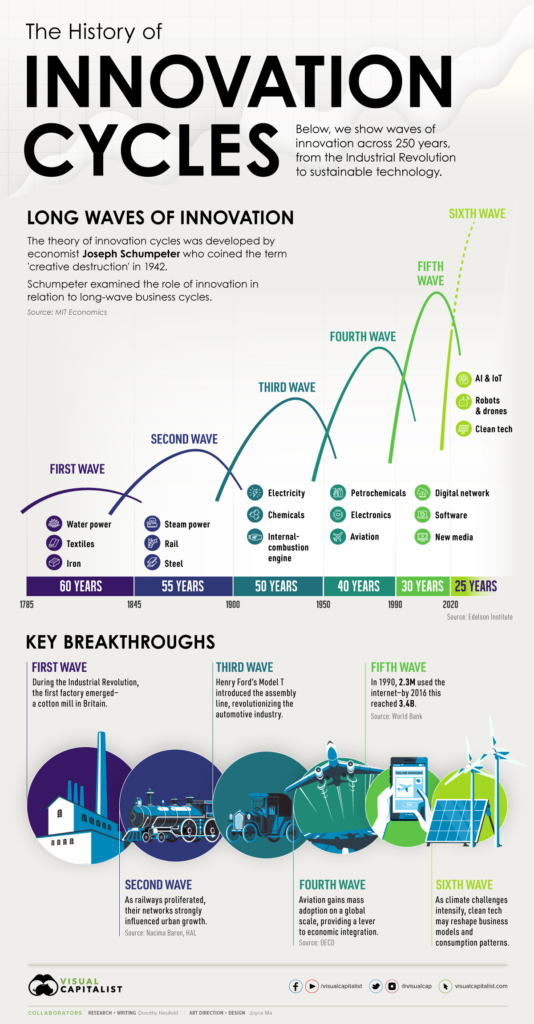
It compared the adoption curves of some of the most consequential technologies in modern history; the railway, electricity, the internet and now artificial intelligence.
What stood out was not simply that AI is being adopted quickly.
It was the speed at which adoption is happening alongside an enormous concentration of capital, talent and investment.
That should make Africa pay attention.
Because every major technological transition creates more than new products. It creates new industries, new infrastructure, new companies and, ultimately, new centres of economic power.
The railway did not simply change transportation. It reorganised economies around new infrastructure.
The internet did not simply change communication. It created entirely new industries.
AI is now beginning to change something even more fundamental: the economics of intelligence.
And that raises a question Africa cannot afford to answer too late:
What position do we intend to occupy in the emerging AI economy?
From users to builders
Africa has already demonstrated that it can take technologies developed elsewhere and apply them in extraordinary ways.
Mobile money is perhaps one of the clearest examples.
Kenya did not invent the mobile phone. It did not invent banking. But it combined existing technologies around a distinctly African problem and created M-PESA, a system that became globally influential.
That distinction matters.
Innovation does not always mean inventing every underlying component from scratch.
Sometimes it means understanding a problem so deeply that you use existing technology in a way nobody else considered.
That is the opportunity AI presents to Africa.
We do not necessarily need to build the largest model in the world simply to prove that we can.
We need to ask better questions.
Can we build AI that works for African agriculture?
Can we create intelligence that understands our languages?
Can we improve healthcare access?
Can we make informal businesses more productive?
Can we build tools for governments that work under African infrastructure constraints?
Can we turn our unique challenges into products that eventually have global relevance?
The opportunity is not simply African AI for Africans.
It is globally relevant AI built from African realities.
Our fragmentation is an economic problem
But there is another structural problem we must confront: fragmentation.
We often describe Africa as a market of more than a billion people.
A startup does not experience Africa that way.
It experiences Ghana.
Then Nigeria.
Then Kenya.
Then Rwanda.
Different currencies. Different regulations. Different payment systems. Different procurement processes. Different languages and customer behaviours.
Imagine if an American technology company had to fundamentally rebuild its payment architecture, regulatory strategy and market-entry model every time it moved from California to Texas.
It would be much harder to scale.
This is one of the reasons African technologies needs more than capital.
It needs commercial connectivity.
If a Ghanaian startup wants to enter Kenya, it should be able to find the people, institutions and businesses that can help it land.
If a Kenyan AI company wants to enter West Africa, it should not have to start from zero.
This is where serious continental convening can become economically useful.
The value of a summit should not simply be the number of people who attended.
It should be what happens because those people were in the same room.
A founder meets an investor.
A corporation discovers a technology.
A government identifies a solution.
Two startups enter a new market together.
A pilot becomes a contract.
A partnership becomes a company.
That is when a conference begins to become an institution.
Africa's constraints can become our competitive advantage
At NeuraHomes, we encountered this reality directly.
It became increasingly clear that we could not simply take assumptions from smart-home markets in Europe or North America and expect them to work perfectly in Ghana.
Energy reliability matters differently.
Connectivity matters differently.
Affordability matters differently.
The way people live, build and interact with technology is different.
So the question changed from:
“How do we bring smart homes to Africa?”
to:
“What should intelligent living look like when it is designed around African realities from the beginning?”
That distinction applies to AI as well.
A product designed around unlimited connectivity, expensive hardware, English-only interaction and always-on infrastructure may work beautifully in one market.
But those assumptions cannot simply be exported everywhere.
Africa's constraints should become engineering specifications.
Low bandwidth should influence architecture.
Local languages should influence interfaces.
Mobile money should influence payments.
Voice should influence interaction.
Energy constraints should influence infrastructure.
This is not about building inferior technology for a poorer market.
It is about building technology for a different environment.
And sometimes, designing for constraints produces something more resilient and more globally useful.
AI adoption must become AI productivity
There is also a responsibility on African businesses.
We should stop treating AI as a fashionable technology that companies need to “have.”
A CEO does not ultimately care about the sophistication of a model.
They care about productivity.
Can the company serve customers faster?
Can it reduce operating costs?
Can employees spend less time on repetitive work?
Can decisions be made with better information?
Can a company create products it could not previously afford to build?
That is where AI becomes infrastructure.
The next stage of African AI should therefore not be measured simply by how many companies say they are using AI.
We should ask whether AI is increasing output, competitiveness and economic value.
At MOONDOOG, this is the direction we are increasingly pursuing.
We started as a software development company, working with real businesses and seeing first-hand the gap between having an idea and actually turning that idea into technology.
That experience led us toward MoonAI, our exploration of how AI can compress the product-development process itself.
The larger idea is simple:
The bottleneck should be the quality of the idea, not the cost of turning that idea into software.
Capital will follow capability
There is another reason this moment matters.
Capital follows opportunity.
Once investors recognise that AI is becoming a fundamental layer of the economy, enormous amounts of capital will move toward the companies, infrastructure and talent capable of capturing that value.
Africa cannot afford to wait until the allocation decisions have already been made.
We need African investors who understand technology.
We need corporations willing to become early customers of African AI companies.
We need governments capable of procuring and deploying technology responsibly.
We need researchers and engineers building local capability.
And we need founders who can turn that capability into commercially viable companies.
This is why I believe the AI conversation needs to move beyond startups and technology enthusiasts.
It needs to include capital, policy, enterprise, academia and infrastructure.
No single group can build an AI economy alone.
From conferences to institutions
This is also the standard I believe we should apply to gatherings such as the Pan African AI & Innovation Summit.
PAAIS is taking place in Accra on 22–23 September 2026 under the theme “Scaling Africa’s Ethical AI & Innovation Ecosystem: Building Youth Capacity, Policy, Partnerships and Skills.” Its stated objectives include scaling validated AI models into practical initiatives, advancing ethical frameworks, developing African data and AI capability, building partnerships and connecting young innovators with mentorship.
Those ambitions are important.
But the real test comes afterwards.
What capital was mobilised?
How many startups entered new markets?
How many pilots became deployments?
How many partnerships became commercial relationships?
How many young people moved from training into actual technology careers?
How much African intellectual property was created?
I would like to see African technology gatherings increasingly measured this way.
Perhaps every summit should eventually produce an annual outcomes index showing what actually moved because the ecosystem came together.
Because the value of a summit is not who is sitting in the room.
It is what moves after they leave the room.
The choice before Africa
We are entering an unusual period.
AI is developing at extraordinary speed, while the infrastructure, capital and institutions around it are still being formed.
That means the position Africa occupies in this economy is not predetermined.
We can become exceptional consumers of intelligence built elsewhere.
Or we can build companies, infrastructure, intellectual property and institutions of our own.
Ideally, we do both.
We should use the world's best technology where it gives us leverage.
But we should also build where African context creates a genuine advantage.
We should use open source as a foundation, not treat it as a ceiling.
We should welcome global capital while developing stronger African capital.
We should collaborate across borders while working to reduce the fragmentation that makes continental scaling unnecessarily difficult.
And most importantly, we should stop thinking of Africa's challenges merely as problems waiting for someone else to solve.
They can become our R&D roadmap.
The next great African technology company may not emerge because someone copied the latest Silicon Valley trend.
It may emerge because a founder looked at a uniquely African problem and asked a completely different question.
That is the conversation I hope we continue having as Africa enters this next technological transition.
Because the future of African AI should not simply be something that happens to Africa.
We should help design it.
The author, Isaac Ayitey Chris-Quaye, is CEO of MOONDOOG Technologies and Founder of NeuraHomes LTD.
DISCLAIMER: The Views, Comments, Opinions, Contributions and Statements made by Readers and Contributors on this platform do not necessarily represent the views or policy of Multimedia Group Limited.
Tags:
DISCLAIMER: The Views, Comments, Opinions, Contributions and Statements made by Readers and Contributors on this platform do not necessarily represent the views or policy of Multimedia Group Limited.
KioskNews shows a cleaned-up reading view extracted from the publisher’s page — the original always lives on their site, not ours.