Sorting the science from the hype about weight loss jabs
Do you gain weight once you stop using them? Do they make your face saggy? Can they improve your mental health? Experts explain whether 13 common beliefs about GLP-1s are true or false
By Isabelle Aron / The Guardian


THEY SUPPRESS YOUR APPETITE
FALSE: “GLP-1 medications mimic Glucagon-like peptide-1 — one of the hormones involved in appetite regulation. It doesn’t completely suppress hunger, but it is powerful,” says Federica Amati, nutrition lead at Imperial College School of Medicine and author of The Appetite Reset.
“The medicine is about 1,000 times stronger than what we naturally produce from our gut,” she explains.
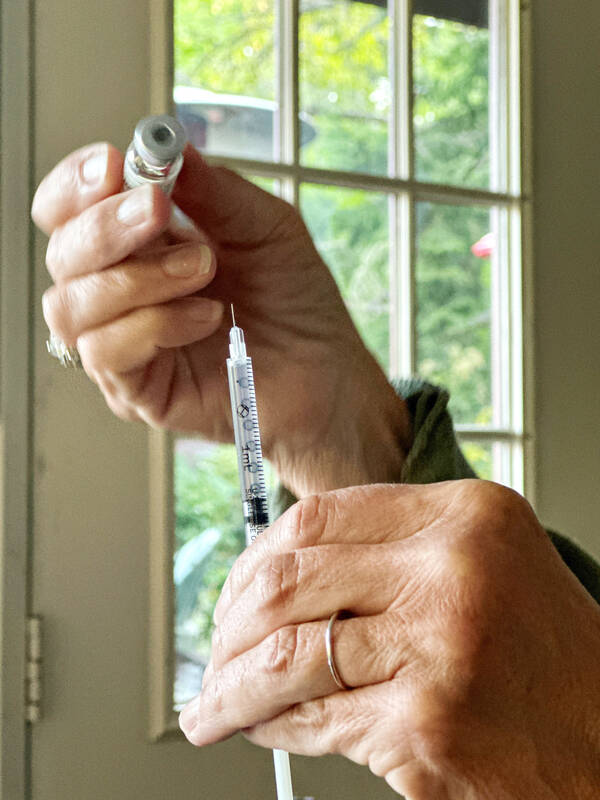
A woman in July prepares an injection of Zepbound, a GLP-1 weight-loss drug, at her home in Coupeville, Washington, US.
Photo: Reuters
As food passes through the gut, cells called L-cells sense the nutrients, which sparks the production of the GLP-1 hormone. Without the drugs, these bursts of GLP-1 production last a few minutes.
“It’s a bit like a sparkler. In comparison, the drugs are like a bonfire that roars for a week,” Amati says.
Because the GLP-1 hormone stays in your body for longer if you are on the drugs, you feel fuller faster and your appetite gets suppressed, but you will eventually get hungry.
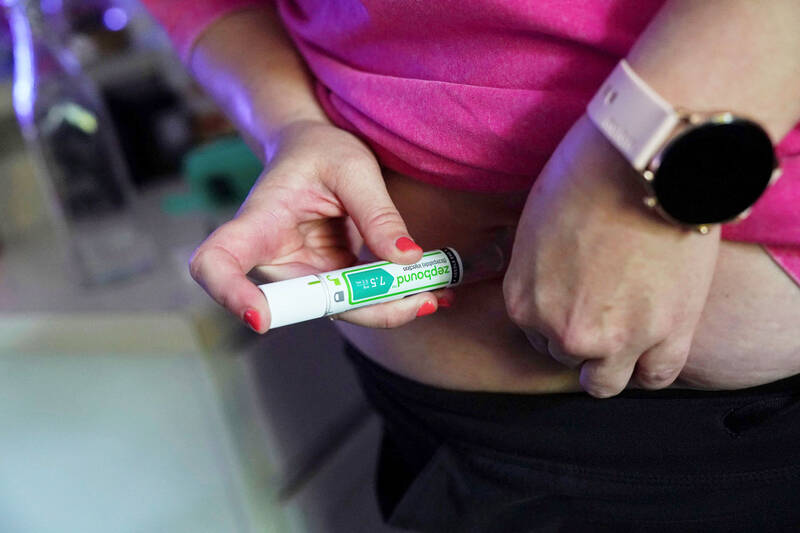
A woman in July injects herself with Zepbound, a GLP-1 weight-loss drug, at her home in Memphis, Tennessee, US.
Photo: Reuters
THEY CAUSE GASTROINTESTINAL ISSUES
TRUE: “Nausea, constipation, diarrhea, bloating and vomiting are well-recognized side-effects,” says Adrian Brown, associate professor and specialist dietitian at University College London. “They tend to occur during dose escalation, and most symptoms improve over time.”
Eating smaller meals, staying hydrated and limiting fatty foods can help.

A patient last month shares a laugh with his physician after getting cosmetic surgery after trying GLP-1 weight loss drugs in New York, US.
Photo: Reuters
“One of the best ways to prevent these side-effects is to prepare your gut, liver and pancreas before you start taking the medications,” Amati says. “If you go into treatment with existing reflux or constipation, it’s only going to get worse.”
She advises eating more plants and gradually upping your fiber intake. Once taking the drugs, never push past the point of fullness.
“The gastric emptying is so slow that you need to stop straight away.”
YOU FORGET TO DRINK WATER
PARTLY TRUE: The drugs themselves don’t make you want to drink less, but people can experience this as a side-effect. This is partly because we get a lot of water from food, especially fruits and vegetables.
“These drugs massively reduce the amount that you eat — up to 40 percent reduction in calories,” Amati says.
You may also drink less if you’re experiencing nausea, constipation or reflux.
“It’s important that you do drink, because dehydration is one of the key reasons why reflux and constipation may be worse,” she says.
As well as drinking water, she recommends having hydrating foods and smoothies, especially on the day you take the drugs (typically, the injections are used once a week, while the pills are taken daily), when you can have the most appetite suppression.
THEY MAKE YOU DEFICIENT IN NUTRIENTS
TRUE: Taking GLP-1 medication can “substantially reduce food intake, and that creates the potential for nutrient deficiencies if the quality of a person’s diet is poor,” says Brown, who has researched this area.
He found that some people on these drugs may not get enough vitamin D, vitamin B12, iron, calcium and protein.
“If your diet was relatively healthy to begin with, that’s fine because you’re just eating less. But this is not true for many people,” says Giles Yeo, professor of molecular neuroendocrinology at the University of Cambridge and an obesity expert.
“For those whose diets were not great to begin with, there’s a danger of going into malnutrition. You can’t just inject yourself and hope for the best. You have to think about your diet and exercise.”
YOU GAIN WEIGHT AFTER YOU COME OFF THEM
PARTLY TRUE: “Obesity is a chronic, relapsing, progressive condition. When medications for obesity are stopped, a person’s body will attempt to regain the weight,” Brown says. “Studies have shown that people can regain about 60 percent of the weight lost following stopping the medication.”
In fact, one study from the University of Oxford found that people who stop taking GLP-1 medication will return to their original weight within two years.
“For a lot of people, these are likely to be long-term or forever drugs,” Yeo says. “Your appetite is only suppressed when you’re on them. If you stop, your hormonal levels will go back to what they were. You’ll feel as hungry as before, which means the weight will come back.”
While the idea of taking medication for ever might sound scary, Yeo points out that many people take medication for high blood pressure and statins, used for lowering cholesterol, for life. “I think the same is going to be true for these drugs,” he says.
MUSCLE LOSS
TRUE: “Whenever people lose weight, they don’t just lose fat, they also lose muscle. The key point is whether we can minimize it,” Brown says. “Current evidence suggests that up to 40 percent of the weight lost with GLP-1 medicine may come from lean mass [bone, muscle and connective tissue] rather than fat alone.”
This is why it’s important to prioritize protein-rich foods and resistance training when taking GLP-1s.
“It’s not negotiable — you have to do it if you want to preserve lean mass,” Amati says. “If you have excess fat mass and you engage in resistance training, you will lose fat first because that’s the stored energy source.” She recommends resistance training three times a week, including high-quality protein in every meal, and eating that first.
NOT EVERYONE RESPONDS THE SAME
TRUE: “These drugs don’t work for everybody — they’re not a magic bullet,” Amati says. “The data shows that 5-20 percent of people lose less than 5 percent of their body weight, so they’re classed as non-responders. If you’re someone who doesn’t have a very sensitive GLP-1 receptor, GLP-1 medications won’t have the desired effect.”
While we don’t yet know why this is, Yeo says that it’s only a matter of time before we do.
ANYONE SHOULD USE THEM TO LOSE WEIGHT
FALSE: GLP-1 drugs were originally developed for people with type 2 diabetes. Now, they’re also licensed for people with obesity, or people who are overweight and have weight-related health problems. Despite this, many people are using GLP-1s for aesthetic reasons because they’ve become so easily accessible.
“I see a lot of people accessing them to lose weight before a wedding or a holiday,” Amati says. “These drugs are not designed for that.”
People taking GLP-1s in this way could end up with a worse body composition, she explains.
“It’s much easier to regain fat than muscle, so you could find yourself with increased fat mass compared to before you started. Losing lean mass is not helpful for longevity.”
IMPROVE MENTAL HEALTH
PARTLY TRUE: When it comes to how GLP-1s impact anxiety and depression, Michael Browning, professor of psychiatry at the University of Oxford, says, “The evidence that they’re beneficial is pretty thin, and some studies are ongoing.”
Things are more promising for addiction, particularly with alcohol, where there have been some randomized controlled trials. One of these showed that taking semaglutide (the GLP-1 agonist in Wegovy and Ozempic) reduced the number of heavy drinking days for participants. For other addictions, such as nicotine and other drugs, more research is needed.
“There’s work in animals that suggests they might reduce nicotine dependence, but the evidence is not there in humans,” Browning says.
THEY CAUSE BAD BREATH
MORE RESEARCH NEEDED: Is “Ozempic breath” a thing?
“There is a lot of anecdotal evidence, but not any epidemiological studies,” says Dr Praveen Sharma, an associate professor at the University of Birmingham’s School of Dentistry.
While there’s no hard evidence yet, it could be side-effects like vomiting and dehydration that lead to a dry mouth, he says. Saliva “keeps the mouth hydrated and the bacteria level low,” so having a dry mouth can mean “you get a proliferation of bacteria, which can result in bad breath.”
As for burps? Lindsey Ann Edwards, senior lecturer in microbiology at King’s College London, says that by slowing gastric emptying, GLP-1 medication can “cause food to remain in the stomach and upper gastrointestinal tract for longer, creating more opportunity for the gut microbiome to ferment partially digested food. This microbial fermentation can generate gases which may contribute to unpleasant-smelling or “sulphur” burps.
HAIR LOSS?
TRUE: Your body goes through a stress response when you take GLP-1 drugs, says consultant dermatologist Angela Tewari.
“That puts stress on the hair, and you can experience telogen effluvium, which is stress response hair loss. It puts your hair into a shedding phase,” she says.
The good news is that this kind of hair loss is reversible. As your body gets used to the medication, this side-effect will ease off, although the pace at which your hair grows back will vary.
“It can be an inch a month for some people. Generally, how fast your hair grows is a genetic thing,” says Tewari, who recommends taking the lowest possible dose of GLP-1s and eating food rich in protein, zinc, iron and vitamin C to encourage a healthy scalp.
KioskNews shows a cleaned-up reading view extracted from the publisher’s page — the original always lives on their site, not ours.