What historic Xi-Trump-Putin trilateral summit signals for global diplomacy
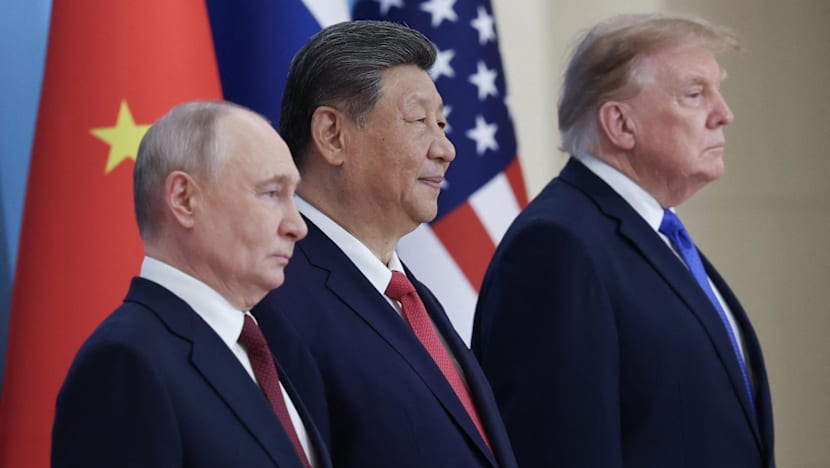
SHENZHEN: Xi Jinping, Donald Trump and Vladimir Putin each walked away from their historic trilateral summit with something to claim as a win, but turning their unprecedented diplomatic engagement into meaningful action will be far harder, say analysts.
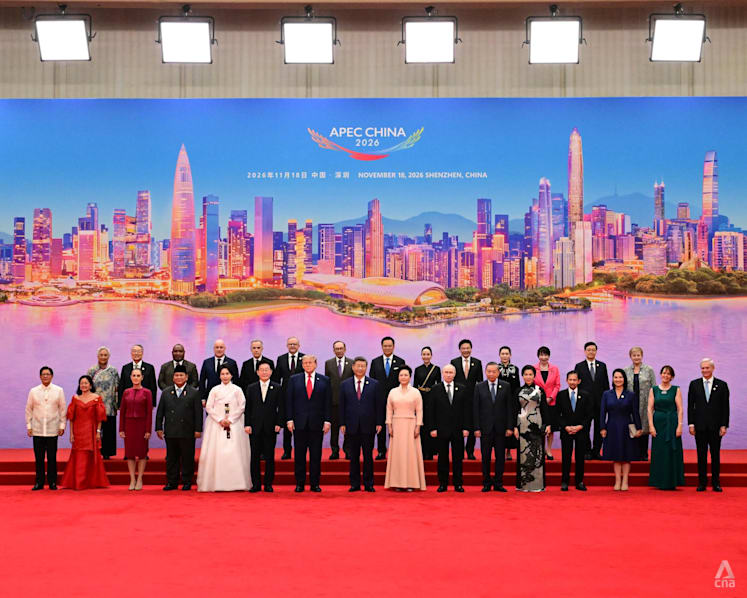
The presidents of China, the United States and Russia met on Thursday (Nov 19) on the sidelines of the Asia-Pacific Economic Cooperation (APEC) summit in Shenzhen.
Their 90-minute gathering at a luxurious lakeside resort yielded a joint declaration pledging talks on nuclear risks as well as cooperation on energy supplies and United Nations reform.
But it offered no timetable, concrete mechanisms or plans for anothersuch gathering.
The summit also offered a glimpse of how the three powers could seek to shape global affairs through closer coordination.
According to the Chinese readout, the discussions ranged from the wars in Ukraine and the Middle East to the Korean Peninsula and nuclear proliferation - issues extending far beyond their own borders.
“Those discussions give the flavour of the three powers deciding for others, whether they like it or not,” Chong Ja Ian, an associate professor of political science at the National University of Singapore (NUS), told CNA.
WHAT EACH LEADER GAINED
Hosting the first meeting of its kind gave Xi diplomatic prestige and allowed him to present China as a power capable of bringing rivals together, analysts said.
The joint declaration noted that Trump and Putin had thanked China for convening the gathering.
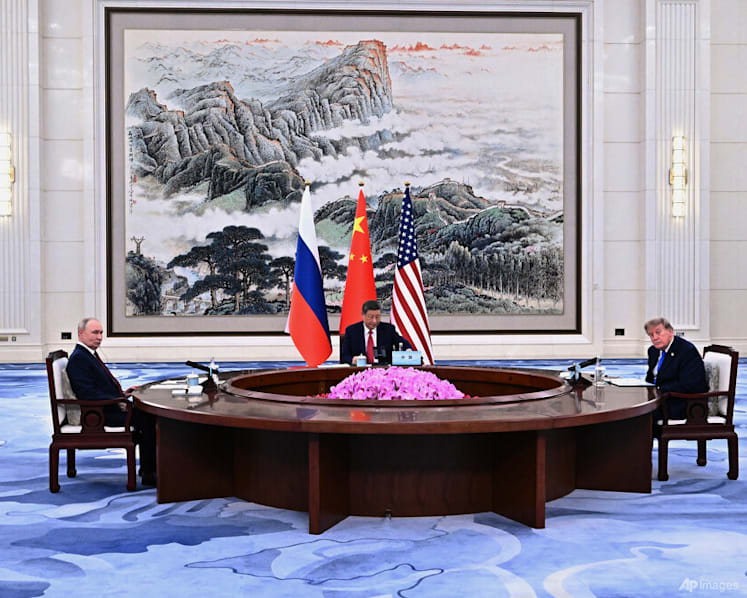
Wang Dan, China director at political risk consultancy Eurasia Group, described the summit as “a diplomatic win for China”.
For Trump, the gathering allowed him to project an image of himself as a powerful global leader to his domestic audience, she said. Besides the trilateral meeting, Trump also held direct talks with both Xi and Putin.
The US president also succeeded in putting nuclear arms control on the three-way agenda, having signalled ahead of the summit that he wanted to discuss the matter. The joint declaration committed the three countries to further talks on nuclear risks.
However, Wang questioned whether the nuclear discussions amounted to a substantive achievement, describing it mainly as a “big topic to show leadership”.
“But the biggest winner is Russia,” Wang said.
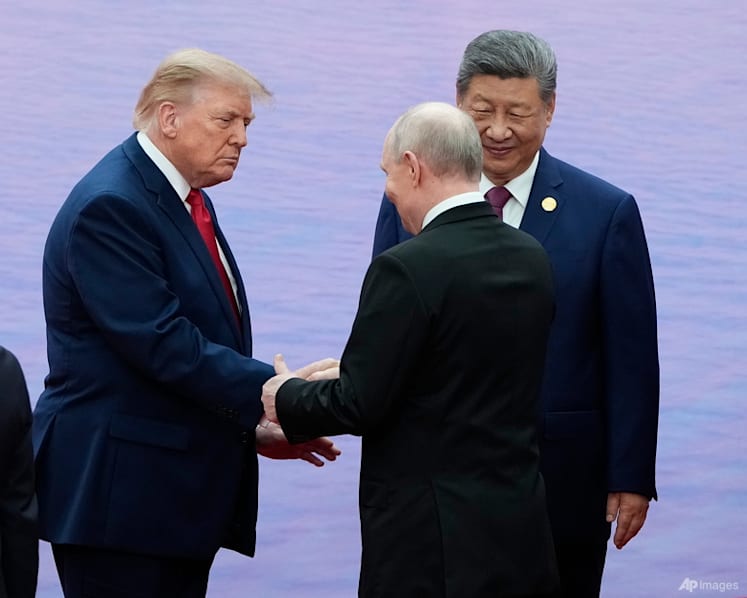
Aside from the trilateral summit, Putin also secured a meeting with Trump, who greeted the Russian leader as his “friend”. It lasted around 40 minutes in what US officials described as a “pull-aside” rather than full-scale bilateral talks.
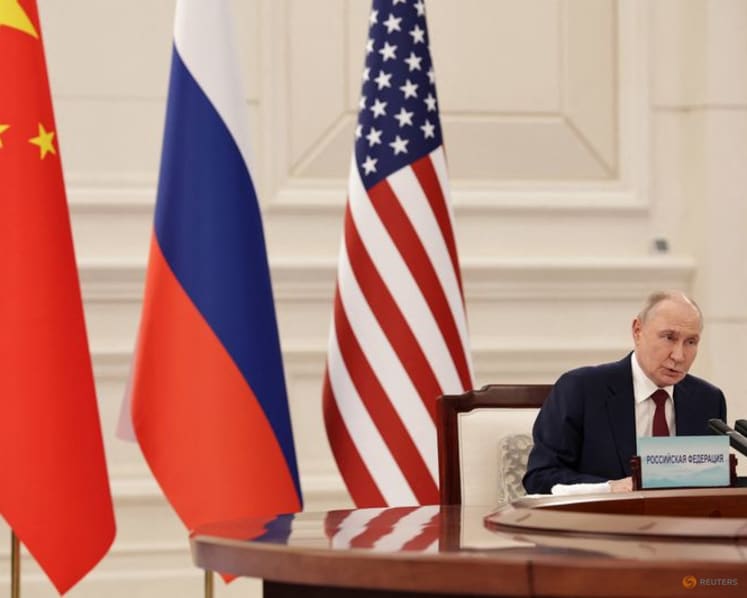
Wang said Russia’s diplomatic status had been “elevated significantly”, effectively ending its “top-level isolation”from the US.
The joint declaration also said respect for the immunities of state officials was “of paramount importance” and that the International Criminal Court (ICC) and similar bodies must not “abuse their jurisdiction”.
The language was particularly significant for Putin, who remains wanted by the ICC over the alleged unlawful deportation and transfer of children from occupied areas of Ukraine to Russia.
In February 2025, Trump imposed sanctions on the court, accusing it of illegitimate actions targeting the US and Israel.
Putin appeared keen to sustain the diplomatic momentum.
At a news conference after the trilateral summit, he described the talks as “open” and “very useful” and said he wanted the format to continue.
The leaders had achieved “if not an agreement, then mutual understanding” across several key areas, he said.
But the diplomatic gains offer little indication of how far they are prepared to go in addressing their differences, Wang said.
“In practice, these top-level principles will be hard to translate into details,” she cautioned.
DEFUSING NUCLEAR RISKS
Experts said talks to reduce nuclear risks were the most realistic near-term outcome.
In their declaration, the leaders reaffirmed that “a nuclear war cannot be won and must never be fought” and pledged further dialogue on non-proliferation.
However, they stopped short of committing to cuts in their nuclear arsenals or launching formal three-way arms-control negotiations.
Wu Xinbo, professor and dean of Fudan University’s Institute of International Studies and director of its Center for American Studies, said the outcome was in line with China’s expectations.
“The United States and Russia ... should first make substantial nuclear reductions,” he told CNA.
“If they do not take the lead in making substantial cuts, China cannot take such a step, he said, echoing China’s long-standing position.
According to estimates by the Stockholm International Peace Research Institute, China has about 620 nuclear warheads, compared with 5,042 held by the US and 5.420 by Russia.
Regardless, the commitment to talks on nuclear security is “significant and positive”, said Daniel Salisbury, a senior fellow for nuclear arms control, non-proliferation and disarmament at the International Institute for Strategic Studies (IISS), a London-headquartered security think-tank.
This is especially given the “absence of ongoing discussion of future arms control” involving the three powers.
New START, the last nuclear treaty between the US and Russia, expired in February this year. Signed in 2010, the treaty capped each side at 1,550 deployed strategic nuclear warheads and provided for inspections, notifications and data exchanges. China was never party to it.
“The current security climate makes cuts unlikely as every state modernises and many expand their nuclear arsenals,” Salisbury said. “Any discussions will be a long road.”
Risk reduction was therefore a more realistic starting point. Talks could address dangers involving hypersonic missiles, missile defence systems, military activity in space and emerging technologies such as artificial intelligence, Salisbury said.
Wu said one possible area for discussion was preventing AI from being given controlover nuclear weapons - an issue that has gained urgency as militaries increasingly adopt it for intelligence analysis and early-warning systems.
GLOBAL STABILITY OR MORE SWAY FOR THREE?
Analysts differed over whether closer coordination among the three powers would bolster global stability or give them greater influence over international affairs.
At the summit, Xi said major countries carried “special responsibilities” and called on China, Russia and the US to set an example by working together to maintain world peace and stability.
He also urged major powers to respect one another's core interests and avoid challenging each other's red lines.
Putin said their countries can strengthen global stability if they cooperate constructively.
After the talks, Trump said the meeting was “bigger than Yalta”, invoking the 1945 conference between the US, Britain and Soviet Union that became shorthand for major-power deals shaping the post-World War II order.
Chong from NUS said the sweeping agenda and repeated emphasis on the three countries suggest they are claiming a privileged role in managing global affairs.
Chong, who is also a non-resident scholar at Carnegie China, interpreted Xi’s references to “core interests”, red lines and the three countries’ special responsibilities as suggesting separate spheres of influence.
“The suggestion or implication from Xi’s language would be a three-way division of the world, driven by Beijing, Moscow and Washington,” he said, adding that there did not appear to be an alternative reading or objection from the other two sides.
Wu from Fudan University offered a different interpretation of the summit’s intentions.
The leaders met “not to discuss dividing up the world or establishing their respective spheres of influence”, but to address major global challenges, he said.
These include maintaining peace, promoting strategic stability and improving relations among the major powers, he added.
At a post-summit briefing, Chinese Foreign Minister Wang Yi said China believes that “all countries, big or small, are equal”. Major powers have more resources and should take the lead in championing equality, credibility, morality and cooperation, he added.
For other countries, the practical consequences of closer three-way coordination could be mixed.
Eurasia Group's Wang said renewed US-Russia engagement could open “new channels” for talks over Ukraine, potentially improving prospects for regional stability.
But it could also put greater pressure on European countries supporting Kyiv and weaken their leverage, she said.
For middle powers, Wang said the joint declaration could ease pressure to choose sides on less contentious matters.
“For sensitive and strategic issues like technology, those middle powers still need to pick sides,” she said.
FROM SUMMIT TO SUBSTANCE
With the trilateral summit concluded, attention now turns to whether its participants can translate their broad commitments into concrete action.
The declaration offered few clues as to how that would happen.
The energy pledge was one example. The three countries said they planned to increase the production and supply of refined petroleum products, while reaffirming the importance of stable energy flows.
Eurasia Group’s Wang said the pledge could have positive “spillover effects for the rest of the world”.
But the document did not specify how much production would rise, when additional supplies could reach the market or how the pledge would be carried out.
Nor was there a clear roadmap for sustaining overall three-way dialogue.
According to the Chinese readout, Xi proposed regular high-level exchanges, open dialogue channels and mechanisms to prevent crises and miscalculation. The joint declaration did not formally establish any of these arrangements.
China’s foreign minister said after the summit on Thursday that China would work with Russia and the US to implement the leaders’ consensus and “maintain coordination and communication at the working level”.
Wang, who did not give details of the format or timetable for future engagement, was responding to a question from CNA on whether the three countries planned to establish a formal follow-up mechanism and hold future trilateral meetings.
Putin, meanwhile, said the leaders had not agreed to meet regularly in the same format, while Kremlin foreign policy aide Yuri Ushakov said it was too early to say whether the meetings would continue.
Fudan University’s Wu nevertheless believes further leaders’ meetings could take place within the next two years.
“I think it is possible that there will be a second or even a third round of this trilateral dialogue,” he said, adding that the key was to find common ground and advance coordination and cooperation.
Wu said establishing “a more stable and healthy pattern of major-power relations” could itself be a significant achievement.
“This is more important than making progress on any one specific issue.”
KioskNews shows a cleaned-up reading view extracted from the publisher’s page — the original always lives on their site, not ours.