The 10 Best Alternative Rock Albums of All Time, Ranked

Jeremy has more than 2800 published articles on Collider to his name, and has been writing for the site since February 2022. He's an omnivore when it comes to his movie-watching diet, so will gladly watch and write about almost anything, from old Godzilla films to gangster flicks to samurai movies to classic musicals to the French New Wave to the MCU... well, maybe not the Disney+ shows.
His favorite directors include Martin Scorsese, Sergio Leone, Akira Kurosawa, Quentin Tarantino, Werner Herzog, John Woo, Bob Fosse, Fritz Lang, Guillermo del Toro, and Yoji Yamada. He's also very proud of the fact that he's seen every single Nicolas Cage movie released before 2022, even though doing so often felt like a tremendous waste of time. He's plagued by the question of whether or not The Room is genuinely terrible or some kind of accidental masterpiece, and has been for more than 12 years (and a similar number of viewings).
When he's not writing lists - and the occasional feature article - for Collider, he also likes to upload film reviews to his Letterboxd profile (username: Jeremy Urquhart) and Instagram account.
He has achieved his 2025 goal of reading all 13,467 novels written by Stephen King, and plans to spend the next year or two getting through the author's 82,756 short stories and 105,433 novellas.
Sign in to your Collider account
There’s quite a bit of subjectivity when it comes to declaring what is or isn't alternative, when it comes to music, and maybe it’s a vibe, too. But the following albums have been called alternative rock according to sources beyond the opinion of one writer, and there are some pretty great rock albums that haven’t been called alternative all that often, even if they're rock-focused and feel at least a little out there.
Alternative music does differ a little from pop, or radio-friendly stuff, of course, but certain great alternative rock songs have become popular anyway, and maybe some songs from certain albums below you could well have even heard on the radio and all. Still, things are going to be centered on albums rather than songs, and this is an attempt to highlight the best alternative rock albums of all time (though “all time” here refers to about the mid-to-late-1980s onward, with most of the rock albums released before then being considered “classic rock” period-wise, for present purposes).
10 'The Moon & Antarctica' (2000)
Modest Mouse
If you know a Modest Mouse song, it’s probably “Float On,” which is found on the 2004 album Good News for People Who Love Bad News. That’s a pretty solid album beyond that track, but two Modest Mouse albums from a bit earlier in the band’s discography are better overall. The Moon & Antarctica is probably the greatest, but an honorable mention should go out to 1997’s The Lonesome Crowded West, since that’s also a pretty great indie/alternative rock sort of album.
To focus on The Moon & Antarctica, and why it’s possibly better, it’s a bit shorter and punchier, and also arguably more consistent, though without ever straying too far from the realm of “alternative,” whatever you might like to think that word probably means. And even with “Float On,” Modest Mouse didn’t exactly sell out. They just had a one-hit wonder of sorts that really seemed to connect with people, but they’ve kept their “cred,” for lack of a better word, and Modest Mouse has always been, you know, unmistakably Modest Mouse.
9 'Tim' (1985)
The Replacements
Released at a time when there was still some classic rock coming out and feeling dominant, Tim by The Replacements is very much an effective bridge between that dominant strain of rock and then the sort of more alternative rock that would define the remainder of the 20th century, plus a little beyond the 1990s, if you look at the likes of The Moon & Antarctica and a few other indie/alternative rock sort of albums.
Basically, with Tim, parts of it sound big and unapologetically poppy, but there is also an edge to it and also a sadness pervading a few songs throughout that stops it from being purely approachable or full-on pop. It’s still undeniably rock music, which is the main thing, just with a bit of a kick by way of the punk, pop, and alternative genres, too, with some truly incredible songs here, and the album as a whole (alongside 1984’s Let It Be and 1987’s Pleased to Meet Me cementing The Replacements as one of their era’s most underrated bands).
8 'Nevermind' (1991)
Nirvana
Nevermind is the Nirvana album. Well, not literally the only one, but the one people know, and the one that was truly momentous, so including it when you're talking about great alternative rock albums is about as essential as giving a shout-out to Citizen Kane if you're discussing all-time great drama films. It’s not exciting or particularly surprising, but people aren’t going to be happy if you ignore it. So, here it is.
Truth be told, it won’t please everyone, because there are people who are entirely on board with the idea of In Utero being the best Nirvana album. It’s the heavier and perhaps more challenging one, but Nevermind is going here for its cultural value and its generally greater sense of snappiness and immediacy. It does also have some hits, admittedly, and maybe that helps, but standing out most is just the manner in which it screams “alternative rock,” or at least screams a certain kind of alternative rock, louder than just about any other album out there.
7 'Daydream Nation' (1988)
Sonic Youth
Coming out near the end of the 1980s and feeling very much influential for a good deal of rock to come in the 1990s, Daydream Nation stands out for being the best of Sonic Youth’s albums, which is saying quite a lot. There is the right level of rawness and noise here, if you're looking for something that has a decent amount of appeal (almost mass-appeal) while still qualifying as alternative rock.
The length of this album is also a bit unconventional, since Daydream Nation clocks in at a sprawling and sometimes drawn-out feeling 71 minutes. Still, the songwriting here is sound throughout, and there’s a good balance of chaos/noise with control, and things do keep consistent with the style while there does also happen to be just enough by way of variety to keep it interesting for more than an hour. To cut a long/rambling story (or a pair of paragraphs) short: Sonic Youth definitely knew what they were doing – and cooking – here.
6 'Let Love In' (1994)
Nick Cave and the Bad Seeds
Yes, Nick Cave is the frontman, but Nick Cave and the Bad Seeds is the name of the band, though Cave’s released some other albums not officially with – or part of – this band. But Nick Cave and the Bad Seeds is where you do generally get the best of Nick Cave, with some of his more recent albums maybe being his masterpieces? Like, Skeleton Tree is basically perfect, though not really rock; even “alternative rock” is too much of a stretch.
Going back in time by a couple of decades before 2016’s Skeleton Tree, you get Let Love In, which does have more of a rock feel, and it’s also maybe Cave’s second-best after Skeleton Tree, so here it goes. It goes here. It’s an excellent and also undeniably strange/unique collection of songs, and whatever it might be a concept album about (if it is one), it’s probably not a pleasant subject. Still, what a phenomenal collection of music you’ve got here.
5 'OK Computer' (1997)
Radiohead
Concept albums were a bit of a classic rock thing, if you look at the likes of The Dark Side of the Moon, Tommy, and maybe Sgt. Pepper’s Lonely Hearts Club Band, yet something like OK Computer went a good way toward extending and maybe even elevating the concept album as a, well, concept. If this top-tier Radiohead album isn't quite as good, it might have something to do with it being slightly less groundbreaking than some of those, but even then, there was quite a bit of ground being broken here.
To stand out among Radiohead albums is impressive, and if Kid A is better, sure, that’s an argument that can be made, but it’s harder to classify that one as rock, or even alternative rock. OK Computer was the band’s best (mostly) rock-focused album, and it is, of course, also one of the very best albums of the 1990s. Beyond essential. Lives up to the hype. Really that good. Yada-yada-yada. All that jazz (or all that rock?).
4 'Doolittle' (1989)
Pixies
It might be called Doolittle, but this Pixies album actually does a lot. Sorry. But it’s also true. Pixies are one of the defining alternative rock bands, so much so that even if they only ever had two genuinely masterful albums, that’s okay. That’s enough. Those two albums are Surfer Rosa and Doolittle, and both were so very cool and so very influential. Actually, scratch the “were cool” part. These albums are still cool, even with the pair of them pushing 40.
Doolittle is the one to start with, even if Surfer Rosa came out a year earlier, with this just being such a consistent and continually energetic alternative rock album, with just about every song being an earworm, and thankfully none prove to be the annoying sort of earworm. These are songs that you're happy to have bouncing around in your head for who knows how long, with highlights (hard to single out when almost everything feels like a highlight) being “Here Comes Your Man,” “Debaser,” and “Monkey Gone to Heaven.”
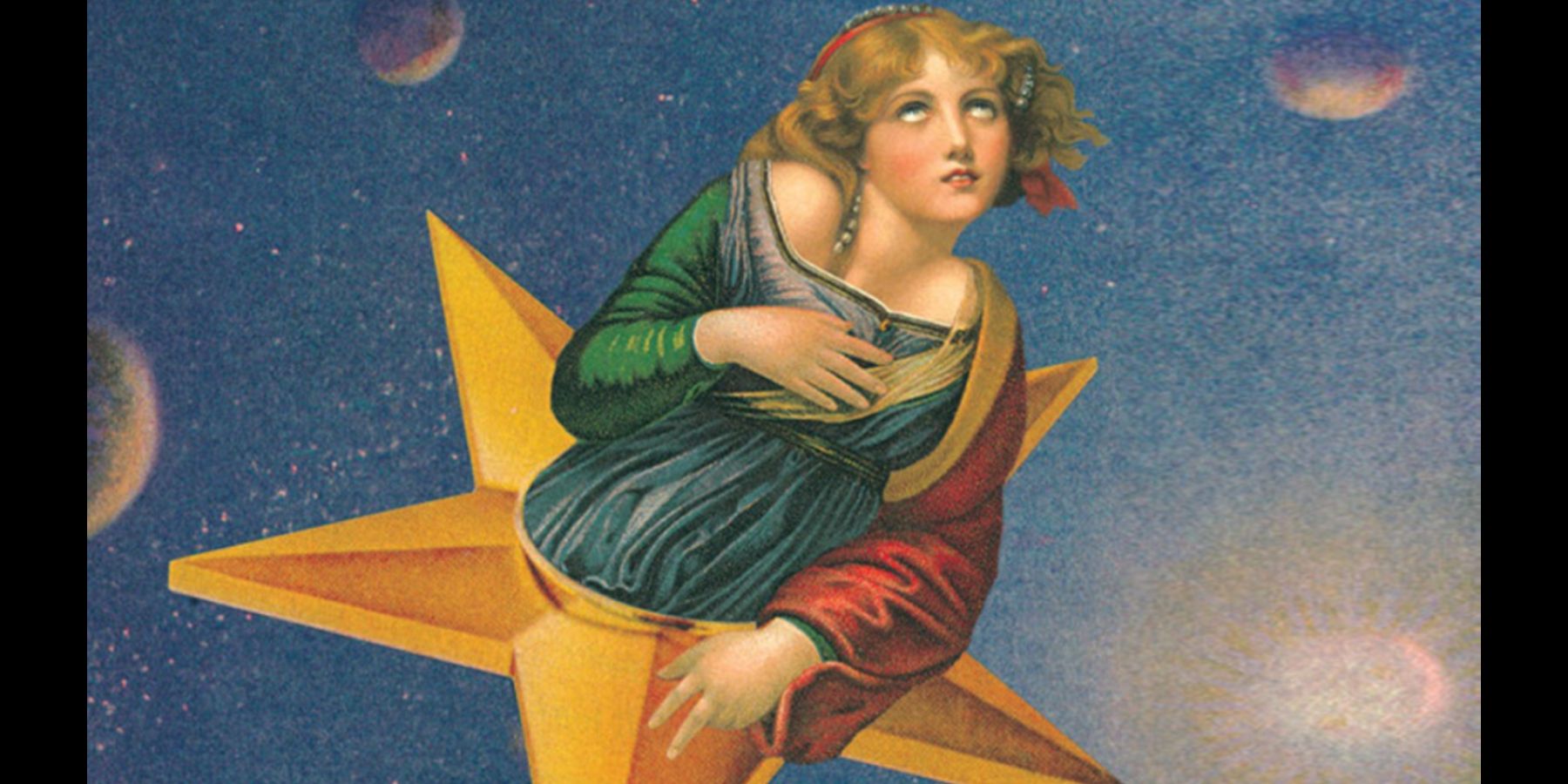
3 'Mellon Collie and the Infinite Sadness' (1995)
The Smashing Pumpkins
As mentioned before, classic rock as it was understood might've died a quiet sort of death in the 1980s, and then it was out of fashion by the 1990s, but The Smashing Pumpkins were one of the best bands keeping some kind of rock alive into that decade. This is best demonstrated by Mellon Collie and the Infinite Sadness, which is easily one of the biggest rock albums of all time, running for longer than a good many movies at a little over two hours all up.
So, it’s not the kind of thing you can put on casually, though there are highlights from Mellon Collie and the Infinite Sadness that maybe can be enjoyed in that way. The album as a whole, though, is immense and definitely something special, owing to how unapologetically eclectic and theatrical it’s willing to get throughout. The first half might be a tad better, admittedly, but there are too many solid tracks in the second half to even half-heartedly consider writing it off (you want to miss “1979”? That’d be a tragedy).
2 'Yankee Hotel Foxtrot' (2002)
Wilco
It’s pretty easy to recommend Yankee Hotel Foxtrot to anyone who likes indie rock from the early part of the 21st century, because that is the itch that Wilco scratches, and they scratch most thoroughly with this particular album. It’s great rock, and the kind of alternative that isn't too strange, but maybe a little out there because of some of the longer song durations and the fact that. It’s also quite a sad album, maybe best demonstrated by the fact that it kicks off with a track called “I Am Trying to Break Your Heart.”
It’s otherwise a bit hard to do justice to just what works here, but it’s such an effortless listen that you might as well give it a spin for yourself.
Thankfully, there’s catharsis with the brand of sadness on offer here, so it’s not necessarily a miserable kind of angst or loneliness conveyed throughout. Yankee Hotel Foxtrot is just a little of those things, or at least the right amount of those things to not become too overwhelming. It’s otherwise a bit hard to do justice to just what works here, but it’s such an effortless listen that you might as well give it a spin for yourself and see what all the hype is about, if you’ve not listened to this top-quality Wilco album already.
1 'Disintegration' (1989)
The Cure
With The Cure and their relationship to the rock genre, broadly speaking, Disintegration feels like the band drifting away from said genre to a greater extent than they had previously, and probably for the better. There is a lot to like about those earlier albums, but Disintegration is next-level stuff in terms of quality, and it also helps that it contains a handful of The Cure’s all-time (and indisputably) best tracks, like “Pictures of You,” “Lovesong,” “Lullaby,” and “Fascination Street.”
That’s before getting to all the deep cuts, too, with everything in Disintegration being immense. And then the album as a whole is also immense, because even if it’s “only” 12 songs long, they add up to a duration of over 70 minutes, yet it’s also great enough that you really don’t feel the length. The ambition here is undeniable, and so is the execution. If you want a great album that best demonstrates what alternative rock can be (admittedly a more mellow and spacey sort of alternative rock, but still), then Disintegration is 100% where it’s at; 100% what you should be listening to, like, ASAP.

The Cure - Trilogy
- Release Date
- November 10, 2002
- Runtime
- 223 minutes
- Director
- Nick Wickham
KioskNews shows a cleaned-up reading view extracted from the publisher’s page — the original always lives on their site, not ours.