Experts Explain | How India can make its Rs 20,000 crore carbon capture investment count
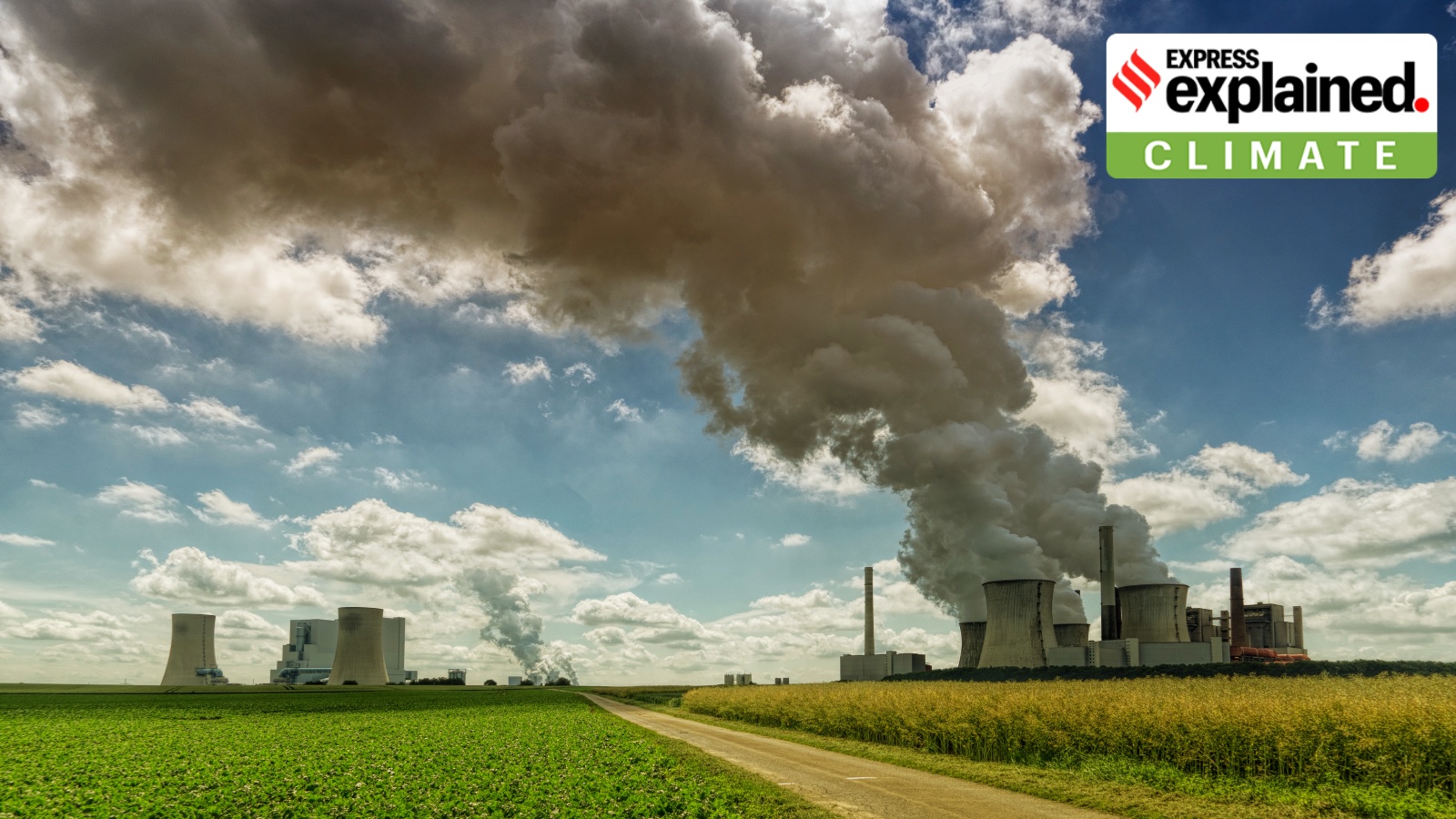
Most countries have expressed commitments to achieving net-zero by 2050. Twenty-six years in, that target remains a tall ask, especially given the present geopolitical landscape. In reality, humans will continue to emit significant amounts of carbon dioxide.
The need for a technology to capture, store, and, if possible, utilise CO2 has never been so pressing. However, achieving this combination at scale has proven to be a rare feat.
This is where carbon capture, utilisation and storage (CCUS) technologies can play a major role. These are a range of technologies that capture carbon dioxide (CO₂) emitted by industries such as steel, cement and power generation, preventing it from entering the atmosphere. The captured CO₂ can either be stored deep underground in suitable geological formations or reused to make products such as chemicals.
These technologies are particularly relevant for industries where cutting emissions is difficult, even with a shift to cleaner energy. However, their widespread adoption remains constrained by high costs and the challenge of scaling up existing technologies
The need of the hour is to place enablers across the innovation, finance, and policy domains to initiate a phased, credible deployment plan for carbon capture, utilisation, and storage (CCUS). India’s Union Budget 2026 has rightly earmarked Rs 20,000 crore for CCUS technologies over the next five years with the goal of achieving industrial growth while meeting net-zero targets.
However, the question is how the Budget would be used to accelerate CCUS adoption.
Phase 1: Investing in research and testing
Story continues below this ad
About 20% (Rs 4,000 crore) of India’s announced CCUS budget can be invested in translational innovation, research and breakthrough projects, as well as pilot validation. This portion of the budget must be used to assess the potential of diverse solutions to avoid costly, unpredictable failures in the future.
To achieve this, India must first leverage cross-sectoral artificial intelligence and machine learning (AI-ML) applications and prioritise tools to synthesise and screen novel sorbent materials. Ensuring the efficiency and effectiveness of such materials is important given their outsized contribution to CCUS process costs.
The Department of Science and Technology (DST) aims to slash Carbon Capture Deployment/Development costs from the current Rs 10,000–20,000 range to under Rs 2,000 per tonne of carbon dioxide. Reducing these costs makes the uptake of CCUS attractive and viable for hard-to-abate industries — those that struggle to reduce their greenhouse gas emissions and need CCUS the most.
Demonstration projects or pilots, ranging between 30,000 and 100,000 tonnes per annum, should be commissioned specifically targeting End-of-Pipe (EOP) technologies. These technologies separate pollutants immediately after they are created and do not require the entire production process to be abruptly modified.
Story continues below this ad
Second, India must also undertake front-end engineering design (FEED) studies to test and validate scaled-up versions (at least 200,000 tons/year). This will help ascertain the techno-commercial feasibility of capture and conversion technologies calibrated for Indian value chains.
Third, a detailed geotechnical study to determine the precise locations and storage potential of the Cauvery basin, the Cambay region, and the Mahanadi valley must be commissioned. Dedicated research in the Deccan Traps should also be supported, given their vast basalt formations capable of permanently mineralising carbon into stable solid minerals. India cannot realise a CCUS ecosystem merely on theoretical approximations. Validated, georeferenced data provides the prerequisite foundation to attract private-sector capital and fulfil regulatory mandates.
Phase 2: Building infrastructure and sharing risks
The government can earmark about Rs 9,000 crore to incentivise the formation of public-private partnerships (PPPs), wherein it commissions tangible and intangible platforms and the private sector contributes to or operates them. Experiences from the UK’s East Coast Cluster and the Netherlands’ Porthos projects show that PPPs offer the best of both worlds — avoiding the inefficiencies attributed to the public sector and mitigating the risk-aversion of private financing for frontier technologies.
The showpieces of this phase must include at least two fully operational large-scale carbon capture utilisation (CCU) units (about 200,000 tonnes of CO₂ per year). Such facilities can be located in the western and eastern zones, catering to large refinery and chemical clusters and the hard-to-decarbonise steel and cement industries, respectively. They will embody the large-scale techno-economic viability of CCU designed and built in India for the benefit of the world at large.
Story continues below this ad
This budgetary support can also initiate pilot-scale Carbon Capture and Storage (CCS) injection at validated storage sites (less than 300,000 tonnes per year), reducing risk by proving storage safety and performance in real conditions, enabling faster and more confident scale-up. Direct Air Capture (DAC), powered by clean energy, should also be developed and tested in real-world conditions during this phase.
Promoting carbon market linkages, including carbon contracts for difference, carbon markets, and the carbon credit trading scheme, while developing a legal framework for CO2 ownership, liability for transportation and post-injection, and carbon accounting.
Phase 3: Scaling up carbon capture commercially
The final allocation of Rs 6,000–7,000 crore should support the commercial scale-up of units beyond 1 million tonnes per year. By adopting execution discipline, India’s hard-to-abate industrial zones should seamlessly connect to proven geological storage sites, both on land and at sea. This will enable India to supplement developments in North America, the North Sea, the South China Sea, and West Asia.
At this stage, CCS should be integrated into India’s hydrogen strategy. Blue hydrogen (considered low-carbon hydrogen) is not the ideal destination, but a practical and acceptable tool that provides the decarbonization rails for the Indian industry till 2045 while avoiding stranding assets or workforce curtailment.
Story continues below this ad
A world-class CCUS ecosystem can emerge in India, provided the trifecta of institutional accountability, private capital, and execution speed is synchronised. Delivering verifiable CCUS outcomes should be the north star guiding funding disbursals. India has previously demonstrated its capacity to deliver world-scale infrastructure within aggressive timelines.
The potential of CCUS to revolutionise India’s economy and liveability is enormous and comparable to the Unified Payments Interface (UPI) revolution or ISRO’s space program. It offers a rare opportunity where India can permanently de-link its developmental aspirations from its carbon footprint on the planet.
Labanya Prakash Jena is a Visiting Senior Fellow, London School of Economics and Political Science (LSE), and Advisor at the Climate and Sustainability Initiative (CSI). Prasad Ashok Thakur is an alumnus of IIT Bombay and IIM Ahmedabad.
KioskNews shows a cleaned-up reading view extracted from the publisher’s page — the original always lives on their site, not ours.