Avraham Saide: The 100th anniversary of British-Palestinian passport No. 1
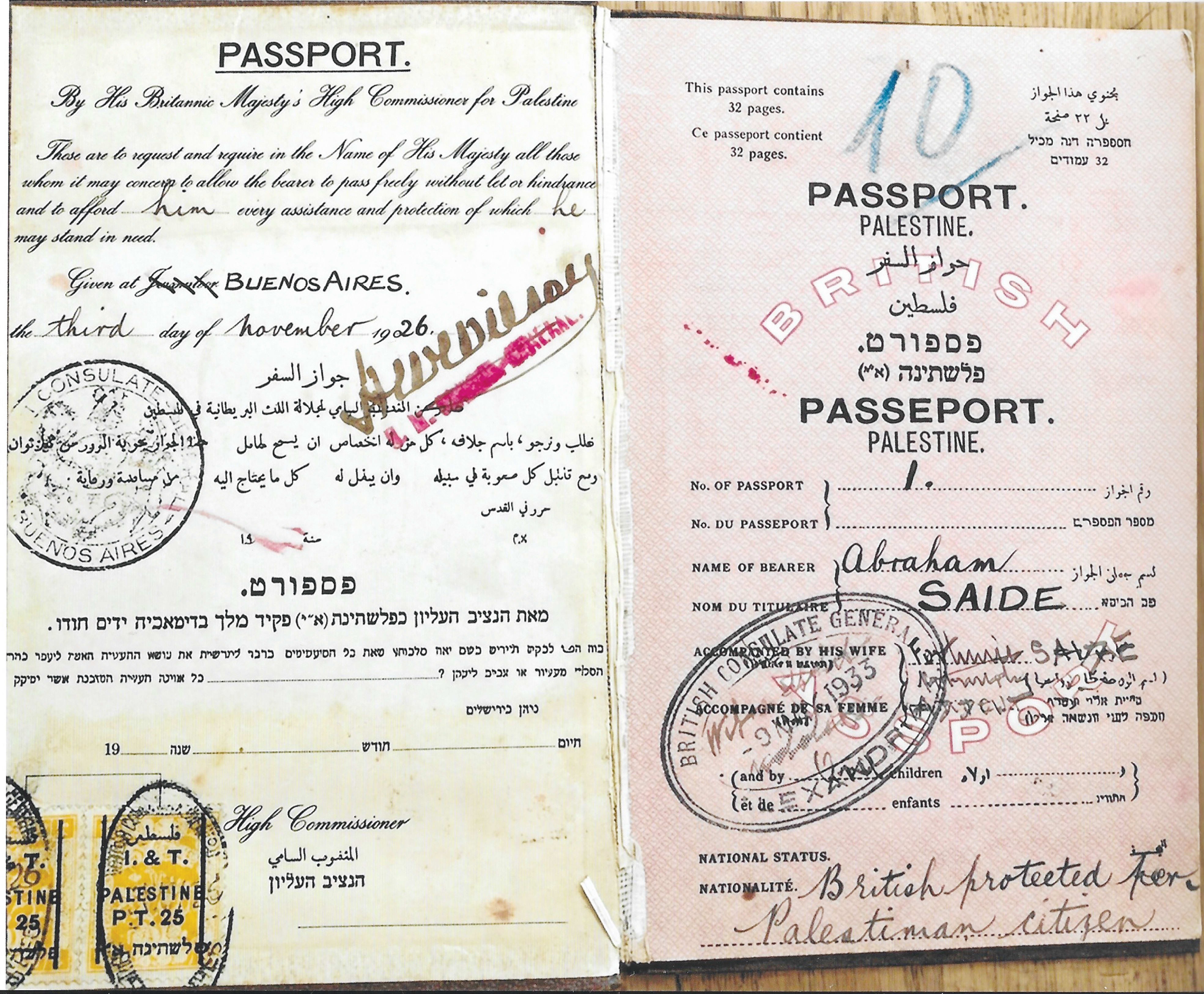
My grandfather, Avraham Saide, was born in Kikar Hatulim in Jerusalem in 1906, during the late Ottoman rule. His parents, Sion and Esther, were extremely poor – to the extent that they would go to the Ottoman barracks near Jerusalem’s Jaffa Gate to pick up discarded meat and stale bread.
In 1910, Avraham’s mother died at the age of 24 from tuberculosis, which she probably contracted from wearing infected, donated clothing.
After World War I, when Jerusalem came under British rule, Avraham’s father remarried – and astonishingly had another seven children. Avraham, however, did not get along with his new stepmother. So at the tender age of 17, he left Jerusalem to find his father’s family, who were originally from Aleppo in Syria.
His destination was Argentina, to find his Syrian Jewish first cousins living there. His route first took him to Syria, then occupied by the French, where he boarded a ship to Buenos Aires. His landsmen in Argentina were not as welcoming and accommodating as he had hoped.
On his second visit to Buenos Aires, he acquired the first registered British-Palestine passport, following the passage of the British Government’s Palestinian Citizenship in the Mandate Act in 1925.
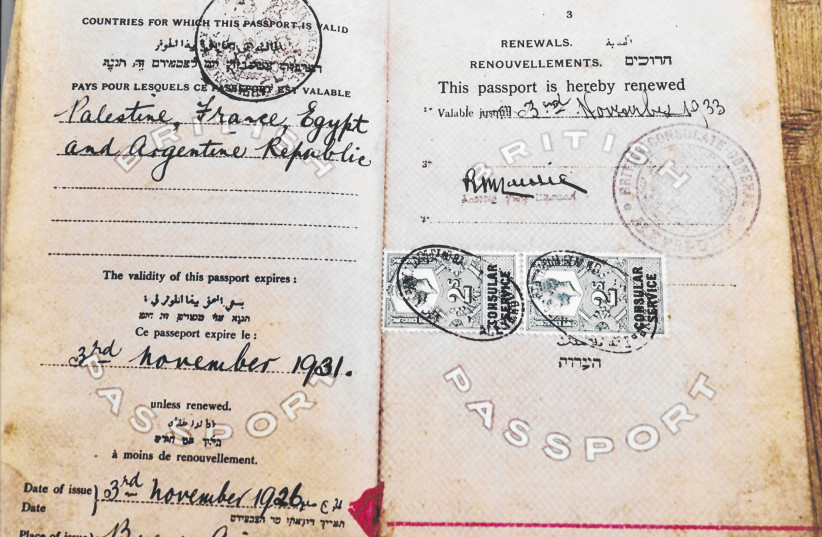
Golda Meir and David Ben-Gurion were also among the first recipients of this passport, but Avraham was able to procure one for himself from the British Consul in the Argentine capital.
After returning to the Yishuv (the Jewish settlement in Palestine) and selling cloth to earn money, he traveled to Alexandria with a Bedouin caravan, thereby bypassing the colonial railway from Jerusalem to the Egyptian city.
In Egypt, he met his 15-year-old future wife, Mazal Fortuna, at a local synagogue, and was invited to her parents’ home for a Shabbat meal. Ironically, she was to be engaged to someone else, but the family – being enthusiastic Zionists – were attracted to Avraham, since he actually came from Jerusalem, “the Holy City.”
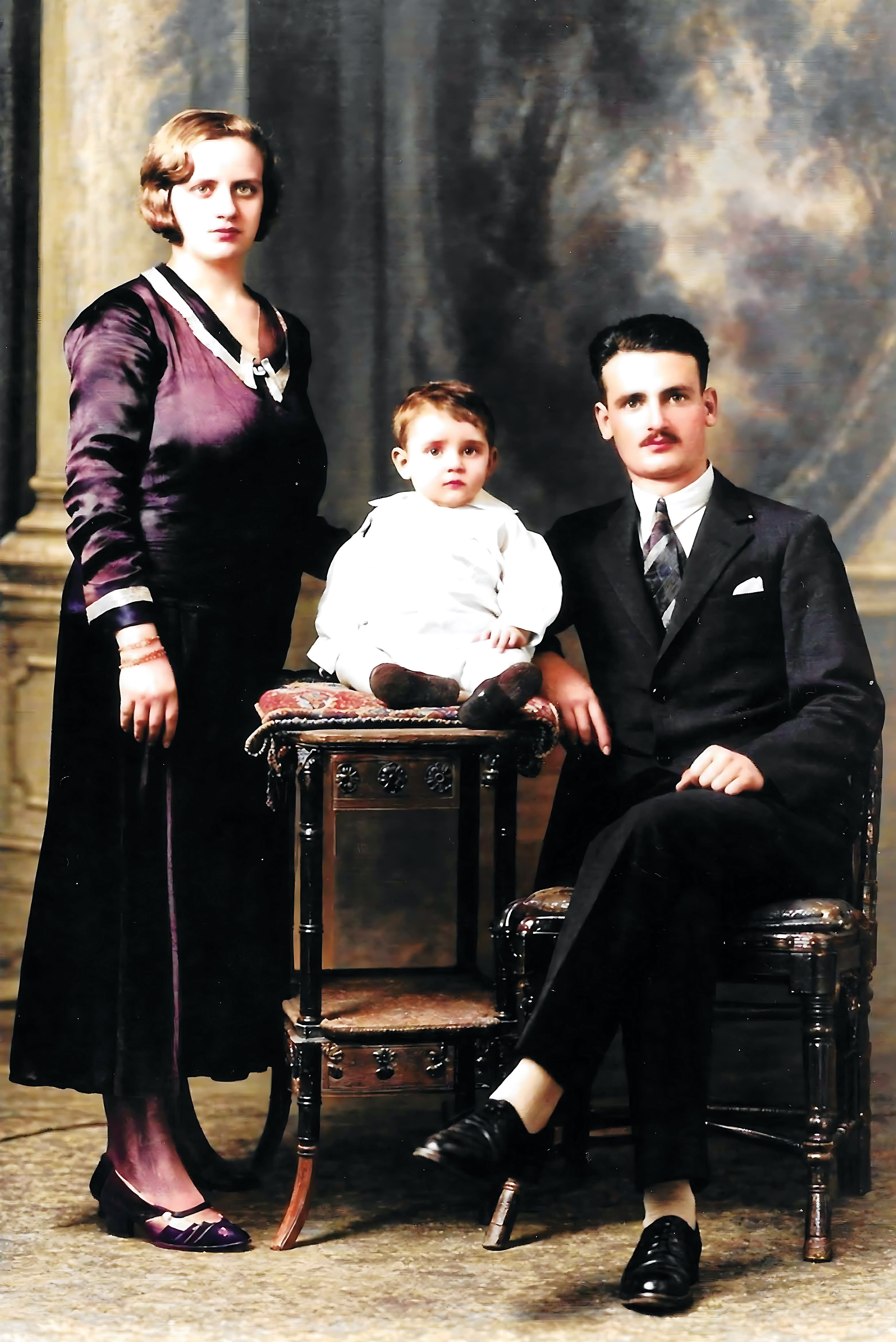
He then stayed and worked for a while in Alexandria in order to marry Mazal. They subsequently returned to the Yishuv with their first son, also named Sion, following the Sephardic custom to name after a living grandfather. Like many others at that time, the 1929 Arab riots and subsequent murders of Jews in Jerusalem, Safed, and Hebron soured Avraham’s attitude toward British colonial rule.
AFTER LIVING for a while in Petah Tikvah, the family returned to Avraham’s native Jerusalem. Although an Anglophile, Avraham became more and more opposed to the British presence and their determination to remain here and rule.
The Peel Commission Report of 1937, the Woodhead Commission of 1938, and the White Paper of 1939, which would allow in only 15,000 Jews each year, confirmed Avraham’s fears that the British were reneging on their commitments outlined in the 1917 Balfour Declaration – the British public statement supporting a Jewish national home in Palestine.
Field Marshal Erwin Rommel’s advance during World War II and the possible Nazi conquest of the Yishuv by the Nazis – before being defeated by Allied forces at El Alamein in 1942 – highlighted the Jews’ precarious situation.
This persuaded my grandfather to become a medical orderly at the age of 40, and to take an active part in the struggle for the establishment of a state of the Jews. He served in the Irgun underground, covertly carrying secret messages in sterile dressings to figures such as the future prime minister, Lehi’s Yitzhak Shamir, and to the Irgun’s Dov Gruner, one of the “Olei Hagardom” – those executed by the British.
Avraham explained to the British forces on guard duty that he could not open the dressings for inspection, as this would destroy their sterility and defeat the entire healing purpose.
Family flees Jerusalem Old City with six children
BY THIS TIME, Avraham had Hebraicized his name to “Sade,” and moved his family to the Shimon Hatzadik neighborhood in Jerusalem, near Sheikh Jarrah. During the 1948 War of Independence, shortly before the State of Israel was declared, the family had to flee with their six children, including my father Shlomo (Solly), then just three years old.
The Royal Jordanian Legion was advancing, under the command of Lt. Col. Abdullah al-Tell, who was responsible to Sir John Glubb (“Pasha Glubb”). Glubb was a British military officer who led and trained Transjordan’s Arab Legion between 1939 and 1956, and served as its commanding general.
The family immediately fled to the safer confines of western Jerusalem, where they were surrounded by multiple Arab forces. Jerusalem was under constant siege, and provisions were scarce. The family survived on meager rations of about eight gr. of bread a day.
Fortunately, on June 11, 1948, just hours before the designated UN ceasefire took force, Israeli forces circumvented the Arab lines leading to Jerusalem. The improvised Burma Road had been constructed, bypassing Arab-held Latrun and connecting Israeli positions with Bab el-Wad. This broke the Arab blockade of the access roads to Jerusalem, allowing provisions to be brought to its starving citizens.
Family remained in Romema until Six Day War
FOLLOWING THE War of Independence, Avraham and Mazal lived with their sons and daughters in a small apartment in Jerusalem’s Romema neighborhood, near today’s Central Bus Station. The family remained there until after the Six Day War.
My grandfather spoke eight languages and met old friends, both Arab and Jew, following Israel’s victory in the Old City and Jerusalem’s reunification. He lived to experience both Ottoman and British rule, as well as Israeli independence. His sons fought in all the post-independence wars, and he continued to work in the medical profession for the Health Ministry.
Avraham passed away in 1993, following the death of his wife a few years earlier. They were survived by five sons and three daughters.
He grew up wearing a Turkish fez before donning a British trilby, and obtaining, upon request, the first known passport issued during the British Mandatory rule.
He contributed to the fight for Israel, and lived to see its establishment in 1948. His life began the same year that Ben-Gurion arrived in Ottoman Palestine from Poland, and concluded while Yitzhak Rabin was the prime minister of the sovereign State of Israel.
On November 3, his descendants marked 100 years to the day when Avraham Sade formally received his historic passport, issued during the British Mandate of Palestine.
This is the story of an ordinary family caught up in the terror of war, and in the tribulations of the Jewish people during the last century. They came to build the Land of Israel, and in turn, were built by it.■
KioskNews shows a cleaned-up reading view extracted from the publisher’s page — the original always lives on their site, not ours.