Experts On Why Delhi's Winter Action Plan May Fall Short
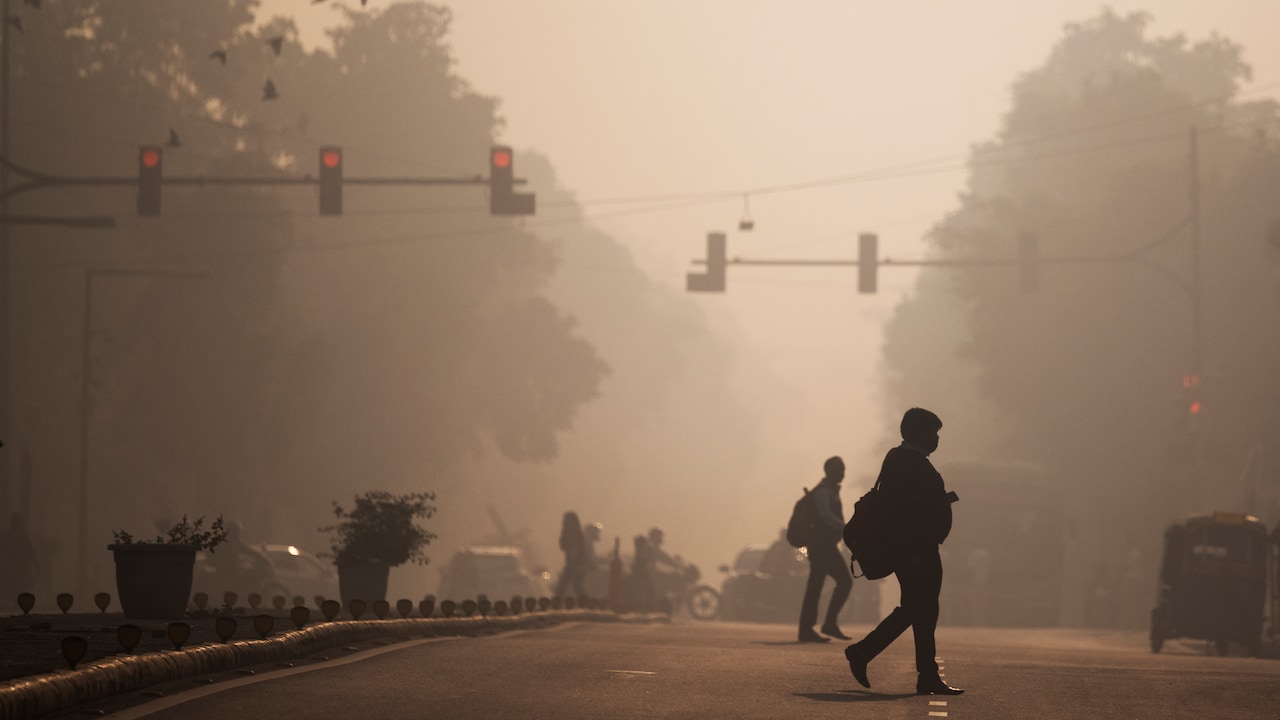
The Delhi government's Winter Action Plan 2026-27, aimed to tackle seasonal air pollution in the National Capital Region (NCR), has introduced a slew of measures. These include a "No PUCC, No Fuel" campaign, entry bans on non-BS-VI vehicles, phased construction bans, doubled parking fees, staggered office timings, and AI-enabled Command and Control monitoring.
The plan, unveiled in collaboration with the Centre, remains a seasonal "band-aid ritual", experts have argued, saying it fails to address root causes, ground-level enforcement gaps, and core scientific realities.
What The Plan Proposes
The winter action plan looks at a multi-agency coordination across the Commission for Air Quality Management (CAQM), Central Pollution Control Board (CPCB), Delhi Metro Rail Corporation (DMRC), Delhi Police, and local municipal bodies.
The plan lays down guidelines for strict enforcement of the "No PUCC, No Fuel" rule at 500 fuel stations equipped with Automatic Number Plate Recognition (ANPR) systems starting October 1. Out-of-state petrol and diesel vehicles below BS-VI standards face an entry ban starting November 1. Apart from this, there are also phased prohibitions banning demolition and outdoor civil works from November 1 to January 31, followed by a total C&D ban from December 10 to January 20, along with mandatory 100 per cent CCTV coverage at sites.
READ | Man Shares Reason Behind Asking Parents To Stay At Home During Winter
The plan further recommends 50 per cent work-from-home or two WFH days weekly, staggered government/MCD office hours, doubled parking fees, and targets to scale metro ridership. Mechanised sweeping, water sprinkling across major roads, road redevelopments, weekly hotspot inspections, sealing of polluting industrial units, and real-time monitoring via an AI Command Centre, are also part of the plan.
The Gaps
While the policy was rolled out a week ago by the ministry, several activists and environmentalists have hit out, criticising the plan. Environmentalist Bhavreen Kandhari points out that most measures simply rehash existing provisions under the Graded Response Action Plan (GRAP) without solving non-compliance.
Kandhari explains, "Delhi does not need another winter ritual of announcing restrictions, it needs to see them enforced on the ground. The Winter Action Plan brings several necessary measures, but most are already part of GRAP and have been announced before."
"What Delhi's children need is not a better plan on paper, but accountability for every missed enforcement, every open waste fire, every tree felled, every dusty road, every polluting vehicle, industry or thermal power plants and every construction site or brick kiln that violates the rules," she adds.
Hitting out at the government, Kandhari points at how the problem is perpetual and not a one-time thing. "Winter pollution is not created in winter. Emissions accumulate through the year, and by October-November we are simply seeing the consequences. The government must therefore move from seasonal crisis management to continuous source reduction, transparent data and time bound accountability across the NCR airshed. A Winter Action Plan can set the direction, but unless every agency is given clear responsibility, strength, training, equipment, measurable targets and consequences for failure, we will once again be managing the symptoms of a crisis rather than eliminating its sources."
Manoj Kumar, an analyst at the Centre for Research on Energy and Clean Air (CREA), also highlights a critical flaw in the plan's scientific prioritisation.
READ | Construction Ban, Dust Control: Delhi's Winter Action Plan Explained
Kumar explains, "The bigger gap is that many existing measures are still aimed at controlling PM 10 and dust, while PM 2.5 is the dominant pollutant in Delhi's winter pollution. A significant share of PM 2.5 is also formed in the atmosphere from gases released by vehicles, industries and other sources, yet there are limited winter measures targeting these gaseous pollutants."
Adding on how the problem must be fixed, Kumar argues, "The focus should therefore shift towards year-round control of PM2.5 and its sources, with the success of the winter plan ultimately measured by how much PM2.5 levels and emissions actually come down."
As the implementation of the winter action plan begins by all the relevant agencies, many experts have hit out, calling the plan a 'paper plan' distant from reality. Repeated control must be adopted instead of focusing on the problem in the last months or the year, they argue.
KioskNews shows a cleaned-up reading view extracted from the publisher’s page — the original always lives on their site, not ours.