"China Border Stable, Won't Let Guard Down With Pak": Defence Chief To NDTV
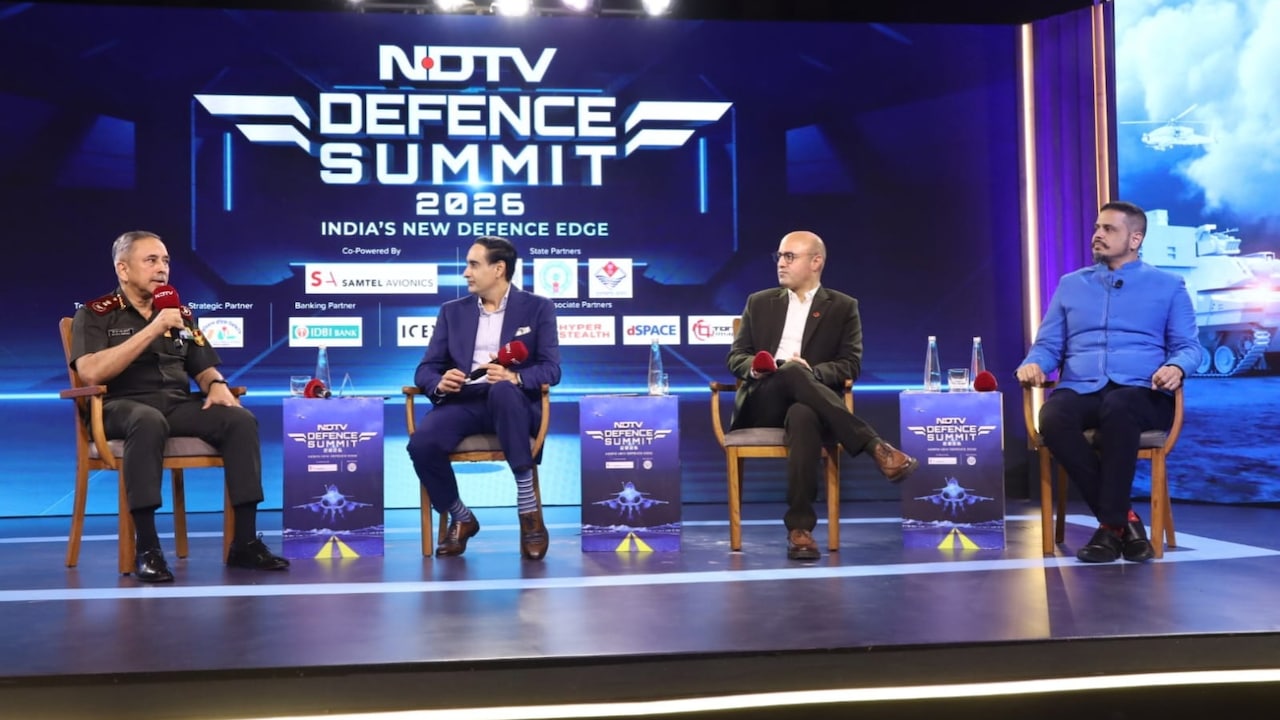
India is not letting its guard down when it comes to Pakistan or China and measures are in place to ensure that territorial sovereignty can be guarded, the country's top military leader has said.
In a wide-ranging conversation with NDTV's CEO and Editor-in-Chief Rahul Kanwal, Managing Editor Shiv Aroor and Senior Executive Editor Aditya Raj Kaul at the NDTV Defence Summit 2026 on Sunday, Chief of Defence Staff General NS Raja Subramani also addressed questions on Artificial Intelligence, integrated theatre commands, and the Mecca pact between Pakistan, Saudi Arabia and Turkey.
READ | AI Will Transform Battlefield In All Aspects: Chief Of Defence Staff To NDTV
"There is no doubt that future wars have to be fought in an integrated manner. And I will not only talk about fighting it through operational integration, but we also need to look at it in terms of capability integration. We do not now need to say what the Army will do, what the Navy will do, or what the Air Force will do. What we need to talk about is the effect that we desire to be executed, the capability we require for that effect and how we are going to do it in an integrated manner. The groundwork for theatre commands has already been laid, and I am sure that it's just a matter of time before it comes into place," the General said.
Operation Sindoor, the Chief of Defence Staff (CDS) pointed out, was a "classic example" where the three branches of the military fought and planned together as one and achieved joint objectives.
The China-Pak Question
Asked about the situation at the border with China and how things have progressed since the flare-up in Eastern Ladakh, General Subramani said there is stability.
Pointing to meetings between Chinese President Xi Jinping and Prime Minister Narendra Modi, most recently at the BRICS summit this month, the CDS said the two armies have contacts at the ground level and meetings take place from time to time.
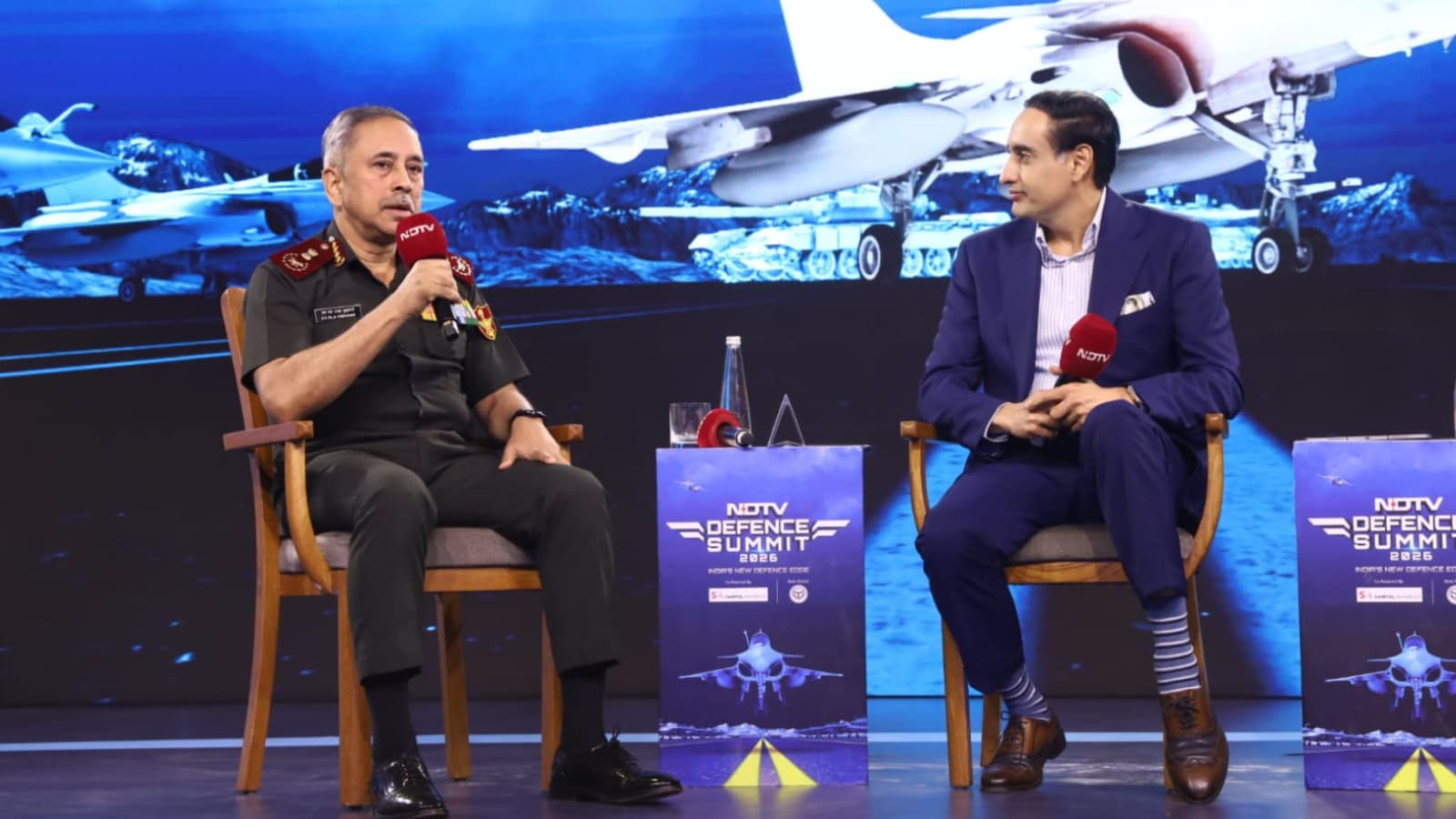
"As armed forces, it is our mission and also our job to ensure that our borders are safeguarded. We do not let our guard down and we have adequate measures to ensure that we are able to guard our territorial sovereignty...The situation on the border is, at the moment, quite stable and I don't think there is any cause for concern," he said.
READ | 'New Weapons Shouldn't Take Years To Integrate': Air Marshal Tejpal Singh At NDTV Defence Summit
On the lessons learned from Operation Sindoor, which was India's response to the terror attack in Jammu and Kashmir's Pahalgam, the CDS said the objectives were met and, like all armed forces, the Indian military continuously prepares and carries out contingency planning for future situations.
"We continuously analyse conflicts around the world, how the future and character of war are changing and what we need to do about it," he emphasised.
The situation in the Kashmir valley, he said, is stable and the credit for that goes to "a whole-of-government" approach and the integration between the armed forces, the police, the central armed police forces and the intelligence apparatus. Constant pressure is exerted on terrorists, whose numbers are declining, so that they are not able to mount any attacks on the forces or on citizens.
"As far as Pakistan is concerned, we are not letting our guard down. My job as the Chief of Defence Staff is to analyse these threats, take cognisance of them and make sure that our defence preparedness is of a high order. And the best way of deterring any threats or any misadventure by our adversaries is to ensure that we are fully prepared to respond quickly and decisively, and ensure that when we act, we act in a manner that the appropriate lessons are conveyed," he asserted.
Mecca Pact
On whether he saw the Mecca Pact between Saudi Arabia, Pakistan and Turkey having far-reaching consequences, General Subramani said many decisions are taken based on perceived interests at the time, which is especially important given the situation in West Asia.
"But alliances have to survive the test of time and they also have to survive when strain comes in and various interests collide. As far as India is concerned, we are watching the situation very carefully. We have also got a number of partners in West Asia with whom we are working. It's important for us that our sovereign interests are protected and we also act as far as our national interests are concerned. As a military, we are monitoring the developments carefully and making sure that we have adequate means and resources to take care of ourselves while simultaneously nurturing partnerships across the region," he explained.
READ | After Op Sindoor, India's Defence Push Faces A New Test. What Experts Said
"We cannot dictate what other nations do, but we can plan what we are doing, focus on where the threats are coming from and take adequate measures to deter those threats," he added.
Artificial Intelligence
General Subramani said he sees AI as "an opportunity and then as a challenge".
"All three services have progressed a great deal in terms of how to go about it. AI is going to transform the battlefield in all aspects, whether it be planning, logistics, decision-support or intelligence. For that, you require compute, data, networks, and skilled personnel. As far as compute is concerned, the defence forces are working very closely with the national AI mission and MeitY (Ministry of Electronics and Information Technology)."
Data, the Chief of Defence Staff (CDS) said, was siloed between the three services, but they have made efforts to ensure that their data schemas are correct and sharing can happen. AI has already been implemented in some areas, especially OSINT (Open-Source Intelligence) and predictive intelligence.
"We are looking at making our legacy systems smarter by infusing AI and are ensuring the new systems we procure have it. AI should also be able to act at the edge, it is not enough to have it at the centre - at the battle edge, where AI is required, the soldiers need to have it. So I can assure you that the armed forces are looking at it in a very, very serious manner... We are working with private sector players as well as the DRDO (Defence Research and Development Organisation) on this," he said.
KioskNews shows a cleaned-up reading view extracted from the publisher’s page — the original always lives on their site, not ours.