HBO's 'The Gilded Age' Is Even Darker and More Defiant in Season 4 | Review

Carly Lane is an Atlanta-based writer and critic who has been with Collider in some form or fashion since 2021. She considers herself a television nerd, diehard romance/sci-fi/fantasy reader, and nascent horror lover. Her fondness of books is only eclipsed by the towering TBR that her shelves can't possibly contain.
She is the author of A REGENCY GUIDE TO MODERN LIFE: 1800s ADVICE ON 21ST CENTURY LOVE, FRIENDS, FUN AND MORE, published through DK Books (an imprint of Penguin Random House) and currently available wherever books are sold.
Sign in to your Collider account
The Gilded Age currently holds a very interesting position on television. Originally, the series from Julian Fellowes, which the Downton Abbey creator largely co-writes alongside Sonja Warfield, had to set itself apart from Fellowes' previous hit period drama. Yet four seasons in, the HBO show's newest mission is less about building its own reputation and more about sustaining the positive momentum it's already drummed up.
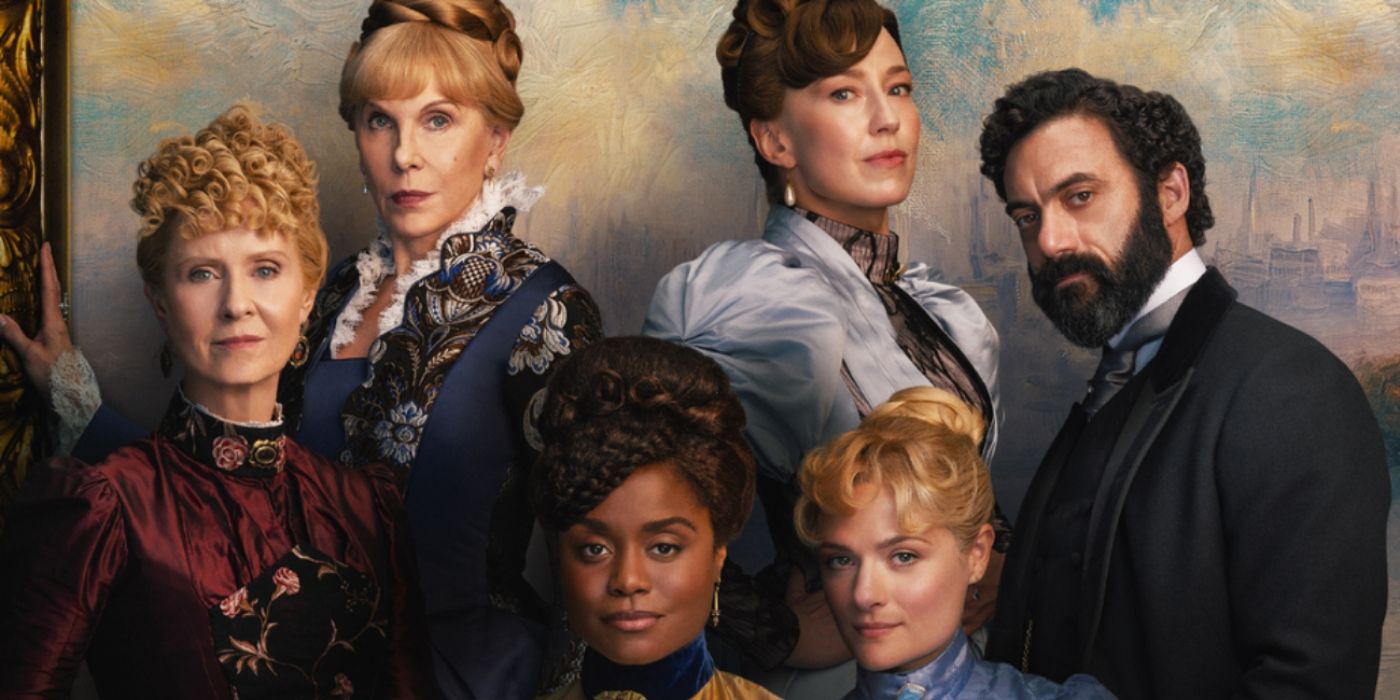
Alongside titles like its HBO sister series The Pitt and Apple TV's Slow Horses, it's also been one of TV's most consistent shows, maintaining a fairly reliable release schedule that gives no indication of slowing down (provided another renewal is in the cards). Between an ensemble that only seems to make room for more impressive names and an evolving, expanding story that strikes the right balance between over-the-top melodrama and feel-good viewing, The Gilded Age has unquestionably hit its stride. While Season 4 still isn't retreating from wading into much heavier subjects, upending several characters in the process, it still succeeds at being immensely compelling, courtesy of the strongest presences in the cast.
What Is 'The Gilded Age' Season 4 About?
When The Gilded Age Season 4 begins, new-moneyed matriarch Bertha Russell (Carrie Coon) isn't even in New York; she's traveled across the pond to be with her daughter, Gladys (Taissa Farmiga), as she prepares to give birth to her first child with Hector, the Duke of Buckingham (Ben Lamb). It's an opener that only emphasizes the present disconnect between Bertha and her husband, George Russell (Morgan Spector), whose visits to the office or his gentlemen's club have become even more frequent in the wake of the couple's decision to separate last season. Once Bertha is back on the same continent and seeks George out for an attempt at reconciliation, it's clear that love alone may not be enough to sustain them — especially when both husband and wife are navigating their own dilemmas.
In the aftermath of the Season 3 shooting that almost mortally injured him, George has made it his mission to uncover the identity of the man responsible. Meanwhile, Bertha finds herself in the position of once again battling her neighbor, Agnes van Rhijn (Christine Baranski), for the privilege of hosting a dinner for visiting U.S. President Grover Cleveland (Jim Gaffigan). While the two women have achieved a mostly peaceful coexistence, the looming event threatens to throw a new wrench into their rivalry. As for the next generation, Bertha's son Larry (Harry Richardson) and Agnes' niece Marian Brook (Louisa Jacobson) may have previously called off their engagement, but a chance encounter and a shared carriage ride bring all of those long-held feelings flooding back to the surface.
Thankfully, Season 4 provides more than one Gilded Age couple for fans to root for. After Dr. William Kirkland (Jordan Donica) popped the question, Peggy Scott (Denée Benton) should be merely counting down the days until she can live in happily wedded bliss — but there's continued meddling from her future mother-in-law (Phylicia Rashad) to navigate, as well as how becoming someone's wife could potentially conflict with her own growing success as a published author. As for Ada Forte (Cynthia Nixon), she might have previously resigned herself to widowhood, but the possibility of moving on arises in a most unexpected setting. Oh, and if you were delighted by the potential of a relationship for appearances' sake between Oscar van Rhijn (Blake Ritson) and the former Mrs. Enid Winterton (Kelley Curran), that dynamic only continues to evolve, with all the plotting and scheming that ensues.
'The Gilded Age' Season 4 Puts Several Characters Through the Wringer
Much of The Gilded Age's drama is cultivated through the divide between what characters present to the rest of the world and the truth they unveil behind closed doors, and that largely remains the case in Season 4. As far as New York high society is concerned, Bertha and George Russell are still a united front, and yet whispers about the strength of said union continue to follow them through their respective spheres of influence. It speaks to the enduring strength of Coon and Spector's chemistry, though, that their characters' marital separation only feels like a transitory point of tension this season — and that no matter what kind of struggle the Russells might be facing, they just need to let bygones be bygones and lean on each other to overcome it. As for their co-stars positioned across Fifth Avenue, Baranski and Nixon remain a crucial cornerstone of The Gilded Age's foundation, with the former's pithy comebacks and the latter's tender-hearted performance infusing the series with its trademark blend of humor and emotion.
Last season provided Benton's Peggy with even more of the spotlight — an appreciated focus for a series that previously struggled with how best to balance her development alongside the character's white counterparts — and Season 4 doubles down on that decision with even better results. One would think that Peggy's acceptance of Kirkland's proposal might effectively bring her storyline to a close, but The Gilded Age introduces an even more intriguing predicament for her to navigate. Does choosing to become a wife mean that she'll have to sacrifice her ultimate professional dream, or is it truly possible for her to find the ideal work-love balance? Kirkland's devotion to her is never in question, so the biggest conundrum arises when these two are forced to make some tough decisions about what their future together will have to look like. If there's any drawback to Peggy's journey this season, it's that there are fewer opportunities for her to keep in touch with her closest friend — and given Marian's own emotionally fraught arc, more scenes between the two women would have been a welcome balm.
Collider Exclusive · 8 Questions · 2 Minutes Which Iconic Romance Is Your Favorite? Harry & Sally · Love & Basketball · Heated Rivalry · Titanic
Four great love stories, and four completely different ideas of what love actually is. One is a friendship that took twelve years to admit itself. One is two people who refuse to stop competing. One happens entirely behind closed doors. And one lasts five days and never stops mattering. Eight questions decide which one is really yours.
🍂Harry & Sally(1989)
🏀Love & Basketball(2000)
🏒Heated Rivalry(HBO Max)
🚢Titanic(1997)
01
How does your love story start? The first scene tells you what kind of story this is going to be.
02
What do the two of you keep arguing about? Every great romance has one fight it has over and over.
03
How do you show somebody that you love them? Grand gestures are easy to write. This is the harder question.
04
What is actually standing in the way? There is always something. Which something tells you the genre.
05
Which romantic moment gets you every single time? Be honest. There is one that works on you and you know which.
06
What would you actually risk for the right person? Every romance asks this. Most people find out far too late.
07
Where are the two of you in ten years? Some love stories are about the meeting. Some are about the staying.
08
Which of these sounds most like something you would say? Eight questions in, this is the one that decides your romance.
Roll The Credits Your Romance Is…
Four love stories, four completely different ideas of what it means to be somebody's person. This is the one that matches how you actually fall, and what it would ask of you.
Harry & Sally
You do not fall for strangers. You fall for the person you have already been talking to for years, which is the slowest and by some distance the most durable way anybody has found to do this.
- When Harry Met Sally made the case that the best romance is an argument you enjoy, conducted over a decade, by two people refusing to admit what is happening.
- You want to be known rather than swept away. Somebody who remembers your worst story is doing better work than anybody arriving with flowers.
- The film is unusually honest about timing. These two are wrong for each other repeatedly until suddenly they are not, and neither of them engineered it.
- You would still be talking about everything at eighty. That is the entire promise.
Love & Basketball
You want a partner, not an audience. Somebody who wants their own life as badly as you want yours, and who would never ask you to be smaller to make the relationship easier.
- This is the rare romance where both people have a real career and the film takes both of them equally seriously.
- You would rather be pushed than protected. The right person for you is also a bit of a rival, and that never entirely goes away.
- It understands the actual problem in ambitious relationships. Not whether you love each other, but whose turn it is this year.
- You would still be competing at forty. That is how you would know it was working.
Heated Rivalry
The intensity was never the problem. The secrecy is. You are drawn to a love that lives entirely in private, and to the particular ache of wanting somebody you are not supposed to want.
- Heated Rivalry runs on the oldest engine in romance: two people on opposite sides, meeting in secret, getting far more attached than either of them planned.
- You keep your private life genuinely private, and something in you finds hidden things more real than public ones.
- The tension is not only between the two of them. It is between what they have and what it would cost either one to say it out loud.
- Years of this, and the whole story is really about whether either of them will finally stop hiding.
Titanic
You do not do this cautiously. When it happens for you it is immediate and total and it rearranges everything, and you would not accept a smaller version of it.
- Titanic gave us the biggest romance in film history and then made it last about five days, which is precisely the point of it.
- You measure love by intensity rather than duration. A few days of the real thing beats decades of something merely comfortable.
- The film is not only about the romance. It is about a woman who went on to live an enormous life afterwards because of it.
- You would still be telling this story at a hundred years old, and telling it exactly the same way.
Speaking of Marian, one could argue she's already been put through the wringer before now, and yet Season 4 pushes her into completely uncharted territory. Jacobson proves more than up to the task in navigating it on a performance front, though the fact that The Gilded Age is still juggling so many characters after all this time means Marian's storyline feels a bit unevenly paced, with the most significant momentum occurring in later episodes. The opposite is true for Farmiga's Gladys, who had a much bigger role to play in Season 3 but gets sidelined to a more supporting presence, with only a few scenes afforded for an exploration of her evolving outlook on marriage and motherhood. That said, if you're interested in following along with how Jack Trotter's (Ben Ahlers) newly achieved fortune has plunged him into both a different tax bracket and a fancier social circle, it is rather endearing to watch him take the necessary etiquette lessons — courtesy of his former colleagues at the van Rhjin house, of course.
Unquestionably the biggest delight to watch this season, however, has to be Ritson's Oscar and Curran's Enid. While the two have long been partners in crime to varying extents, their mutual decision to enter a more strategic arrangement for public-facing benefit gives their relationship a wholly new dimension. Enid's inherited money is enough to rescue Oscar from the certainty of financial ruin, while the van Rhijn name could give her an advantage that her previous marriage never quite held. Yet Enid's plan to be one of society's biggest movers and shakers teeters on the precipice of ruin — would New York's elite actually open their arms to someone who was once a lady's maid? — while Oscar's secret preferences could also jeopardize the facade of devotion this new couple is projecting. There's just as much plotting and manipulation inside their dynamic, too, and any time they're onscreen together, Curran and Ritson are deliciously riveting.
'The Gilded Age' Has Never Been More Confident in Its Identity
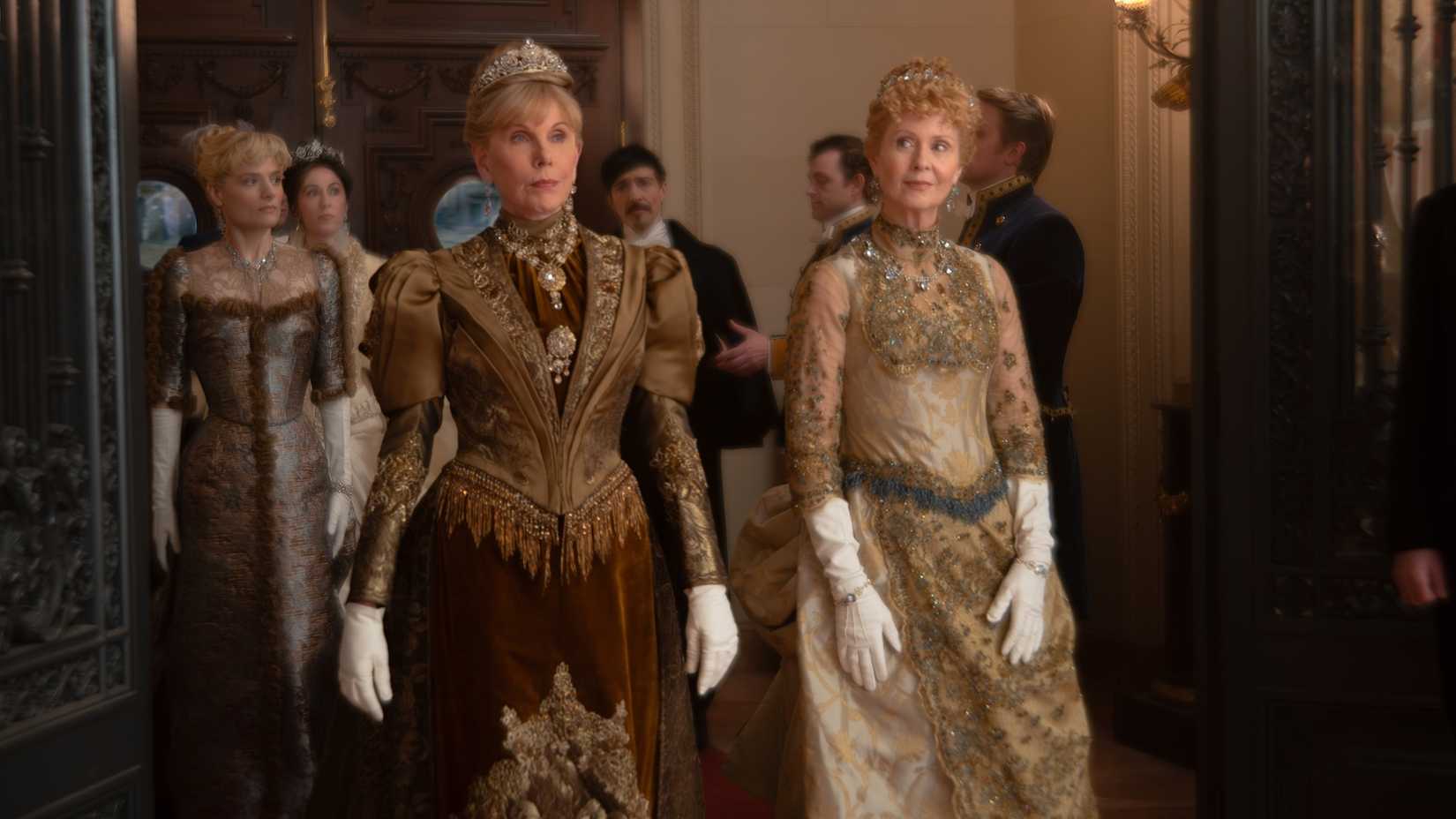
Around this same time in its original run, Downton Abbey had already shaken things up with a major character death, the ripple effects of which carried through the show's remaining three seasons. Having reached a similar milestone, The Gilded Age may be embracing the same melodrama, but the twists that this Fellowes show introduces aren't merely for shock value. Instead, the series is more interested in exploring the lingering consequences of certain choices and infusing them with honest, human reactions. Several arcs are a testament to how Season 4 isn't just resetting the board once again after a seemingly happy ending, a brutal romantic split, or a devastating financial loss; characters like George, Peggy, Marian, and Ada have all been markedly defined by what came before, and the story is richer, sometimes bleaker, and more defiant of viewer expectations as a consequence.
Rather than wiping the slate clean to maintain a simpler and significantly less interesting status quo, Fellowes and Warfield are clearly thinking about how last season's biggest scandals and triumphs will inform this newest batch of eight episodes – all of which were provided for review — and possibly even beyond. There's already a lot to recommend The Gilded Age, from a sprawling ensemble that knows exactly what kind of show they're in and performs accordingly to a story that never runs out of exciting drama to mine. Yet the biggest point in the series' favor, four seasons in, is that it's officially settled into the most confident version of itself. In a constantly shifting television landscape, sometimes that kind of steadiness is everything you could ask for.
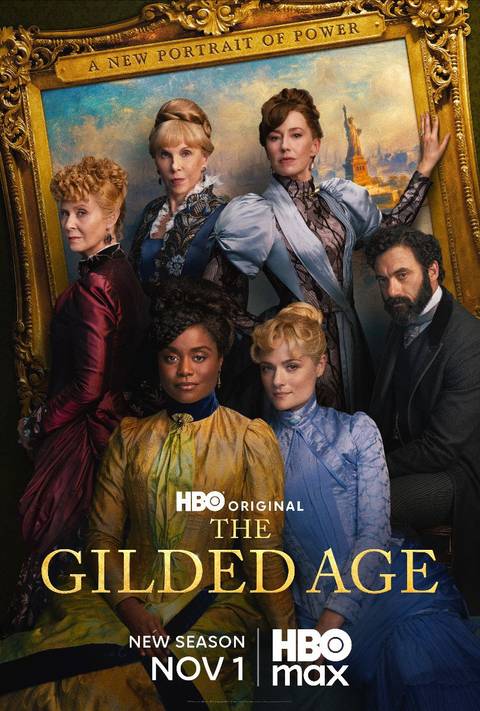
The Gilded Age Season 4 premieres November 1 on HBO and HBO Max.
- Release Date
- January 24, 2022
- Network
- HBO Max
- Showrunner
- Julian Fellowes
- Directors
- Deborah Kampmeier, Salli Richardson-Whitfield
- Writers
- Julian Fellowes
-

Bertha Russell
-

Morgan Spector
George Russell
Pros & Cons
- Season 4 isn't just resetting the status quo, introducing new wrinkles for fan-favorite characters.
- Carrie Coon and Morgan Spector's enduring chemistry makes the Russells' estrangement more emotionally complex.
- Enid and Oscar's new dynamic this season is a treat to watch, courtesy of Kelley Curran and Blake Ritson.
- Peggy's efforts to balance her professional aspirations and romantic hopes are given just as much screentime and weight.
- Some characters' storylines are a bit unevenly paced over the course of the season.
KioskNews shows a cleaned-up reading view extracted from the publisher’s page — the original always lives on their site, not ours.