8 Facts About The X-Men Even Diehard Fans Don't Know

Emedo Ashibeze is a tenured journalist and critic specializing in the entertainment industry. Before joining ScreenRant in 2025. he wrote for several major publications, including GameRant.
Six decades of X-Men mythology hide more secrets than most casual readers realize. Beneath the blockbuster films and household names sits an undiscovered history, one built on rejected names, forgotten villains, and a founding lineup that barely resembles the team fans picture today.
Superhero teams crowd the comic book scenery, from the Avengers to the Justice League, each built around a shared mission or crisis. The X-Men stand apart from that formula entirely. Where other teams assemble to fight external threats, the X-Men's greatest opponents often include ordinary humans, government agencies, and prejudiced legislation, not supervillains alone.
8 The Original 1963 Lineup Looked Nothing Like the Mainstream Team of Today
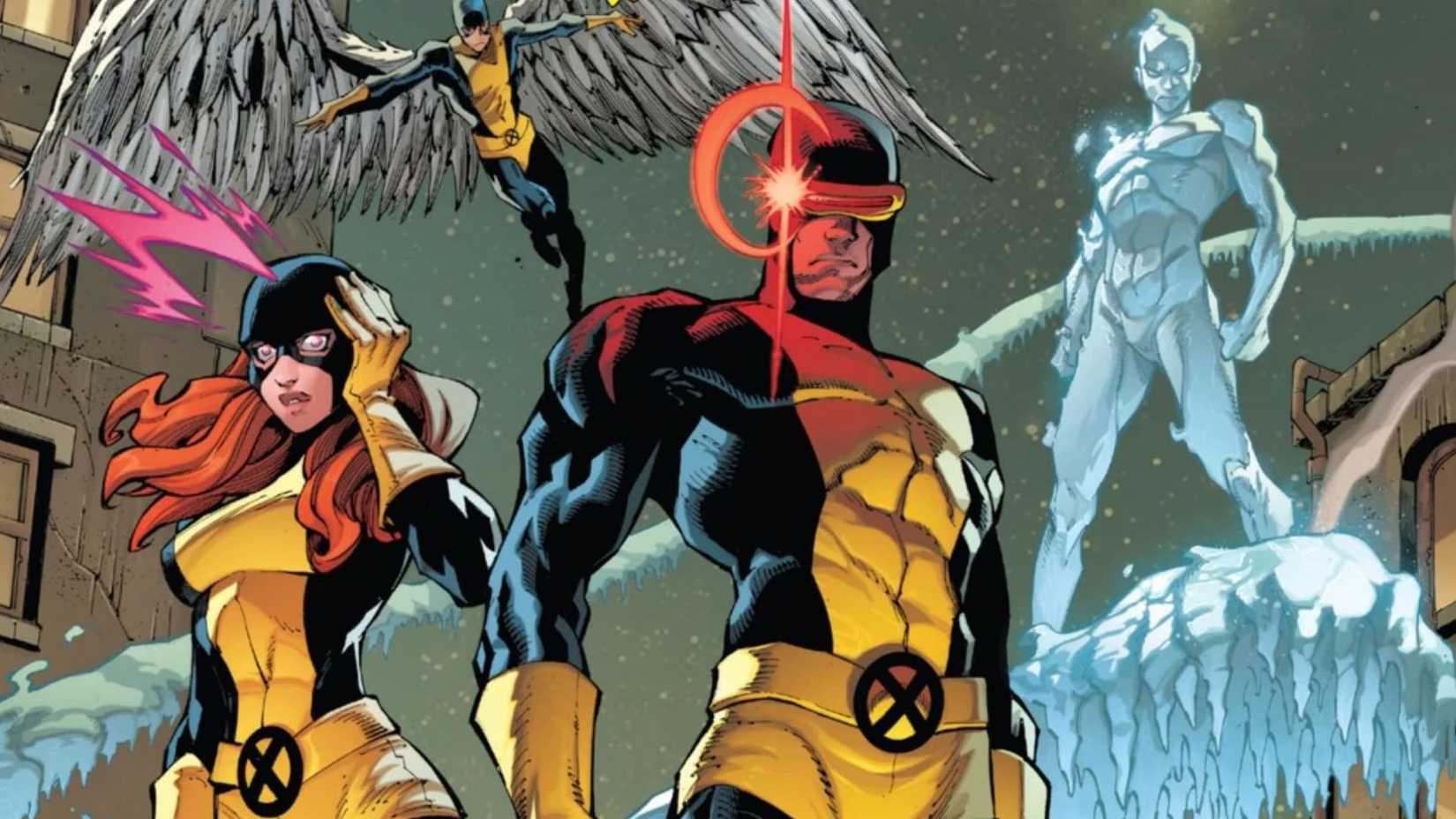
Stan Lee and Jack Kirby introduced this five-person squad in September 1963's The X-Men #1. However, think of the X-Men today: claws, weather control, and metal skeletons likely come to mind first. The founding team looks almost nothing like that image.
It featured Cyclops, Beast, Angel, Iceman, and Marvel Girl (later known as Jean Grey), who make up the entire roster under Professor Xavier's guidance. The team reads more like a group of gifted prep-school students than the battle-hardened unit later generations recognize, with no Wolverine, Storm, or Nightcrawler anywhere in sight.
The comic sold poorly for years, leading Marvel to essentially cancel it in 1970 by stopping new stories and publishing only reprints. That drought lasted until 1975, when an overhaul reshaped the franchise so completely that the "classic five" became a footnote rather than the face of the brand.
7 Spider-Man Declined Membership

Long before shared-universe crossovers became a marketing strategy, Spider-Man and the X-Men crossed paths in a much smaller, stranger way. In X-Men #27, Beast and Iceman approach Peter Parker directly with an invitation to join the team, which he (Peter) turns down without much hesitation.
The rejection makes sense given the timing: Spider-Man had recently declined a similar offer from the Avengers, and joining another team so soon does not appeal to him. Writers revisit the idea over the following decades, including a later encounter where Cyclops and Jean Grey invite him again.
Each time he is asked, his answer and rationale stay the same. Spider-Man values his independence and his civilian life in Queens far more than a spot on the roster, and Marvel never fully commits to changing his mind, leaving the "X-Man who never was" as a permanent piece of trivia.
6 Professor X And Magneto Were Modeled On Real Civil Rights Figures

Stan Lee and Jack Kirby introduced the X-Men in 1963 as a basic metaphor for diversity. Writer Chris Claremont later deepened this civil rights parallel during his run in the late 1970s and 1980s. He fully fleshed out the allegory by giving Magneto a tragic backstory as a Holocaust survivor.
As a result, the philosophical clash between Professor X and Magneto carries more historical weight than a typical hero-versus-villain rivalry. Their debate over integration versus separatism echoes the real ideological split between Martin Luther King Jr. and Malcolm X during the civil rights era.
Xavier's belief in peaceful coexistence between mutants and humans mirrors King's vision of integration through nonviolence. Magneto's conviction that mutants must seize power to survive draws from the more confrontational stance associated with Malcolm X's early rhetoric, born from years of witnessing prejudice firsthand.
5 Rogue's First Step Toward Heroism Came From A Toy-Tie-In Comic Marvel Can Barely Reprint

In her earliest appearances, Rogue works as a villain allied with mutant shape-shifter Mystique, absorbing powers and memories from anyone she touches. Her turn toward heroism doesn't begin in an X-Men title; it starts in Rom #32. There, she attempts to drain the powers of the titular space knight.
While targeting Rom the Spaceknight, a cosmic cyborg hero, Rogue absorbs a portion of his life force, along with his selflessness and nobility. That single encounter plants the seed that eventually pushes her away from villainy and toward the X-Men, where she becomes one of the team's most beloved members.
Rom was created to promote a Parker Brothers toy line that Hasbro now owns. Because of those complex licensing rights, this foundational Rogue story remains out of reach for most modern collections.
4 The Team Almost Wasn't Called "The X-Men" At All

Stan Lee's first choice for the team's name was blunt and literal: “The Mutants.” Publisher Martin Goodman rejected it outright, insisting readers wouldn't understand what a mutant even was. Lee disagreed but had no authority to overrule his boss.
Lee went home, thought it over, and returned the next day with "X-Men" instead. Goodman approved it immediately, though Lee later admitted the irony privately. If readers supposedly could not grasp "mutant," a name like "X-Men" offered little more clarity.
The "X" implied mystery, extra ability, and something worth investigating, an ambiguity that became a strength rather than a weakness. Six decades later, the name Goodman approved anchors one of Marvel's most valuable franchises.
3 Chris Claremont's X-Men Run Became The Best-Selling Comic In History

When Stan Lee and Jack Kirby debuted the X-Men in 1963, it struggled with low sales. The team’s fortunes would later change: Chris Claremont's 17-year tenure writing the X-Men transformed the franchise from a cancellation risk into Marvel's flagship property. His storytelling, first with Dave Cockrum and later with artist Jim Lee, built a sprawling, soap-opera-scaled mythology that keeps readers coming back issue after issue.
The partnership peaked in 1991 with X-Men (Vol. 2) #1 by Claremont and Jim Lee-illustrated relaunch, which became a genuine cultural event. Backed by multiple variant covers designed to encourage repeat purchases, the issue moved close to 8.2 million copies.
That figure still stands as the best-selling single comic book issue in history, decades after its release. What began in 1963 as a struggling five-person team, nearly canceled by 1970, ended Claremont's run as the most commercially successful superhero comic ever printed.
2 Krakoa Was Originally Villainous

Today, Krakoa is known as a sovereign mutant homeland, a living island that gives an entire species safety and self-rule. That is a recent reinvention, as opposed to the monster status Krakoa started with when it first appeared in Giant-Size X-Men #1.
Created by Len Wein and Dave Cockrum, Krakoa appears as a Pacific island that is secretly one massive, hostile mutant lifeform, capable of draining energy from any mutant unlucky enough to set foot on it. The original X-Men team goes missing investigating it, and Professor X responds by assembling an entirely new international roster for a rescue.
Polaris ultimately launches the island into space, seemingly ending the threat. It resurfaces only sporadically for decades until writer Jonathan Hickman resurrects the concept in 2019, transforming a Bronze Age monster into the political and cultural centerpiece of an entirely new era.
1 Cyclops Actually Killed Professor X

Few storylines shake the franchise's foundation quite like Avengers vs. X-Men. By 2012, Cyclops finds himself consumed by a fragment of the Phoenix Force, and the corruption strips away the calculated leader fans had followed for decades. Instead, someone emerges willing to burn the world to save his people.
Professor Xavier, the man who built the X-Men from five students into a movement, steps forward to reason with his former pupil one final time. Cyclops is no longer in control of himself and responds with a single blast that kills him instantly. Thus, the founder of the X-Men dies at the hand of one of his earliest and most trusted recruits. Cyclops subsequently acquires fugitive status while leadership of the X-Men passes through Wolverine, then Storm, then Kitty Pryde in the years that follow.
KioskNews shows a cleaned-up reading view extracted from the publisher’s page — the original always lives on their site, not ours.