President Mahama explains why Ghana must rethink regulation of TikTok, other new media platforms
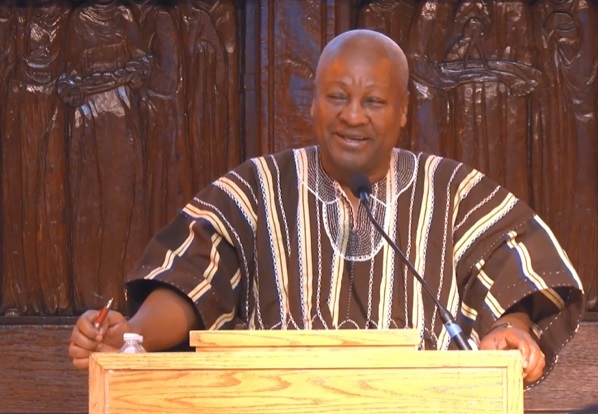
President John Dramani Mahama has explained why he believes Ghana needs a broader conversation on how TikTok and other new media platforms should be regulated, pointing to concerns over information integrity, anonymous content and the difficulty of balancing free expression with harmful or misleading material.
He said the rapid democratisation of information, where anyone with a mobile phone can publish content to a potentially large audience, had created challenges that traditional media regulation was not designed to address.
Speaking at a town hall meeting with the Ghanaian community in New York on Friday, September 25, President Mahama said TikTok had become part of a wider global debate over how to protect the integrity of information in the digital age.
“There is a new term that I call information integrity. The media has become democratised. Anybody with a mobile phone can disseminate information. There is a new medium called TikTok. And it's not only Ghana where people are wondering what to do to regulate TikTok. Because in all countries all over the world, we are wondering what to do to make sure that we have information integrity even with TikTok,” he said.
Anyone can publish
President Mahama said the nature of new media differed significantly from traditional journalism, where professional journalists and established media organisations have reputations to protect.
He cited the Daily Graphic and Channel One as examples of traditional media outlets where journalists put their professional credibility behind the stories they publish.
“Anybody who has a phone just puts it in front of him and just says whatever he likes. Once they put it out, it has an algorithm that shares it,” he said.
He said the ability of platforms to amplify content through algorithms meant that information could spread rapidly regardless of whether it met the standards traditionally associated with professional journalism.
The President also expressed concern about the use of anonymous accounts to publish insulting and what he described as vile content.
‘I don't mind being insulted’
President Mahama said his call for a discussion on regulation was not motivated by a desire to shield himself from criticism or insults.
“As a leader, I don't mind being insulted. I've been insulted. I was vilified. I was voted out of office. I have a tough skin; so if you insult me, I don't mind,” he said.
He said, however, that some recent arrests linked to social media activity had come to his attention through media reports, including cases in which people were allegedly arrested for insulting him.
“Definitely, a lot of these arrests, I don't even know about them. I also hear about them in the media. Some of them have been tracked and arrested and all that. And sometimes, it worries me, because sometimes the reason for which the person has been arrested, really, they say, is because he insulted me,” he said.
President @JDMahama on why he wants a stakeholders forum on social media and insults. He was speaking at a townhall meeting with the Ghanaian community in New York on Friday pic.twitter.com/FVo05PmI5D
— DailyGraphic GraphicOnline (@Graphicgh) September 26, 2026
Where should the line be drawn?
President Mahama said the challenge was determining where legitimate freedom of expression ended and conduct that required intervention began.
He said government could simply instruct the police not to arrest people over anything they said, but questioned whether that would reflect the position Ghanaians wanted to adopt.
“I can tell the IGP, we can go to Cabinet and say, let anybody insult anybody. Let's leave it free for all. Don't arrest anybody for anything they say. We can do that. But is that what we want?” he asked.
He said police intervention could also go to extremes, making it difficult to determine where to draw the line once arrests for social media activity began.
“So, let's all decide what we want to do. So, that we either find a way of regulating it or we say, when it comes to free expression, anybody can say whatever he wants,” he said.
A collective decision
It was against this background that President Mahama said the question of regulating new media should not be determined by government alone.
He proposed that the Ghana Journalists Association (GJA), Media Foundation for West Africa (MFWA) and other stakeholders come together to examine the issue and make recommendations.
“What we should do is for the Ghana Journalists Association (GJA) and the Media Foundation for West Africa (MFWA) to bring all the stakeholders together and hold a workshop or a forum.
“Let’s all collectively take a decision on what we want to do with the new media. Should the police get involved, or shouldn't they get involved? How do we regulate it? You come out and tell us,” he said.
He said the recommendations from the forum would be placed before government to guide how such matters should be handled.
President Mahama also stressed that while Ghanaians valued freedom of expression, he did not consider it an absolute licence, citing the consequences that could follow a threat against the President of the United States as an example.
DISCLAIMER: The Views, Comments, Opinions, Contributions and Statements made by Readers and Contributors on this platform do not necessarily represent the views or policy of Multimedia Group Limited.
Tags:
DISCLAIMER: The Views, Comments, Opinions, Contributions and Statements made by Readers and Contributors on this platform do not necessarily represent the views or policy of Multimedia Group Limited.
KioskNews shows a cleaned-up reading view extracted from the publisher’s page — the original always lives on their site, not ours.