The first batch of Android XR smartglasses made me rethink my stance on specs without displays

I still want models with built-in screens, but Google’s first run of intelligent eyewear has a lot to offer.

Sam Rutherford for Engadget
The first device powered by Android XR came out last year when Samsung released the Galaxy XR headset. But this fall, Google is taking its augmented reality platform in a different direction with the launch of intelligent eyewear from partners such as Warby Parker and Gentle Monster. This gives Google its own version of lightweight smartglasses to rival competitors like the third-gen Ray-Ban Meta line, and after testing them out, it made me reconsider my feelings about smart specs without built-in displays.
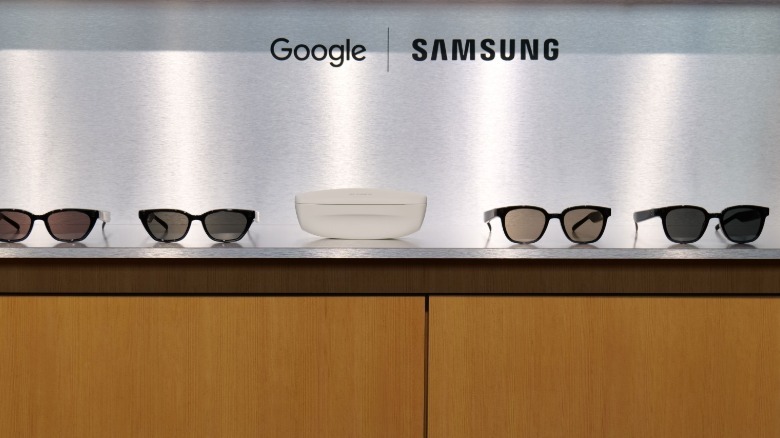
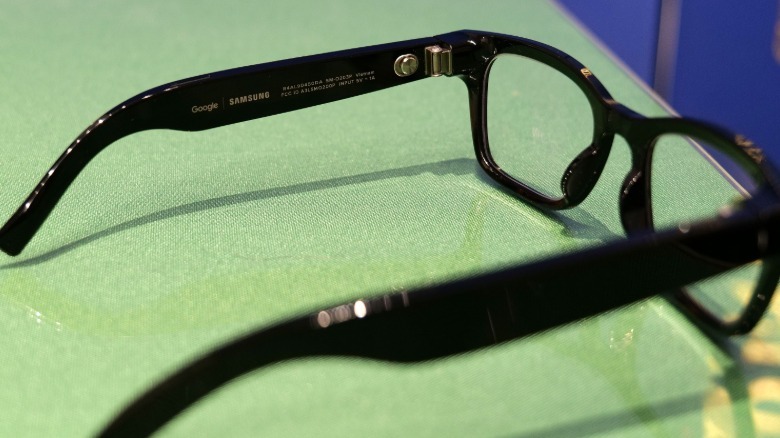
As this first generation of intelligent eyewear is a bit of a departure from previous Android XR devices, I think it's important to get some of the basics out of the way first. For this family of specs, Google is in charge of the OS while Samsung is handling much of the tech — including things like the cameras, mics, touch sensors and more. All of that then gets handed over to Warby Parker and Gentle Monster, who are in charge of the glasses design, lenses, general sales and customer support.
 Sam Rutherford for Engadget
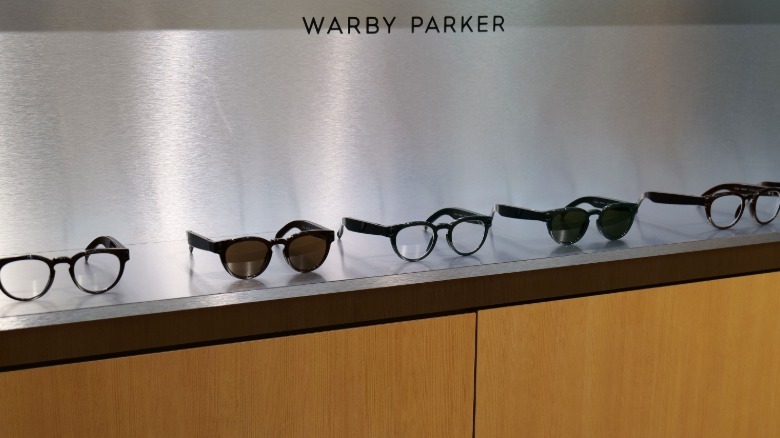
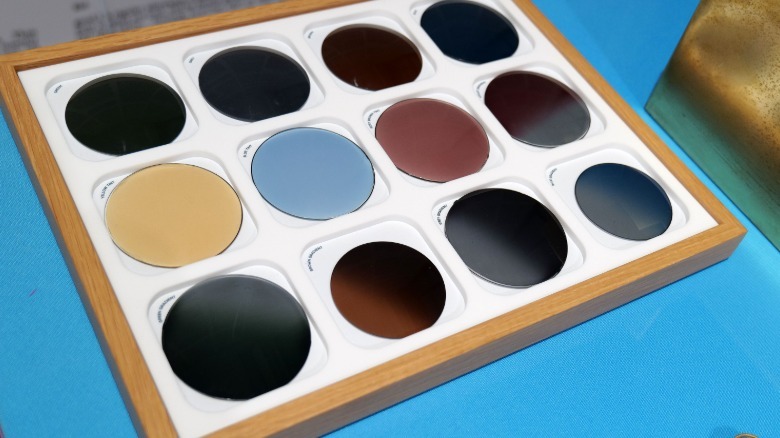
Right off the bat, this seems like a great division of responsibilities because it allows each company to do what they're best at. Google handles the software, Samsung takes care of the hardware and the real glasses makers ensure you have good-looking frames with the right prescriptions (you can even opt for transition/photochromic lenses). And right out of the gate, it feels like there's already a lot of interesting styles and color combos to choose from, regardless if you're a bit more fashion-forward or if you, like me, prefer a more traditional frame.
Another important thing to note is that while Gentle Monster's eyewear will be a touch more expensive than Warby Parker's models ($449 and $395, respectively), they will have the same general tech specs. Those include the same 2GB of RAM and 64GB of storage, a 12MP camera (that also handles up to 3K video), stereo speakers, far-field mics and a built-in touch sensor. Battery life is also the same across the board with around nine hours of use on a single charge, while the case for the glasses stores enough juice for multiple full charges.
 Sam Rutherford for Engadget
Furthermore, you won't be required to have a paid Gemini plan to use any of the features of the glasses; it's all free. These glasses will even work with both Android devices and iPhones with feature parity across both OSes. That said, there won't be any options with a built-in display, which means Google won't have a true rival to the Meta Ray-Ban Display glasses, at least not yet.
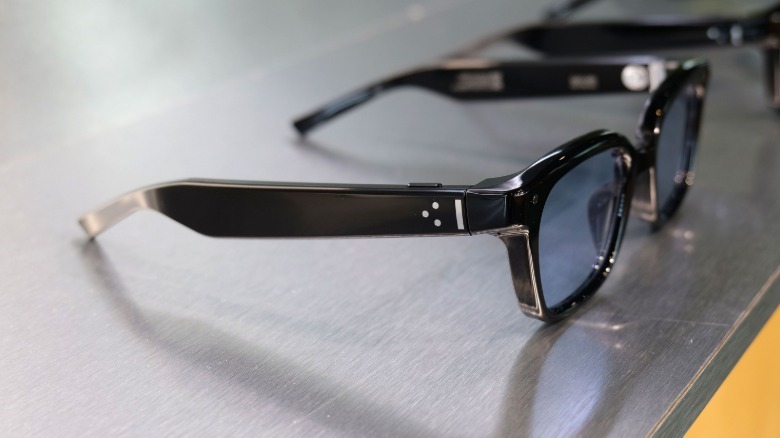
When it comes to features, it's no surprise that these glasses have a lot of overlap with the Ray-Ban Meta specs. There's a physical button near the right temple for capturing images: A short press takes a picture while a long press records videos. There's also a touch sensor built into the right arm for doing stuff like controlling volume, pausing audio or dismissing Gemini. And of course, the glasses are connected to your phone wirelessly (either Bluetooth or Wi-Fi depending on the situation) so you have access to streaming music, notifications, messages, supported apps and more. However, the real lynchpin of the entire platform is Google's AI, which can be easily summoned via voice controls or by performing a long press on the touch panel.
 Sam Rutherford for Engadget
Now I'll admit that I don't interact with Gemini all that often when I'm using a phone or a laptop. When I already have access to a screen, a keyboard and all sorts of dedicated apps, so I find I can often perform tasks faster manually than asking an AI assistant to do them. But when wearing smartglasses, it's a whole different story. If you want to respond to a text, get turn-by-turn directions or start some tunes, you can do all that hands-free with simple voice commands while keeping your phone in your pocket. Granted, that is sort of table stakes for smartglasses these days, but being able to walk around with your head up while dodging traffic or other pedestrians can't be understated.
But it goes deeper, because thanks to Gemini's intelligence and persistent memory between conversations, the AI in your glasses has a much deeper understanding of how to help you. Instead of constantly having to say a wake word all the time, you can have more natural back and forth dialogue. This allows you to get updates on your events, make adjustments to questions and pick up on previous queries even when they happen throughout the course of your day (you can specify how long you want Gemini to remember conversations).
 Sam Rutherford for Engadget
Where things get really interesting is the combination of computer vision and AI, which allowed me to do things like pick up a physical invite card and simply ask Gemini to add it to my calendar. No need to grab my phone, open up an app and add details like the time, date and location myself. I was also able to do things like simply look at a bunch of different ingredients and ask Gemini to make a smoothie from what was in front of me. It can even do rough estimates for how much of a certain food has been added, so if you're not worried about being super precise, you can leave your measuring cups in a drawer. And if you run out of certain foods, you can easily tell Gemini to add something to your grocery list.
Then there are other features like live translation, which feels kind of magical. The glasses are designed so that the mics are directed in a cone-shaped space in front of you, so that even in a room with other conversations going on, the glasses don't get confused. Not only does this let you switch speakers naturally just by looking at someone else, Gemini will even adjust the output of a translation to sound similar to the original speaker. This allows you to follow along in real-time almost as well as someone who speaks the language naturally.
 Sam Rutherford for Engadget
That said, the thing that impressed me the most about these Android XR glasses is the platform itself. Compared to some rivals where a lot of features feel like a work in progress, Google's OS feels much more mature. This includes little touches like dedicated sounds when Gemini accesses your camera, when the glasses take a photo or video, when Gemini leverages external AI and more. Google has done a pretty good job of translating a lot of the most important features you use on your phone to a medium without a screen.
Then there's Google's approach to privacy, which looks to be a step up from the competition. In addition to each pair of glasses coming with an LED indicator that blocks you from taking pictures or videos when it's covered up or disabled, Google also isn't supporting features like livestreaming video directly from the specs. Furthermore, Google says images and info sent to Gemini will stay on your device and will not be used to train AI or for ad targeting. That might not sound like much, but considering Google owns YouTube and generates billions from advertising, the simple act of leaving money on the table in favor of privacy is a welcome departure from Meta's glasses. Those have always felt like they are meant to expand the reach of Facebook and Instagram.
 Sam Rutherford for Engadget
The one caveat to all this is that you do have to buy into talking to and relying rather heavily on Gemini. I'm still not sure I'm 100 percent on board with that, but at least for me, these glasses make a better argument for always-on AI support than almost any other class of device I've used. So while I'm still waiting for companies to deliver streamlined specs with built-in displays, these audio-first options feel like much more than a stepping stone towards that. They're surprisingly full-featured, and I don't think it's a stretch to say that compared to rival assistants like Siri, Muse and others, Gemini is the smartest of the bunch. So even if you primarily want these for playing music, keeping tabs on your schedule and getting occasional help from AI, Google's first batch of Android XR-powered intelligent eyewear feels like it's already jumped to the front of the pack.
Pre-orders for the new family of Android XR intelligent eyewear from both Warby Parker and Gentle Monster begin today with official sales slated for December 10.
KioskNews shows a cleaned-up reading view extracted from the publisher’s page — the original always lives on their site, not ours.