Japanese bond funds see record inflows as yields attract European buyers
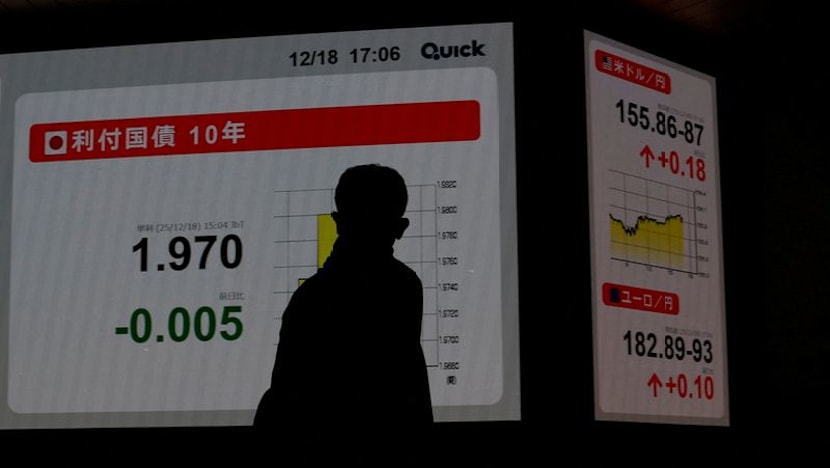
LONDON, Aug 25 : Japanese bond funds have seen record inflows this year as global investors, including from Europe, are attracted by the high yields on offer, although many remain wary of the trade and say bond prices can continue to fall.
Japanese government bond (JGB) yields have risen sharply in recent years as inflation finally picks up, causing the Bank of Japan to raise interest rates. The Iran war, investor concerns about fiscal policy, and a very weak yen have been major drivers in 2026.
Data from Morningstar on Tuesday showed Japanese bond exchange-traded funds (ETFs) have attracted a record $1.5 billion in net inflows in the year to date, up sharply from $550 million across the whole of last year.
INFLOWS BEGAN IN 2025, TREND ONGOING
BlackRock said earlier this month that its Europe-domiciled Japanese government bond (JGB) ETFs had seen $1.4 billion of inflows this year, driven primarily by large wealth investors. That compared to a net outflow of $58 million last year.
"From a foreign investor's perspective, the inflow into JGBs really started in 2025 and the trend has been ongoing," said Wee Khoon Chong, a senior market strategist for Asia-Pacific at BNY.
"As JGB yields rise, it then becomes one of the investment choices."
Among foreign buyers this year, so-called real money investors such as insurance companies, government institutions and central banks had increased their holdings the most, he added, referring to BNY's data.
10-YEAR JGB YIELD HITS HIGHEST SINCE MID-1990S
The 10-year JGB yield rose to 2.93 per cent earlier this month, its highest since the mid-1990s according to LSEG data. That's up from 2.1 per cent at the start of the year and 0.1 per cent at the start of 2022. Yields move inversely to prices.
It is now within striking distance of the symbolic 3 per cent-mark, following more than a decade of zero inflation and massive central bank debt purchases that kept Japan's bond yields around or below 0 per cent.
However, the flows remain very small compared to the size of the overall market, which stands at roughly $8 trillion, or 1,300 trillion yen, and investors remain wary that yields could rise further and prices fall.
Ales Koutny, head of international rates at Vanguard in London, said he maintains a short position — a bet that yields will rise — in shorter-dated JGBs in expectation that the Bank of Japan will need to raise interest rates relatively sharply.
Yet he said some longer-dated JGB yields, which at the 30-year point are above 4 per cent, were starting to look attractive.
The BOJ next meets in September and is widely expected to hike rates.
KioskNews shows a cleaned-up reading view extracted from the publisher’s page — the original always lives on their site, not ours.