Contractor paid but water never reached homes, Jal Jeevan probe in Madhya Pradesh finds
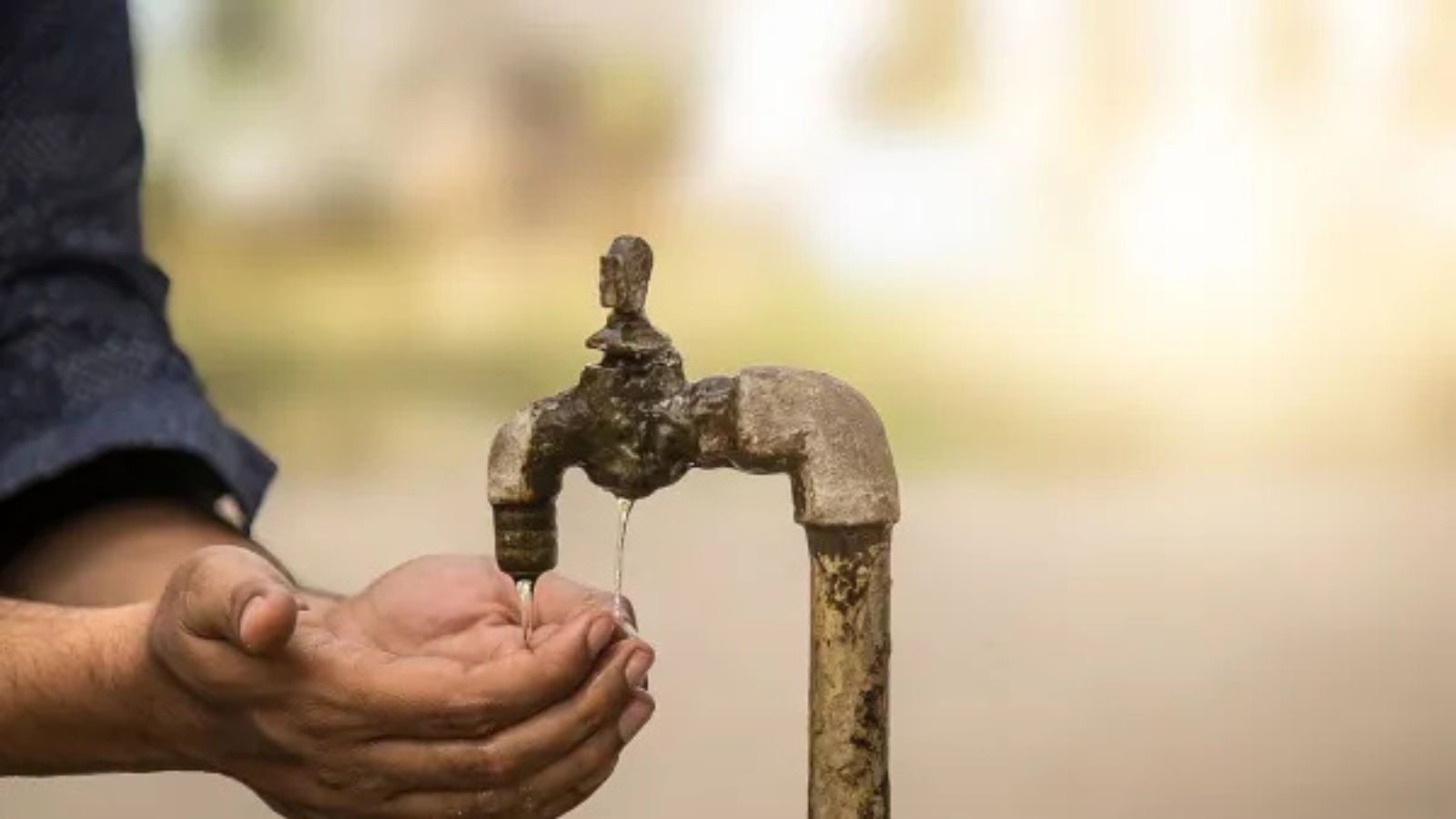
Collapsed tank, missing taps, incomplete pipework and halted water supply — these are among the findings of the Economic Offences Wing’s probe into Jal Jeevan Mission works in several villages in Madhya Pradesh’s Mauganj district, despite Rs 3.85 crore being paid to the contractor, officials have said.
The agency has alleged that the contractor and three Public Health Engineering officials colluded to execute substandard work and secure payments. The JJM department declined to comment on the findings, saying only that it had “no issues with the probe”.
The probe followed a complaint and physical verification of the works in four villages — Judmania Raghunath, Khatkhari, Karah alias Bairagarh and Shivrajpur. The projects were awarded in 2021 under the ‘Har Ghar Nal Jal’ programme, with a nine-month deadline for completion.
Investigators alleged that the contractor, in collusion with the three departmental officials, got substandard work executed and secured payment despite the deficiencies. The case is being investigated under the provisions of the Bharatiya Nyaya Sanhita and the Prevention of Corruption Act.
The EOW allegedly found that while pipelines had been laid in several places, the infrastructure needed to actually supply water to individual households was missing or incomplete. In one village, an overhead water tank collapsed during its first filling, an official said.
The contractor, Shivendra Kumar Tiwari, and then PHE officials A.P. Tiwari, Sanjay Pandey and J.P. Dwivedi have been named as accused in the case.
At Judmania Raghunath, the project included 7,600 metres of HDPE pipeline, a sump, a motor and 440 household tap connections. The contractor and the concerned sub-engineer allegedly told the EOW that the pipeline had been laid, a motor pump installed, electrical work completed, and 400 household connections provided.
Story continues below this ad
Physical verification allegedly found that the pipeline had been laid, but the sump was still under construction. The EOW also found that the household connections had not been completed as required.
As a result, the FIR says, when water was supplied through the main pipeline, it reached the “initial five to 10 distribution lines”, but could not move further through the network, leaving water unable to reach all the houses.
What investigators found
At the Khatkhari village water tank, the FIR says a 75-KL tank with 15-metre staging was constructed during the tenure of then executive engineer J.P. Dwivedi.
The structure, investigators alleged, was of poor quality and collapsed on March 27, 2026, when water was being filled during testing.
Story continues below this ad
The FIR says the collapse “prima facie” demonstrated the poor quality of the construction work.
At Khatkhari, the project included a 75-KL overhead water tank, sump, 4,400 metres of pipeline, a motor pump, electrical work and 315 household connections. The contractor claimed that the pipeline, motor and electrical work had been completed, along with the sump, and that 290 domestic connections had been provided.
The EOW found that distribution pipelines had been brought out in front of villagers’ houses, but the required fittings had allegedly not been installed. The FIR says “no fitting of any kind or concrete circular stand post had been constructed”.
At Karah village, the project allegedly involved a 250-KL overhead tank, sump, 11,500 metres of pipeline, five submersible motors and 740 domestic tap connections. The contractor told investigators that 11,500 metres of pipeline had been laid, four submersible motors installed and 740 household connections provided, the FIR says.
Story continues below this ad
The EOW found that pipeline work had been completed in only about half the area, investigators say. Water supply, which had reportedly continued for a few days after construction began, had “at present completely stopped”, according to the FIR.
The physical verification also allegedly found a discrepancy in the pumps. While the contractor had stated that four motors were installed, only one submersible motor was found at the site.
The household connections were also allegedly not found. The FIR states that “the work of… tap fitting for any domestic connection has not been carried out”. Instead, distribution pipelines had merely been brought out in front of villagers’ houses.
At Shivrajpur, the project provided for a 125-KL overhead tank, sump, 8,000 metres of pipeline, two motors, electrical work and 700 household connections.
Story continues below this ad
The contractor claimed that the pipeline had been laid, one motor installed, electrical work completed, the sump constructed, and 600 domestic connections provided.
The EOW allegedly found that pipeline laying had been completed only in part of the Gram Panchayat. Water supply had continued for a few days after construction began but had subsequently stopped.
The tank, sump and boundary wall were found to have been constructed. But the household connections were incomplete. The FIR says “the work of stand post and tap fitting for any domestic connection has not been carried out”, with only distribution pipelines brought out in front of villagers’ houses.
The FIR also records statements from villagers during the physical verification. They told investigators that some water had reached pipelines near the water tank during the initial days of construction, but the supply had subsequently stopped and had remained shut for several years.
Story continues below this ad
The agency says that although pipeline-laying work had been carried out across large parts of the villages, “water supply has never taken place in the area”.
KioskNews shows a cleaned-up reading view extracted from the publisher’s page — the original always lives on their site, not ours.