Harvard Professor Ranjay Gulati On AI Divide And How Courage Will Determine Winners | NDTV Profit Ignite
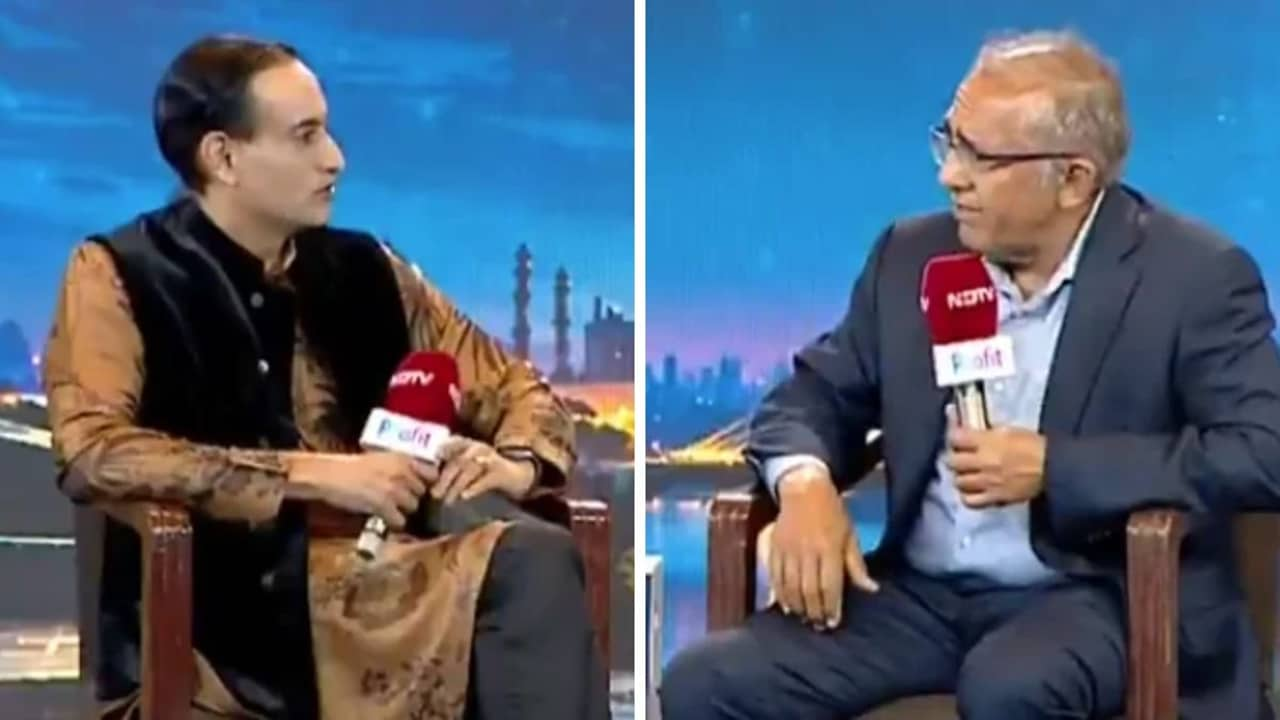
As the artificial intelligence revolution disrupts and dominates global tech spending, upending companies' plans and the global job market, courage has become a critical differentiator, said Ranjay Gulati, Paul R. Lawrence Professor of Business Administration at Harvard Business School, at NDTV Profit Ignite.
In an interview with NDTV CEO and Editor-In-Chief Rahul Kanwal, Gulati argued that companies must move beyond defensive strategies and develop the confidence to experiment, adapt and challenge assumptions about their future.
He, however, stated that there is a fine line between courage and recklessness.
"So, here's something we have in common. We are observers of business. I'll put myself also in this category. We're very opportunistic. We wait for the story to unfold. If it is successful, we'll call it courage. If it's not successful, we'll say reckless," he said.
"So, you know, I think there's a bit of an exposed-we call it Monday morning quarterbacking-that happens. There's a fine line between courage and recklessness. But I think the point, I think, we make is: recklessness is where you haven't thought through the consequences of your actions," he added.
He said that when business leaders plan for scenarios and map out a strategy for dealing with uncertainty, they often make decisions based on assumptions and beliefs about the world.
"We don't make them discussable. We go around showing hockey-stick growth charts, but we never talk about the assumptions or beliefs that are guiding that choice," he said.
He gave two examples to drive home his point -- of Kodak and Google.
"Kodak knew that digital imaging was coming. In fact, they had the largest number of patents for digital imaging. They had the prototype of a digital camera. But they had a belief, and the belief was: film has a ten-year runway. We have a ten-year runway to milk film, a 70% margin business, and in that period, we'll figure something out and do something with it. Right? Guess what happened? It was a two-year runway. Now, Fuji-which had the other 50% of the film market outside of Kodak-had figured this out. They had realised that film is not a ten-year story; it's a two-year story. And the outcome was very different," he said.
"If you look right now in the world of AI, what did Google do? Google wrote the Transformer paper that led to the rise of OpenAI and the whole industry. But they didn't want to do anything with it. Now they say it was reputational risk and worry about safety and all that. They were worried about their main franchise: that this thing takes off and our search business is dead. So, you know, let's just kind of wait it out. And they were doing a Kodak moment. And then they had Code Red and launching Gemini and all this other stuff going on. They had it all. They could easily have just crushed the market, but they didn't," he added.
He said that during an uncertain business environment, it is prudent to "surface your beliefs".
"What do you believe about the market? The question you're asking about foreign direct investment: where is that going? What is going to happen to our capital market? Where is the rupee going? What's going to happen to currency risk, and what's going to happen in terms of geopolitics in the world?" he added.
KioskNews shows a cleaned-up reading view extracted from the publisher’s page — the original always lives on their site, not ours.