10 Worst 'The Twilight Zone' Episodes, Ranked

Andrea M. Ciriaco is a long-time script reader and former entertainment editor who specializes in classic movies and Hollywood history. She was a student film critic at Kent State University for three years and worked at Warner Bros Studio in Burbank and The Safran Company for several years. Based on her vast taste and range of knowledge, many consider Andrea to be a walking IMDb who knows dozens of underrated movies and is a vital assesst to any trivia night. While movies are her expertise, Andrea is also a diehard fan of iconic shows including The Sopranos, Boardwalk Empire, Rod Serling's The Twilight Zone, Will & Grace and South Park. Some of her favorite filmmakers are Walt Disney,John Huston, Fritz Lang, Alfred Hitchcock, John Ford, Mel Brooks, Quentin Tarantino, Martin Scorsese and Howard Hawks.
Sign in to your Collider account
Rod Serling's The Twilight Zone is an iconic anthology series that defied the traditional formula of the small-screen production with its ingenious writing, all-star guest appearances, and influential episodes, ultimately solidifying it as one of the greatest shows of all time. While The Twilight Zone had a successful five-season run, like any television show, it's inevitable that there will always be some episodes that many consider to be duds or fail to meet viewers' expectations.
It's honestly difficult to pick out any episodes from the Fifth Dimension that are just flat-out bad. Certain episodes, like Season 4, Episode 7, "Jess-Belle," and Season 5, Episode 12, "Number 12 Looks Just Like You," aren't without some redeeming qualities. Overall, the majority of the issues lie within other areas, such as a lengthy runtime or a lackluster story that doesn't resonate as deeply as other episodes. From the baffling series finale, Season 5, Episode 36, "The Bewitchin' Pool" to the artistic contribution of Season 5, Episode 22, "An Occurrence at Owl Creek Bridge," these are the worst episodes of The Twilight Zone, ranked.
10 "The Bewitchin' Pool"
Season 5, Episode 36

The series finale, Season 5, Episode 36, "The Bewitchin' Pool," is an episode that had a promising premise and captured the fantasy-driven tone of The Twilight Zone, but the episode failed to reach its full potential due to production issues and delays. The episode centers around two children, Sport (Mary Badham) and Jeb (Jeffrey Bryon), who grow tired of their parents' constant fighting and find an escape to another place at the bottom of their swimming pool.
According to The Twilight Zone Companion, written by Marc Scott Zicree, the main production problem in "The Bewitchin' Pool" was the noise from the studio backlot made all the audio in the outdoor scenes unusable. Everyone re-dubbed their lines, but Badham, who is best known for her role as Scout Finch in To Kill a Mockingbird, had already returned home to Alabama and the cost to fly her back was too expensive. Instead, June Foray, who is known for voicing Rocky the Flying Squirrel, stepped in to re-dub Badham's lines, but, unfortunately, Foray's voice proved to be more of a distraction than a solution, essentially taking away from the overall episode and Badham's character.
9 "The Lateness of the Hour"
Season 2, Episode 8

Inger Stevens stars in Season 2, Episode 8, "The Lateness of the Hour," as a young woman, Jana, who is the daughter of a brilliant inventor, Dr. William Loren (John Hoyt), who has built several robots that make up the staff of the Loren household. While Loren and his wife are content, Jana reaches her limit and decides to rebel against her parents' dependability on the mechanical staff, but her unwavering defiance leads her to a revelation that changes her entire life forever.
The unfortunate aspect of "The Lateness of the Hour" is that it has an intriguing plot, but between the slow pace and lack of inciting action, it's a rather dull episode that doesn't catch the viewer's attention until the very end. Although the twist at the end is the episode's main redeeming quality, it could have had a greater impact if there had been more substance leading up to the reveal, making "The Lateness of the Hour" one of the few Twilight Zone episodes that feels a bit out of place in the Fifth Dimension.
8 "Jess-Belle"
Season 4, Episode 7

In the Blue Ridge Mountains, a young woman, Jess-Belle (Anne Francis), seeks help from a local witch to keep her ex-boyfriend, Billy-Ben (James Best), from marrying another woman. When the witch casts a spell on Billy-Ben, the young man falls madly in love with Jess-Belle, but her newfound happiness is soon threatened after she discovers that her request comes at a deadly price.
Season 4, Episode 7, "Jess-Belle," is the only episode that doesn't feature an opening or closing narration from Serling, whose distinct voice and poetic words are a signature staple of the show, but the problem with "Jess-Belle" is its drawn-out runtime and random timeline of events. Initially, the plot sounds interesting, but about mid-way through, the story is complicated by too many factors. In defense of the writer of the episode, Earl Hamner Jr., he was asked to write the episode on short notice and, since Season 4 featured hour-long episodes instead of the usual half-hour, it's understandable why "Jess-Belle" hits some rough patches.
7 "The Incredible World of Horace Ford"
Season 4, Episode 15

Season 4, Episode 15, 'The Incredible World of Horace Ford', follows a middle-aged toy designer, Horace Ford (Pat Hingle), who is preoccupied with memories of his childhood and daydreaming about the past. When Ford revisits his childhood neighborhood, he discovers it's exactly how it was when he was a kid, but as he spends more time in his hometown and with his friends, he realizes that his childhood wasn't as happy as he initially remembered.
"The Incredible World of Horace Ford" is very similar to other time-traveling episodes, including Season 1, Episode 5, "Walking Distance", and Season 2, Episode 9, "The Trouble with Templeton," essentially exploring the same themes of the previous episodes that make "The Incredible World of Horace Ford" feel like a recycled retelling of an all-too familiar story. The episode does have a few differences and can be argued as a blend of the other episodes, but "The Incredible World of Horace Ford" does nothing for viewers and stands to be a forgettable third showing of an overdone production.
Collider Exclusive · 8 Questions · 2 Minutes What Is Your Biggest Horror Nightmare? Elm Street · Chucky · Scream · The Conjuring
Four horror franchises. Four completely different ways of scaring you. One waits until you fall asleep. One makes sure nobody believes you. One is already in your group of friends. And one is in the house with your family. Answer eight quick questions about how you actually watch horror, and find out which nightmare was built for you.
😴Elm Street(Freddy Krueger)
🧸Chucky(Child's Play)
📞Scream(Ghostface)
🕯️The Conjuring(The Warren Files)
01
Which horror scene makes you cover your eyes? Four classic images. One of them is worse than the others for you.
02
You are home alone and you hear a noise. First thought? Everybody has one. It arrives before you have decided anything.
03
Which horror movie rule would you break first? Everybody thinks they would survive. Almost nobody actually does.
04
Something genuinely frightening happens. What do you do? Not in a film. In your actual living room, tonight.
05
How do you actually watch a horror film? Be honest about this one. Nobody is checking.
06
Somebody offers you serious money. Which do you still refuse? The amount does not matter. There is one on this list you are not doing.
07
Which feeling stays with you a week after the film? Good horror does not stop when the credits do.
08
Something wakes you at 3am. What is the worst possibility? Eight questions in, this is the one that decides your nightmare.
The Lights Just Went Out Your Nightmare Is…
Four franchises, four completely different ways of getting underneath your skin. This is the one built out of your particular fear, why it works so well on you, and what it would leave behind.
Elm Street
Your nightmare does not wait outside the door. It waits for you to close your eyes, which you are going to have to do eventually, because nobody has ever won that particular argument.
- Freddy is horror's cruellest idea: a threat that lives in the one place you cannot guard, cannot lock, and cannot avoid forever.
- You are the one who is fine during the film and wide awake at two in the morning. Your own head is where this does its damage.
- These films understood exhaustion as a horror engine. The kids on Elm Street do not lose because they are weak. They lose because they are tired.
- You can lock every door in the house. You still have to sleep.
Chucky
Your nightmare is not really the doll. It is the face of the person you tell, and the way they decide, very kindly, that you have imagined all of it.
- Chucky works precisely because he is absurd. That is the trap: the more accurately you describe him, the less anybody is going to believe you.
- You are the one shouting at the screen because the characters are not listening. You know that feeling from real life too.
- The franchise is at its best when the adults in the room are the real obstacle, and you have met those adults.
- By the time somebody finally believes you, you will have handled most of it on your own.
Scream
Your nightmare has your number, knows your name, and has almost certainly been inside your house before. The worst part is that you already know them.
- Scream is the only one of these where the killer takes the mask off and turns out to be somebody who was at the party.
- You are the person who calls the twist out loud before it lands. You watch people the same way you watch films.
- The franchise made the rules of horror part of the plot, which means the survivors are the ones paying attention. You would be paying attention.
- Everybody is a suspect, including the person who just offered to walk you home.
The Conjuring
Your nightmare is not really about you. It is about the people asleep down the hall, and the feeling that whatever is here is not interested in leaving.
- The Conjuring films are domestic horror. The house, the family, the perfectly ordinary room that quietly stops feeling ordinary.
- Your instinct is to get everybody into one room. Your fear is protective rather than personal, which is rarer than it sounds.
- This is the one franchise where belief is the weapon. The people who come through it are the ones who are not alone and refuse to be.
- Whatever is here did not come for you. It came for the household, and you are the one standing in the hallway.
6 "I Dream of Genie"
Season 4, Episode 12

When a shy office worker, George P. Hanley (Howard Morris), comes into possession of an old lamp, he unleashes a genie (Jack Albertson) who informs him that he can grant him one wish. While Hanley contemplates what he would wish for, he goes through a series of scenarios, ranging from being the President of the United States to a wealthy tycoon, weighing his odds with each potential wish.
Season 4, Episode 12, "I Dream of Genie," features another familiar story from the Fifth Dimension and is almost an exact replica of Season 2, Episode 2, "The Man in the Bottle." The episodes differ in a few elements, such as the number of wishes and the overall tone, but all in all, "I Dream of Genie" doesn't add anything new to the plot and also has a few characteristics and scenarios that seem highly unlikely. Another issue is the unusual ending, which leaves viewers a bit confused and perplexed as to how and why Hanley came to the decision to wish to become a genie himself.
5 "Uncle Simon"
Season 5, Episode 8

Barbara Polk (Constance Ford) has lived with her abusive uncle, Simon (Cedric Hardwicke), for over twenty years and even though she despises him, she only stays because she is the only heir to her uncle's estate. When the two have an altercation that results in Simon's death, Barbara learns that she will only be able to inherit her uncle's fortune if she stays and cares for a robot he designed that is almost identical to him and his sadistic nature.
On paper, Season 5, Episode 8, "Uncle Simon" may seem like a cruel episode and some might even feel sorry for Ford's character, but in reality, the niece doesn't fall far from her uncle's tree. There's no excuse for Simon's behavior and treatment of his niece, but it's hard to empathize with someone who chooses wealth over their own well-being and also knowingly lets someone die in an effort to inherit their money. There are also several plot holes, such as Simon's attorney having the time and obligation to check that Barbara is caring for the robot and her lack of effort to try and destroy the mechanical replica of her uncle just seems highly unlikely and deems "Uncle Simon" to be an episode that ranks low on the totem pole.
4 "Number 12 Looks Just Like You"
Season 5, Episode 17

Set in a futuristic society, everyone who reaches the age of nineteen goes through a process known as the Transformation, which is a surgical procedure that changes someone's physical appearance to one of several designs of attractive models. When eighteen-year-old Marilyn (Collin Wilcox) decides she doesn't want to go through the Transformation, everyone around her, including her mother and best friend, tries to convince her that it's the right choice, but as Marilyn stands by her decision, she soon realizes she has no say in the matter.
Season 5, Episode 17, "Number 12 Looks Just Like You," is based on The Beautiful People by Charles Beaumont and while it embodies a vital lesson about individualism and freewill, the perfect, happy-go-lucky characters and Wilcox's performance tend to get on viewers' nerves after a while. It's understandable that Wilcox's character is intended to be dramatic, but the actress overdoes it and her constant emotional outbursts make her performance appear to be more childish than defiant and strong-willed. In her defense, the other picture-perfect characters who lack any sense of emotion aren't that much more appealing. Overall, "Number 12 Looks Just Like You" has an ingenious premise but the performances and the episode's over-the-top artifical tone make it one of the worst Twilight Zone episodes.
3 "Black Leather Jackets"
Season 5, Episode 18

Season 5, Episode 18, "Black Leather Jackets" is a humdrum Twilight Zone episode that feels like a waste of space in the Fifth Dimension. When three aliens arrive in a small suburban neighborhood, they disguise themselves as humans and move into a house where they await instructions from their home planet about their plan to exterminate the human race. As the trio start to set the plan in motion, one of them falls in love with a teenage girl and learns that humans aren't as bad as he had believed, but despite his pleas to his superiors, his words fall on deaf ears.
"Black Leather Jackets" is basically a filler episode that doesn't add or take away from the series, making it one of the worst and most forgettable episodes. One of the main issues of the episode is the plan to exterminate the human race by poisoning the water source. Not only would it take quite a while for everyone to drink and die from the water, but eventually, people would catch on that there's something wrong, which could possibly foil the aliens' entire plan. Whether it's the excessive number of plot holes or the dull, robotic performances, "Black Leather Jackets" has very little to be desired and follows a predictable and rather cliché storyline that ends on a flat, unfulfilling note for viewers.
2 "Caesar and Me"
Season 5, Episode 28

Jackie Cooper stars in Season 5, Episode 28, "Caesar and Me," as a struggling Irish ventriloquist, Jonathan West, who finds himself at the mercy of his dummy, Little Caesar, who convinces him to commit a series of crimes to make ends meet. When a bratty little girl at West's boarding house discovers that Little Caesar can talk, the two come up with a cold-hearted scheme that puts West in hot water with the local authorities.
Cooper is seemingly wasted in "Caesar and Me," which is not only incredibly similar to one of the most famous Twilight Zone episodes, Season 3, Episode 3, "The Dummy," but also features the same dummy, Willy, from the previous episode, making no effort to hide a rather lazy attempt of an episode. The episode is also one of the more tragic ones, as it's impossible not to feel empathy for Cooper, who executes his performance with sheer emotion and devastation. It's a shame that the show couldn't have cast Cooper in a more original episode, but his performance is essentially the only redeeming quality of this repeat episode from the Fifth Dimension.
1 "An Occurrence at Owl Creek Bridge"
Season 5, Episode 22

Season 5, Episode 22, "An Occurrence at Owl Creek Bridge," is an award-winning French short film specifically chosen by Serling to be featured in the show's final season. While the short film is a beautiful piece of cinema, it just doesn't coincide with the already-established tropes and tone of The Twilight Zone. Set during the American Civil War, a civilian prisoner is about to be executed by Union soldiers when he miraculously escapes, but as he makes his way down the creek and towards what appears to be salvation, he soon realizes that his near-death experience was all a tragic illusion.
It's easy to see why Serling wanted to include "An Occurrence at Owl Creek Bridge," but it would have been more effective if the show had adapted the film into an episode that aligned more with viewers' expectations. The plot does have the makings of a quality Fifth Dimension tale, but the silent short film itself kind of blindsides viewers and also feels like a missed opportunity for another original entry into The Twilight Zone. "An Occurrence at Owl Creek Bridge" is a misplaced episode in the series that, if adapted into an episode, may have had better reception from fans but the silent short film episode threw many for a confusing loop, making it the worst Twilight Zone episode of all time.
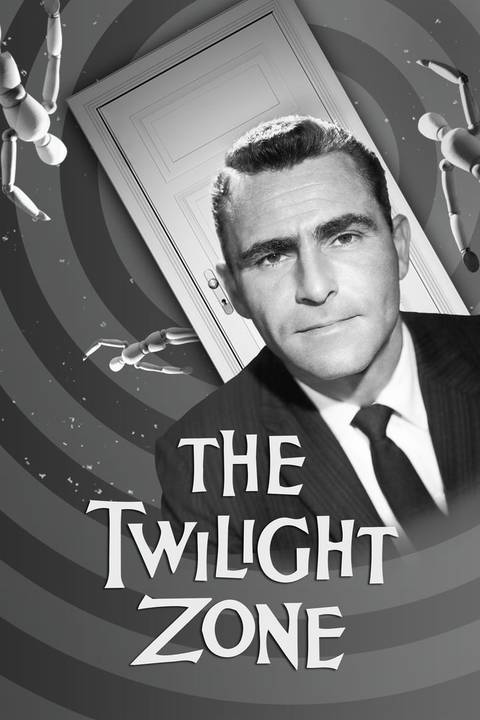
The Twilight Zone
- Release Date
- 1959 - 1964-00-00
- Network
- CBS
- Showrunner
- Rod Serling
- Directors
- John Brahm, Buzz Kulik, Douglas Heyes, Lamont Johnson, Richard L. Bare, James Sheldon, Richard Donner, Don Medford, Montgomery Pittman, Abner Biberman, Alan Crosland, Jr., Alvin Ganzer, Elliot Silverstein, Jack Smight, Joseph M. Newman, Ted Post, William Claxton, Jus Addiss, Mitchell Leisen, Perry Lafferty, Robert Florey, Robert Parrish, Ron Winston, Stuart Rosenberg
-

Rod Serling
Self - Host
-
Robert McCord
Waiter
- Writers
- Charles Beaumont, Richard Matheson, Earl Hamner, Jr., George Clayton Johnson, Jerry Sohl, Henry Slesar, Martin Goldsmith, Anthony Wilson, Bernard C. Schoenfeld, Bill Idelson, E. Jack Neuman, Jerome Bixby, Jerry McNeely, John Collier, John Furia, Jr., John Tomerlin, Lucille Fletcher, Ray Bradbury, Reginald Rose, Sam Rolfe, Adele T. Strassfield
- Main Genre
- Sci-Fi
- Seasons
- 5
- Producers
- Herbert Hirschman, William Froug, Buck Houghton, Bert Granet, Marcel Ichac
- Creator(s)
- Rod Serling
- Story By
- rod serling
- Streaming Service(s)
- Paramount Plus
- Executive Producer(s)
- Rod Serling
KioskNews shows a cleaned-up reading view extracted from the publisher’s page — the original always lives on their site, not ours.