Items found in Pompeii home hint at life before volcanic explosion
Ancient items found in a sealed closet in Pompeii hint at what life was like in the historic Roman city before it was destroyed in the eruption of Mount Vesuvius in A.D. 79.
The closet was located in a home in the central area of the city, the Pompeii Archaeological Park said in a news release. The house had previously been excavated in 1912, but an investigation of the surrounding areas is just now underway.
Inside, archaeologists found cosmetics, an incense burner, a bronze lantern and a balsam jar. Weights, likely used for commercial activity, were also found inside a wooden chest of drawers. The researchers also found vases and pots made of materials such as bronze, glass and ceramic, and a "refined snuff bottle" decorated with pine.
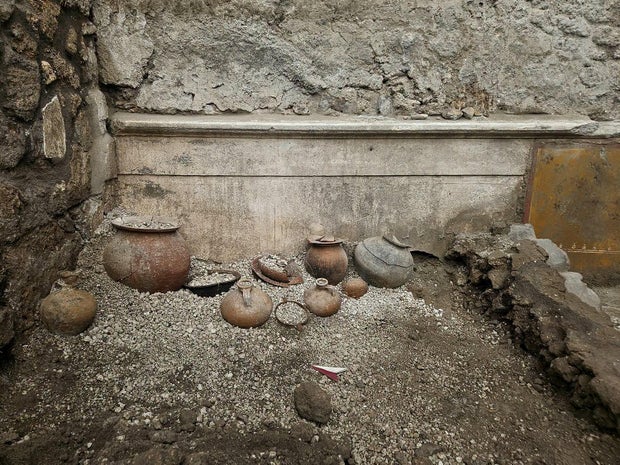
A necklace representing multiple deities and made of several materials was also found. The piece of jewelry might have been considered "magical" during the Roman era, the park said. Now these pieces are known as "crepundia," or rattles. The necklaces have amulets, meant to protect the wearer as a child. Many carried them into adulthood as mementos of childhood, the park said.
There were high levels of "geographical mobility" in the Roman world, the archaeological park said, explaining that many people, from slaves to wealthy merchants, lived far from relatives and the places they were raised.
The necklace found in the closet contains at least 20 miniature objects and materials including bone and crystal.
The wardrobe also held 38 bronze coins, preserved in a container made of plant material. The presence of the coins has led researchers to believe that the owner or owners didn't have time to recover valuable items.
It's impossible to know what happened to the people who owned these items, the archaeological park said. They may have escaped the eruption of Vesuvius and been unable to return to the site and dig for their belongings. They may have died in the disaster, along with about 15% to 20% of Pompeii's population, or afterward, without heirs who could reclaim the objects.
Little is known about the residents of the house. The items in the closet, including the paintings, and the location of the home on one of Pompeii's main streets suggest "a certain standard of living." But mouse skeletons found inside the home cast some doubt on this belief. However, such skeletons have been found in other spots of Pompeii, showing the city contended with "unwelcome guests," the park said.
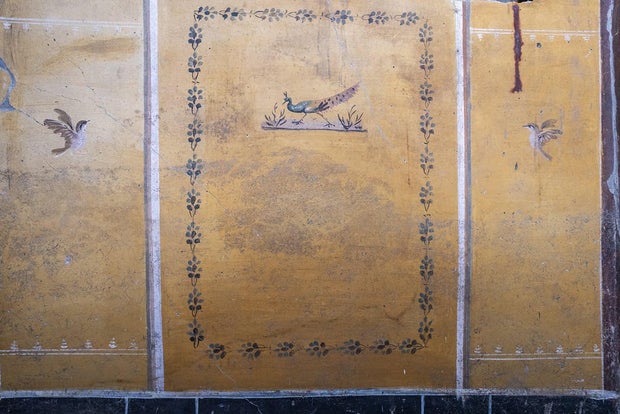
The home has previously been attributed to a person named Cornelius Maximus, the archaeological park said. That identification was based on the discovery of inscriptions that are no longer visible. The newly found items likely won't bring researchers closer to identifying the home's owner, but they allow archaeologists to study "the various traces of a life," said archaeological park director Gabriel Zuchtriegel in the Facebook post.
"We cannot reconstruct with certainty the identity of those who lived in the house, but these fragments bring us closer to their daily lives," said Zuchtriegel.
Pompeii is now a UNESCO World Heritage Site and popular tourist attraction. Archaeologists are also constantly exploring the ruined city, searching under heaps of volcanic ash and pumice to peer into its preserved remains.
In January, the archaeological park announced that researchers had found a 2,000-year-old love note and illustrated gladiator fight scene inscribed on a city wall. In December 2025, archaeologists found evidence suggesting that some Pompeii residents returned to live in the city after the eruption.
KioskNews shows a cleaned-up reading view extracted from the publisher’s page — the original always lives on their site, not ours.