Explained: Opposition's Attack On Chief Election Commissioner Without Numbers
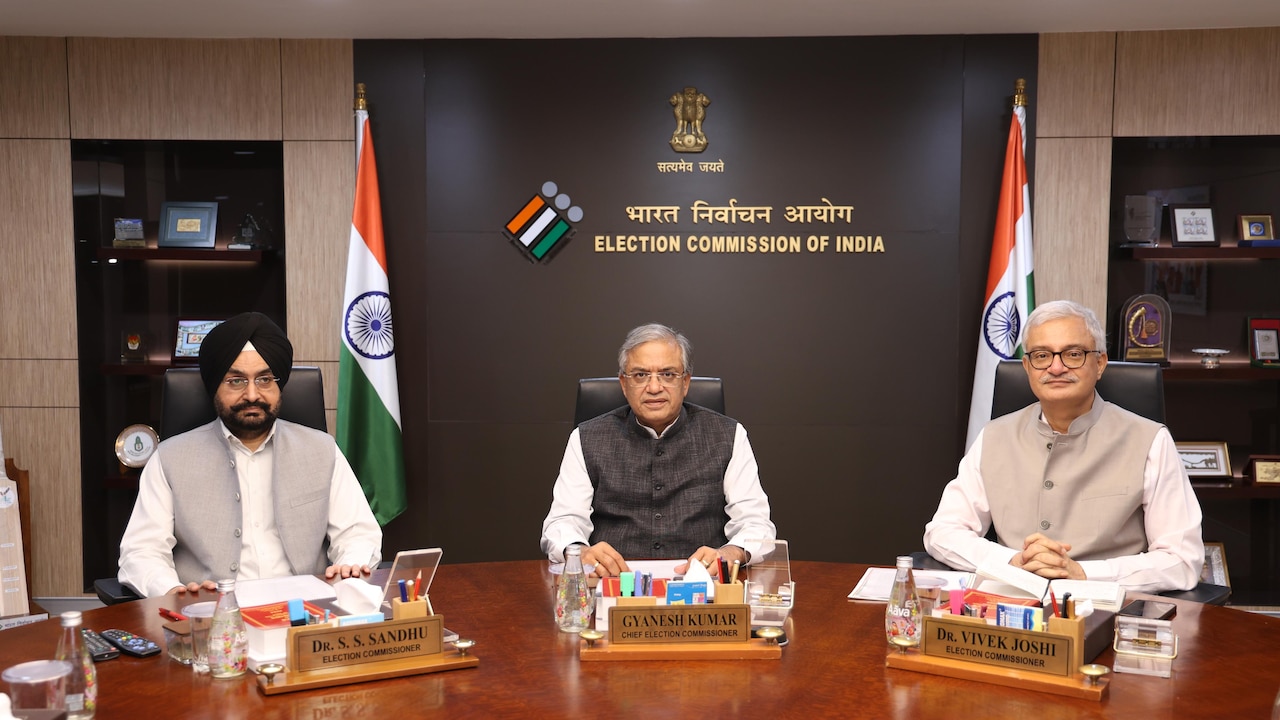
Removing the chief election commissioner (CEC) in India is not that easy and even the government cannot directly remove the CEC if it wants. This is because the CEC has privileges like judges of the Supreme Court. The process of removing the CEC is a complex one. There are provisions in place to prevent direct interference of the government in the working of Election Commission of India (ECI).
Precedents
A CEC has never been removed from office in the history of independent India. However, historical attempts and tensions provide important context for contemporary debates.
Left-Wing Demand Against TN Seshan (1992)
In 1992, Left-wing parties demanded the initiation of formal removal proceedings against the then CEC TN Seshan. This effort did not progress to a formal motion as the necessary parliamentary support to introduce it could not be secured.
Motion Against Election Commision
NDA Petition Against EC Navin Chawla (2006)
In March 2006, the National Democratic Alliance (NDA) petitioned the president seeking the removal of EC Navin Chawla.
CEC Recommendation Against EC Navin Chawla (2009)
In 2009, the then CEC N Gopalaswami formally recommended the removal of EC Navin Chawla, citing allegations of partisan behavior and political bias. This recommendation was subsequently rejected by the then United Progressive Alliance (UPA) government.
Constitutional Process For Removing CEC
The removal of the CEC is governed strictly by constitutional provisions designed to guarantee the independence of the ECI.
Article 324(5)
Article 324(5) of the Constitution stipulates that the CEC can be removed from office only in the same manner and on the same grounds as a judge of the Supreme Court.
Article 124(4)
Article 124(4) dictates that a Supreme Court judge cannot be removed except by an order of the president passed after an address by each house of parliament supported by a majority of the total membership of that house and by a majority of not less than two-thirds of the members present and voting, presented to the president in the same session for proved misbehavior or incapacity.
Procedure To Remove CEC
The procedural workflow for initiating and executing the removal of a CEC involves five distinct stages.
Step 1: Notice Submission
A formal notice for the removal of the CEC is submitted to the chairman of the Rajya Sabha or the speaker of the Lok Sabha. To move the notice successfully, minimum threshold support is required: at least 100 members in the Lok Sabha or at least 50 members in the Rajya Sabha.
Step 2: Inquiry Committee Constitution
If the notice is admitted, the presiding officer constitutes a specialised three-member committee to investigate the specific grounds on which removal is sought. The committee must comprise a judge or the Chief Justice of the Supreme Court, a Chief Justice of a High Court and a distinguished jurist in the opinion of the presiding officer.
Step 3: Inquiry And Reporting
The constituted committee conducts an inquiry into the allegations and submits its formal investigative report back to the chairman or speaker.
Step 4: Parliamentary Voting
If the inquiry committee finds the CEC guilty of proved misbehaviour or incapacity, the matter is brought to the floor of parliament for voting. Passing the motion requires an extraordinary majority: support from a majority of the total membership of the house and a majority of at least two-thirds of the members present and voting in both houses.
Step 5: Presidential Order
If the removal bill or motion is successfully passed by both houses of parliament, it is presented to the president, who then issues the official order removing the CEC from office.
Current Strength In Parliament
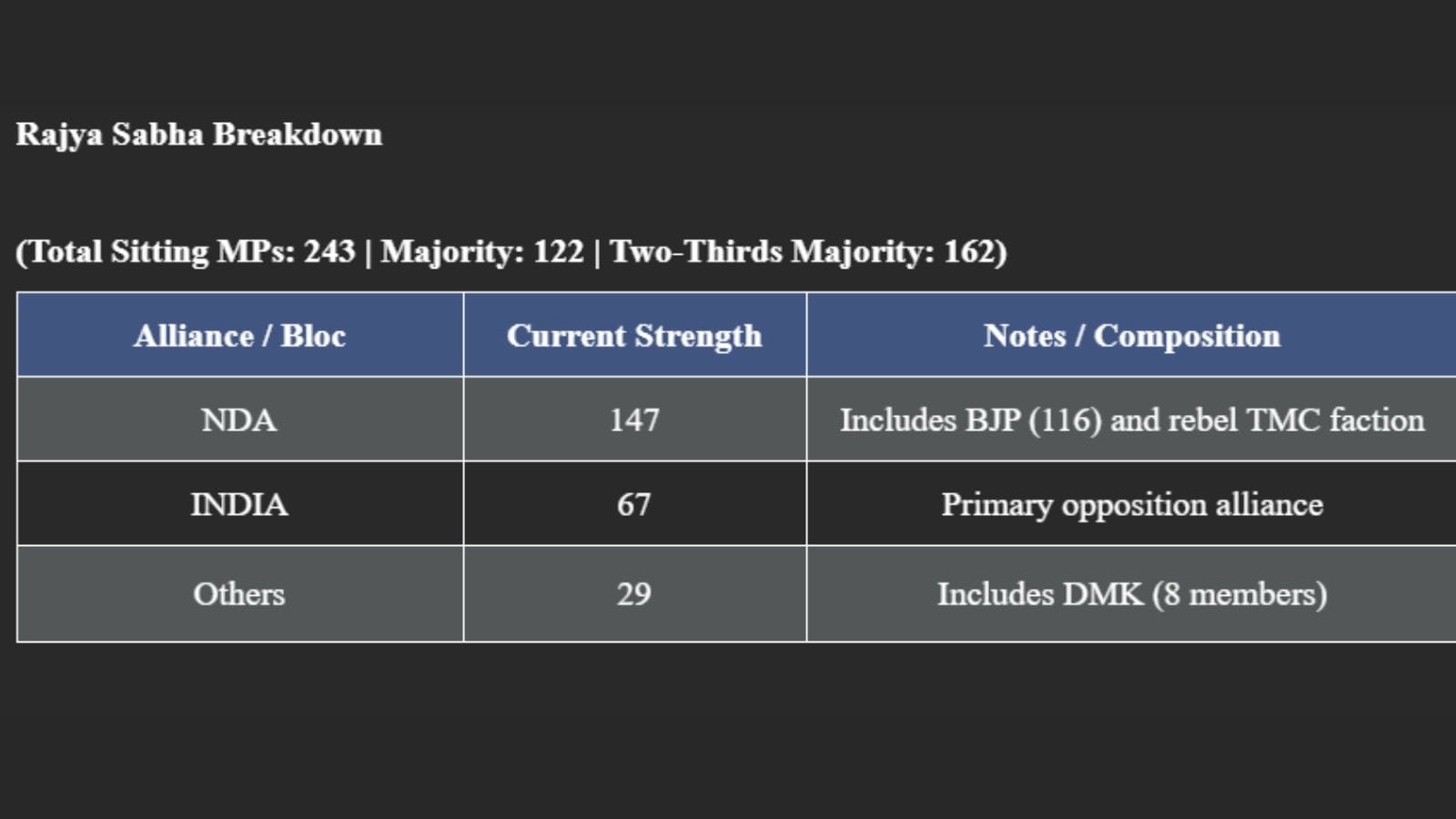
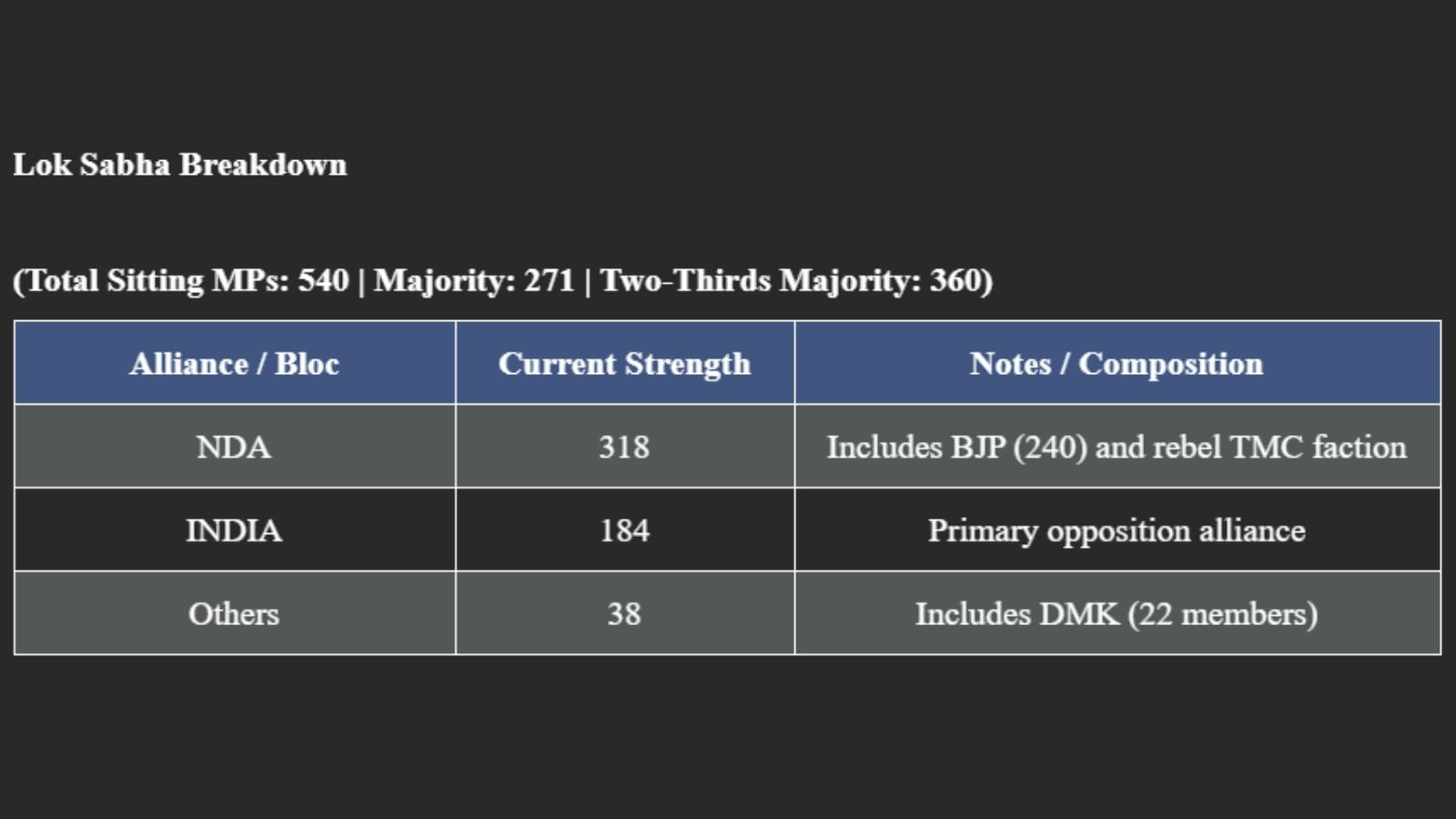
Achieving the requisite two-thirds majority in both houses of parliament presents an insurmountable mathematical barrier for any single Opposition block under current parliamentary alignments.
Mathematical Impossibility
In the Lok Sabha, reaching the 360-mark requires numbers far beyond current Opposition totals. If we even exclude the BJP's 240 seats, only 300 members remain. Hence 360 is not possible.
Similarly, in the Rajya Sabha, reaching the 162 threshold is mathematically restricted If we even exclude the BJP's 116 seats, which leaves only 127 non-BJP members. The DMK (22 Lok Sabha, 8 Rajya Sabha) is categorised under 'Others' rather than the opposition bloc INDIA.
Strategic Intent
Why is the opposition proposing removal despite a deficit in numbers? Given the insurmountable parliamentary math, the Opposition's pursuit of a removal motion is driven by strategic and political imperatives rather than an expectation of successful removal.
Signaling Intent
To send an unequivocal message to the government and the broader public that the CEC's operational methodology and institutional conduct are perceived as flawed and politically biased.
Applying Pressure
To exert sustained political and institutional pressure on the CEC to operate with heightened caution, strict impartiality and scrupulous adherence to electoral rules.
Enabling Inquiry
To trigger the statutory admission of the notice, which compels the establishment of an independent inquiry committee to investigate the matter and bring public scrutiny to institutional processes.
KioskNews shows a cleaned-up reading view extracted from the publisher’s page — the original always lives on their site, not ours.