Billionaires, immortality and barbecues: Sci-fi author ready for arrival at Powerhouse
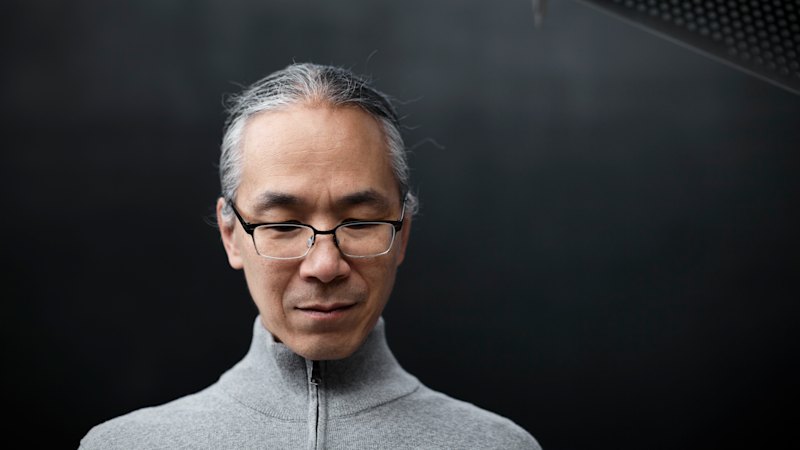
Ted Chiang has been thinking about some of the worst people in the world.
Considered one of the greatest living science-fiction writers and known for fighting the rapacious rise of artificial intelligence, the New York-born, Seattle-based writer is bound for Sydney for Powerhouse Parramatta’s 23-day opening festival. Chiang will give a keynote address on November 8 about billionaires and capitalism and whether immortality can be pursued ethically.
Spoiler alert: probably not.
“It seems like a lot of the people who are interested in pursuing immortality in recent years, they seem like the worst people in the world,” Chiang says. “I guess this raises a couple of questions. You know, like one is, would you really want to spend eternity in the company of these people?”
The other question Chiang is pondering is along these lines: “If the worst people in the world seem to be the only ones who are really interested in that, does that tell you anything about that thing that they are interested in?”
There have been headline-grabbing examples of biohacking, and the longevity billionaires are a class of ultrawealthy individuals who seem intent on testing the theory that money cannot buy more time. Chiang doesn’t name anyone, but points out those in such a socioeconomic stratosphere already live pretty long lives.
“For us to have good evidence that [these treatments] are working, we’ll need to see a significant number of them living over 100 or like 120 or something like that, and so you know that’s decades away.”
In a sense, the ultra-rich have bought time anyway, since they do not have to bother themselves with such mundane tasks as dishes and laundry, or driving around to hardware stores to swap the gas bottle.
“That’s another version of the question of, ‘Why does anyone continue to pursue wealth?’ There’s a level of wealth which is modest by billionaire standards but is really more than anyone could actually want in terms of improving the quality of their life.
“If you have $10 million, I don’t know how much better your life is going to get with additional money, but you know, obviously, billionaires – they have 100 times that.
“Now there are people who have $10 billion or $100 billion. Why do they keep pursuing that? It’s not because it will help improve their life in any meaningful way. It’s just because, arguably, it’s the only thing they know how to do. You know, they can’t think of anything else to do.”
One of Chiang’s early stories, his 1998 novella Story of Your Life, was the basis of Eric Heisserer’s screenplay for the award-winning Denis Villeneuve film Arrival. But another, The Tower of Babylon, was the inspiration for one of the blockbuster opening exhibitions for the Powerhouse Parramatta.
For Task Eternal, billed as “one of the most ambitious aerospace exhibitions ever staged” and located in the museum’s largest space, the architects drew on the story for an ascending design in four acts, titled Skyward, Power, Off-Earth and The Return.
About 30 minutes into the interview, I throw a barbie into the conversation as we veer from billionaires’ quixotic quests to the inevitable heat death of the universe.
In Chiang’s Hugo award-winning story Exhalation, the title work from his 2019 collection, long-lived mechanical beings come to grips with the inevitability of their own demise when they realise the differences in air pressure that power them will eventually equalise and their universe will be rendered inert. Mortality, or immortality, was not front of mind.
“I can understand why you might be reminded of that story, but I guess I want to clarify that that story is just about thermodynamics,” Chiang says.
“Sometimes people interpret the story as maybe being about climate change. It is absolutely not about climate change because climate change is not inevitable, whereas the heat death of the universe is inevitable.”
Early on, there’s a passage about how swapping depleted lungs for full canisters can sometimes be a joyous communal event, and sometimes as perfunctory as changing the batteries in the remote. I’d read it when the bottle under the barbecue had run empty, so fossil fuels were front of mind. Not so for the author.
“I certainly never expected people to interpret Exhalation as being about climate change. That was not something that ever, ever occurred to me. But yeah, that’s just another example of how it is impossible to anticipate how people will read your work.”
Chiang was named among Time’s 100 most influential figures in artificial intelligence for his criticism of the technology and the companies profiting from it. His work has dealt with fate and mortality, along with thermodynamics. “Trying to make peace with one’s mortality is, yeah, I think a really central part of what it means to be a human. What I want is not to live forever, but I want to be at peace with my mortality.”
If writing might be an easier way to achieve immortality, “that has never crossed my mind”.
“When people crave immortality, mostly what they want is actual physical immortality. I don’t think that having a long-lasting reputation is a substitute for physical immortality,” he says.
KioskNews shows a cleaned-up reading view extracted from the publisher’s page — the original always lives on their site, not ours.