Connecticut student Lilah Mehta entered Yale lab at 16, now co-authors research
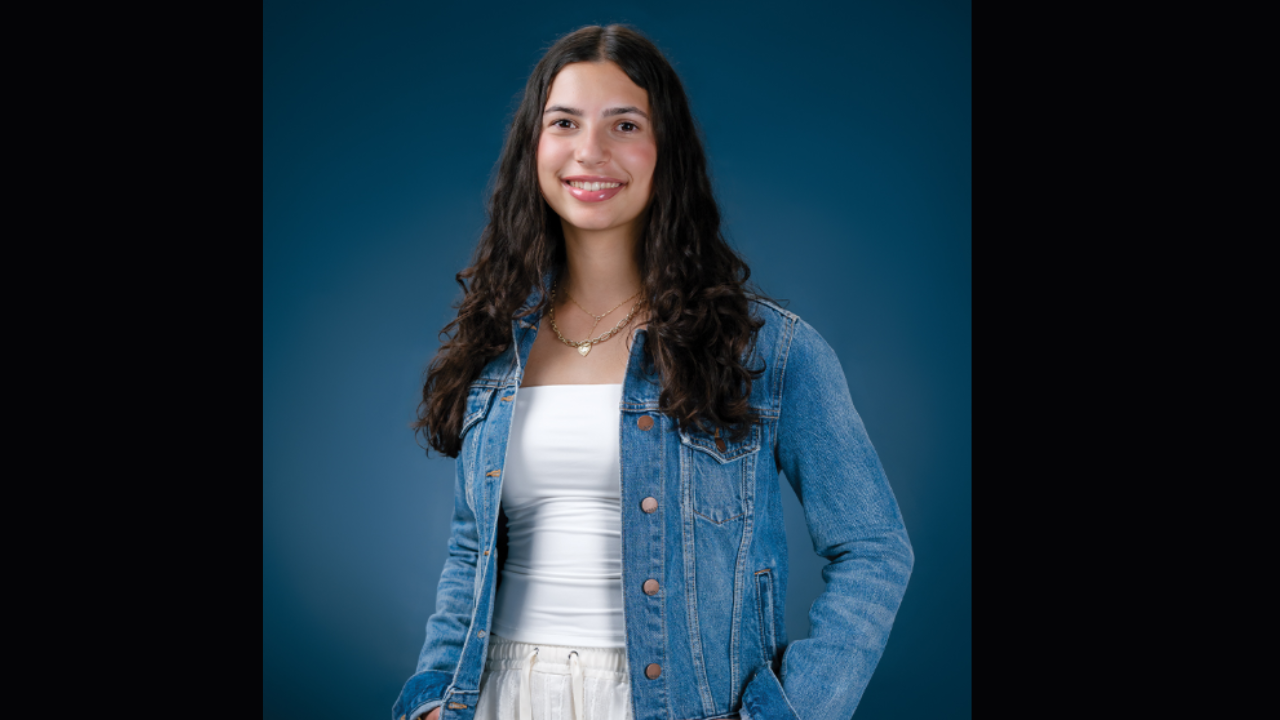
LILAH MEHTA
When Lilah Mehta entered a biomedical research laboratory at Yale University as a 16-year-old high-school pupil, her main goal was to explore the biological questions that had interested her since her ninth-grade science classes.
Two years later, the New Canaan resident and King School student in Stamford has reached an academic milestone rarely achieved before university: co-authoring a peer-reviewed neuroscience study with senior researchers at the Yale School of Medicine. Mehta’s academic journey and research work were featured in Moffly Media’s annual Teens to Watch 2026 profile series, published by New Canaan, Darien & Rowayton Magazine.
The series recognised her as one of Fairfield County’s standout students. The high-school senior directly contributed to a scientific review paper published in the medical journal Current Opinion in Immunology. The study looks at the Kv1.3 voltage-gated potassium channel, an ion channel found on immune cells that researchers believe may help control neuroinflammation linked to Alzheimer’s disease and other neurodegenerative conditions.
Working under Dr Srikant Rangaraju in the Department of Neurology at Yale School of Medicine, Mehta worked with a team of immunologists and neuroscientists. Her work included reviewing complex molecular research and studying network datasets to understand how Kv1.3 channels interact within brain microglial cells and peripheral T cells.
Navigating laboratory setbacks and complex molecular science
Mehta’s move into advanced neuroscience came with several technical challenges.
During her early experiments, the laboratory faced repeated problems, including cases where cell cultures were lost because of unexpected contamination. Looking back at her laboratory experience, Mehta said dealing with uncertain results changed how she approached scientific research. "My research hit many bumps over the years, particularly in the lab; the cell batches died twice due to fungal infections," Mehta said in an interview published by Moffly Media.
"I have found research is rarely a linear path; you have to remain flexible and be comfortable with things not always going as planned, regardless of how carefully you design a study." Despite these early problems, Mehta stayed focused on understanding scientific research. She spent hours using databases such as PubMed and ScienceDirect to learn unfamiliar biomedical concepts. "The same curiosity I had back in 9th-grade biology has sustained me throughout my Independent Study and STEM Scholars project," Mehta recalled.
"I approach ScienceDirect and PubMed articles expecting to encounter gaps in my knowledge and to correct some of my previous assumptions. I often bump into terms I've never heard before—what even is ferroptosis, anyway? —and happily dive down rabbit holes to discover not just answers, but many more questions." Her continued work eventually became part of the Yale team’s published paper, titled Functional interactions of Kv1.3 channels in microglia and T cells and their implications in neurodegeneration.
The paper explores possible treatments that target Kv1.3 channels to influence both innate and adaptive immune responses in people with neurodegenerative diseases.
Recognition at state level and academic foundations
Mehta’s research skills have also earned recognition at regional and state science competitions in Connecticut. She was named a finalist in the Life Sciences category at the Connecticut Science and Engineering Fair and presented her findings at the Health and Science Symposium at the University of Connecticut Health Center.
At King School in Stamford, Mehta takes part in the school’s Advanced Science Program with Independent Research and Engineering (ASPIRE), led by Dr Victoria Schulman.
The programme connects motivated high-school pupils with academic mentors at regional research universities, giving students the chance to carry out real laboratory experiments alongside doctoral candidates and postdoctoral researchers. School officials said student-led projects such as Mehta’s are helping raise the standard of high-school science education across the state. Alongside her biomedical research, Mehta is involved in school community projects, including SPARC, a research group focused on studying and improving student life on campus. She also leads local community service projects with her sisters, balancing her demanding scientific work with volunteering. Asked about her long-term goals, Mehta said her laboratory experience has strengthened her interest in pursuing medicine and environmental science. "That really solidified my interest in medicine, exciting me with the prospect of working with like-minded professionals on intensely meaningful problems," Mehta told Moffly Media, adding that she hopes to use her scientific background to create positive and practical change in public health and environmental sustainability.
KioskNews shows a cleaned-up reading view extracted from the publisher’s page — the original always lives on their site, not ours.