The legacy of South Africa’s first Black showjumper and his horse-riding school in Soweto – photo essay
In a historically wealthy sport dominated by the white elite and plagued by its colonial reign, a Black athlete draped in a red coat represented his nation.
This is the remarkable story of Enos Mafokate and the legacy he worked so hard to create. A professional equestrian rider, Enos began his career as a stable hand and went on to become a world-class athlete during the apartheid era in South Africa.
-
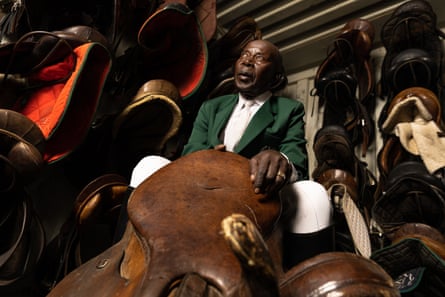
In a shipping container that has been converted into an equipment facility, a display of riding saddles is made accessible to students at the Soweto Equestrian Centre
-
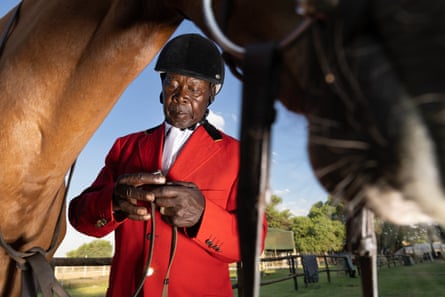
Draped in his national title show jacket, Enos Mafokate pays close attention to the leather reins, meditatively gearing up for an afternoon expedition in Soweto
Though Enos developed a deep love for the horses he trained and nurtured, competing as a professional show jumper seemed out of the question because of the colour of his skin. As a child living under apartheid, Enos was even faced with the threat of arrest after being caught riding a white man’s horse.
-
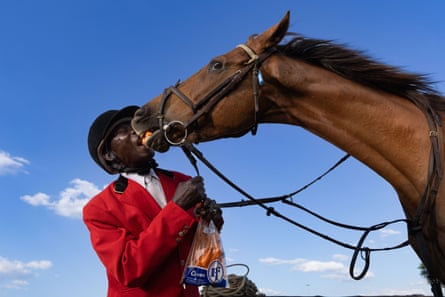
Enos Mafokate said his love for his horses was akin to that of his own children and grandchildren
Still, despite racial tension and oppressive segregation laws, in 1975, Enos was able to overcome these hurdles to become South Africa’s first Black showjumper.
Soon after apartheid was dismantled, Enos attended the 1992 Olympic Games in Barcelona as a sports ambassador for South Africa, breaking down barriers and stereotypes as he cleared each obstacle. In 2006, he founded a non-profit organisation, the Soweto Equestrian Centre, to provide young Black riders access to a world that had long sought to exclude them.
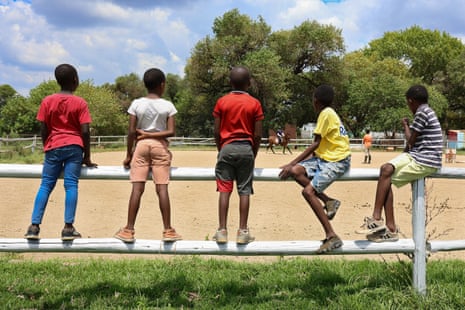
-
A group of curious children are enthralled by witnessing their first sight of the athleticism of equestrian horse riding at the Soweto Equestrian Centre
With the aim to improve the welfare of people in South Africa’s largest township, Soweto, and to open up the elite world of horse riding to those who cannot afford access, the Soweto Equestrian Centre has become a pillar for the community. It remains the world’s only township-based equestrian centre.
In September 2026, at the age of 80, Enos died in Johannesburg. His legacy, and his horse-riding school, continues to live on through the generations he inspired.
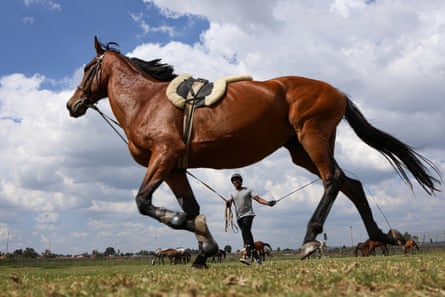
-
Training alone in the open fields, Karabo ‘KB’ Moraka lunges his horse to keep its health and fitness up to par. KB has been a loyal equestrian rider of the Soweto Equestrian Centre for 10 years. He proudly shares how he has competed in several national competitions and hopes to earn his national Protea colours one day
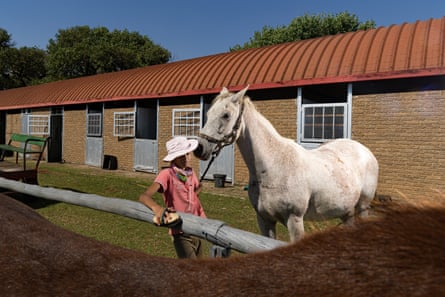
-
As the day begins and the horses prepare for their weekend training, Kutlwano Chabane, a young trainee, attends to a herd of horses that require rigorous grooming before the weekend’s activities can resume at the Soweto Equestrian Centre
In 2024 South Africa commemorated 30 years of democracy, but the abolishment of apartheid has not eradicated racism or inequality. Systematic oppression of Black communities is still common, especially within sport. For many South Africans, participation in sport is an explicitly political act. For decades during apartheid, South Africa was barred from international competitions such as the Olympics and the World Cup because of its refusal to desegregate teams. How much a sport has diversified is often an indicator of a nation’s political progress – however, South Africa is plagued by the world’s highest unemployment rate.
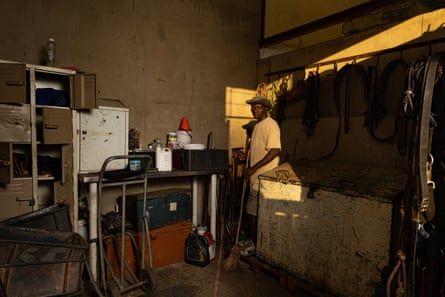
-
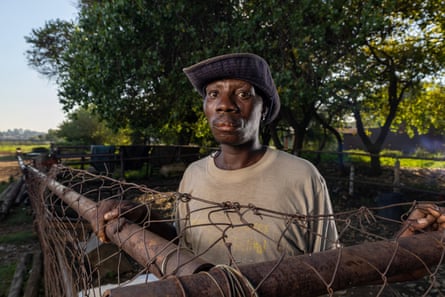
Many hands make light work. From the moment the sun rises at 5am, stable hand and groundskeeper Mduduzi Khumalo gets into action cleaning out stables, washing the horses and checking their health. Hygiene is a priority at the Soweto Equestrian Centre
-
Mduduzi Khumalo tackles the challenges of maintaining the fences of the training facility
Over 30 years of democracy, post-apartheid governments have made promises of ushering in development, yet South Africa has an official unemployment rate of 33%, and many young graduates are jobless or trying to make ends meet working menial jobs.
-
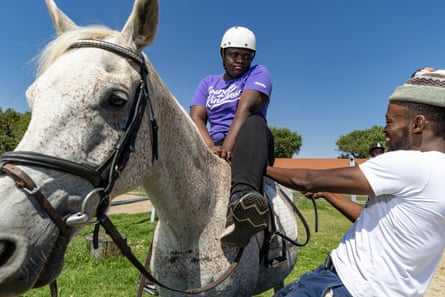
Lesedi Masuku is strapped into his saddle by his trainer, Thembinkosi. The benefits of horse therapy are celebrated at the Soweto Equestrian Centre
-
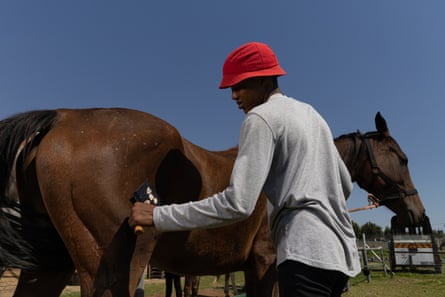
Tshiamo Khumalo, 15, dreams of competing professionally. He is one of many young trainers at the Soweto Equestrian Centre volunteering his time on the weekends and learning the essential practices of the sport to create a better future for himself
The elite sport of equestrian riding requires wealth that developing communities do not have. The reality of exclusive financial barriers and income gaps run parallel with South Africa’s racial inequality. Mafokate demonstrated a life of overcoming adversities, yet as he got older he continued to face racially charged microaggressions – and in some cases blatant racism within the equestrian milieu. At a competition in 2017 he was approached by a security guard who asked him to show proof of ownership of the horse he was loading into his trailer.
-
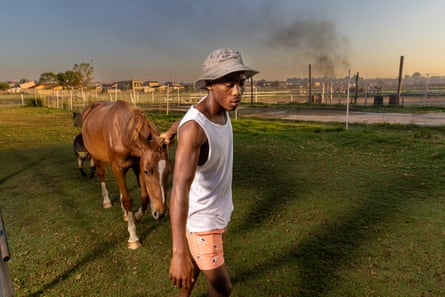
Every morning as early as 5am, the trainer Tshepo Masemola wakes and releases the horses from their stables. Tshepo’s responsibilities range from ensuring the horses are healthy and well rested to preparing them for their morning showers. His dedication to the farm and the animals has won him the status of the highest-ranked mentor and trainer at the Soweto Equestrian Centre
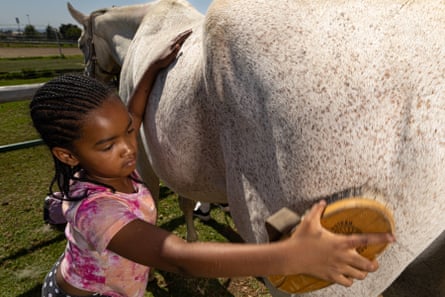
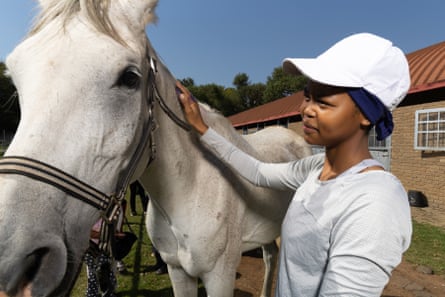
The centre welcomes all ages to learn the benefits of developing relationships with horses, imploring young Black children to embark on a journey that is often inaccessible to Black communities in South Africa. Decolonising Black communities’ relationship to horses is a vital lesson shared at the centre.
-
Children as young as five are taught a variety of life lessons in developing relationships with the equestrian world. From grooming to growing as a competitive rider, Naledi Segale, 17, has excelled. Her commitment to riding and learning at the Soweto centre has led to competing at a national level
-
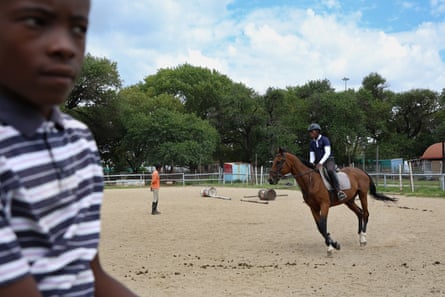
Nhlanhla Vilakazi rides with a refined style, never forgetting his roots as a rider. He grew up riding at the Soweto Equestrian Centre before his skills propelled him into competitive riding at a private equestrian centre outside the township of Soweto. He takes great pride in the opportunities the centre has given him and continues to return in honour of Mafokate’s guidance and training
Asked what obstacles Black riders in South Africa face, Mafokate said it came down to culture and cost. In Soweto, horses are a symbol of labour, reduced to haulers. The lack of exposure to horses outside these historical labour roles, not to mention the exorbitant fees students must pay to participate, perpetuates Black communities’ exclusion from equestrian sports. In a country where more than 40% of workers are paid less than £150 a month, Mafokate’s equestrian school is free.
-
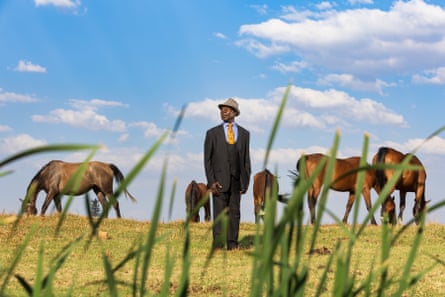
In Soweto, land was seized from Black communities by the apartheid government. After apartheid, Enos Mafokate won land to build his centre and for the horses to graze and roam freely
-
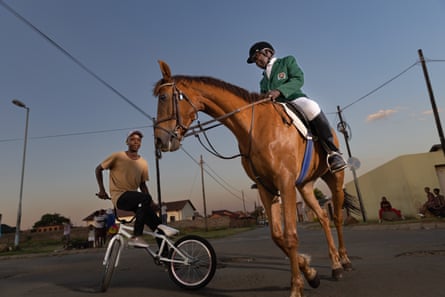
A local BMX rider playfully circled and showed off his skills while Mafokate took an afternoon ride through the streets of Soweto
Young riders pay their dues by helping to care for the 20 horses at the centre. The impact this accessibility has had on the Black youth of Soweto has been immense, allowing them to realise their dreams of competing in a historically colonial sport.
-
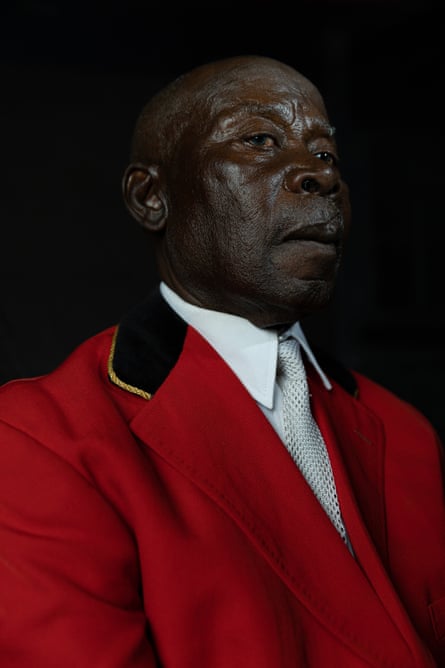
Mafokate dressed in his national title class show jacket on his farm at the Soweto Equestrian Centre
KioskNews shows a cleaned-up reading view extracted from the publisher’s page — the original always lives on their site, not ours.