The anatomy of Maya sacrifice: An interview with author Vera Tiesler
Vera Tiesler is a Maya expert and professor of anthropological sciences at the Autonomous University of Yucatán in Mexico. During her career, she has published several books about ancient Mesoamerican culture. In today’s Q&A, Mexico News Daily sits down to talk with Tiesler about the newest book she edited, “Ritual Violence and Related Body Treatments in Ancient Mesoamerica,” which features contributions from 36 authors.
Tiesler takes us on a trip into a cosmovision where bloodletting was a sacred ritual practice, tells us about new forensic discoveries related to ritual instruments, and explores how ritual logic can still be observed today in cultural rituals in former Maya regions.
Your new book on ritual violence comes after more than three decades of research. What led you to this subject?
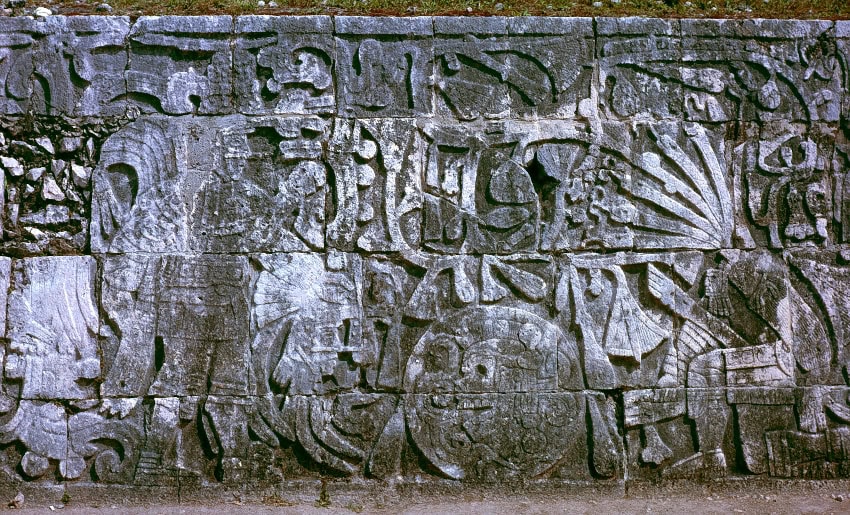
I began working on these subjects in 1992. Through collaborations with archaeological projects and access to many large skeletal collections, I was able to compare cranial modification and dental modification across regions. Then, in the field, we began encountering decapitated individuals in major Maya urban centers like Palenque and Calakmul. We could see the marks on the bones almost as one would in forensic work.
At the time, the question of heart extraction was still heavily debated: How was it done? How did they reach the heart? How did they open the trunk? We documented individuals sacrificed for the Red Queen and for Pakal who showed cut marks on the lower thoracic vertebrae, around the 10th through 12th vertebrae. We also documented cases in Calakmul and Becán.
“The marks led us to reconstruct the anatomy of the procedure. The most plausible route was an incision beneath the thorax, directly under the lower rib margin, using a flint or obsidian blade. That is anatomically the simplest way to reach the heart.”
When the heart is pulled out, it must be separated from the aorta and other structures; that is where the cut marks on the vertebrae at the back of the trunk can occur.
A history of the Maya: The myth of ‘collapse’

When we first published this interpretation, there was considerable pushback. But today we have many more cases of human sacrifice from across Mexico, including findings at the Sacred Cenote of Chichén Itzá, Templo Mayor and the major Mexica skull-rack Tzompantli tower, discovered in 2015. We can now discuss a much wider spectrum of sacrificial festivities and religious observances. That is why we felt the time was right for a new book.
Is the book primarily a forensic account of ritual violence?
No. Forensics is only one of several sources of information. We combine it with archaeology, iconography, inscriptions, ethnohistory, genetics, isotope analysis and archaeometry.
For example, we can use electron microscopy to examine the cut surfaces of stingray spines or obsidian blades that were found at the sacrificial site. What was once dismissed as merely a symbolic offering can now be tested for human red blood cells, muscle remains or any other human tissue. Researchers can identify if those objects were actually used as ritual instruments. We also examine how a victim would have had to be positioned in order for someone to open the thorax ergonomically, and which altars in archaeological contexts may have been used for that purpose.
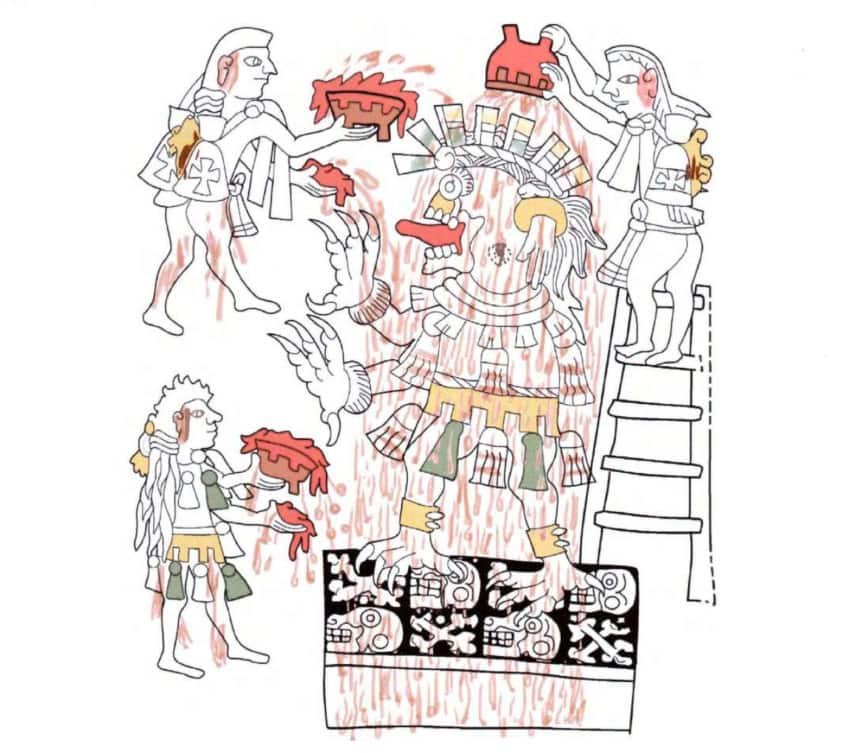
When people hear about heart extraction, they may imagine an emotionally charged or chaotic act. But you describe the procedure as if orchestrated with anatomical and ergonomic precision. It makes the sacrificial ritual sound almost clinical.
It is a very good question. But it was not about performing the act carefully for its own sake. It was a human killing that had to be religiously theatricalized and dramatized; it had to be made meaningfully and effectively carried out by ritual specialists — a proper liturgy.
It could not be accidental or clumsy — “I missed,” or “I stabbed in the wrong place.” The rite had to be performed correctly. There are sources suggesting that specialists could face grave consequences if they failed in their ritual role, whether they were priests or musicians who performed incorrectly.
At the same time, these acts could be extremely forceful. There was an “overkill,” an excess. This pattern is documented in many societies where human sacrifice occurred. The point was an explosive release: bodily essences, understood as sublime substances, were released and communicated with the gods. The action had to be visually effective and choreographed, but it also required religious devotion, substantial knowledge and practical experience by the practitioners.
“So this was not uncontrolled, psychopathic violence. It was highly controlled, yet excessive violence, carried out within a ritual choreography, the highest expression of ritual debt making there was.”
The title of your book begins with the words: Ritual Violence. The word “violence” has a negative connotation in English and other European languages, as does the term “sacrifice.” Does that framing fit the Mesoamerican cosmovision?
If we worked through the Indigenous languages more carefully, sacrifice is the act of merit-making, debt payments, feeding, nourishment and sustenance.
The acts were described in direct terms: a person was cut; a person was opened. “Opened” is important. To sacrifice was to cut or open something so that bodily essences could be released, the trunk likened to the sacred mountain of the Indigenous cosmos.
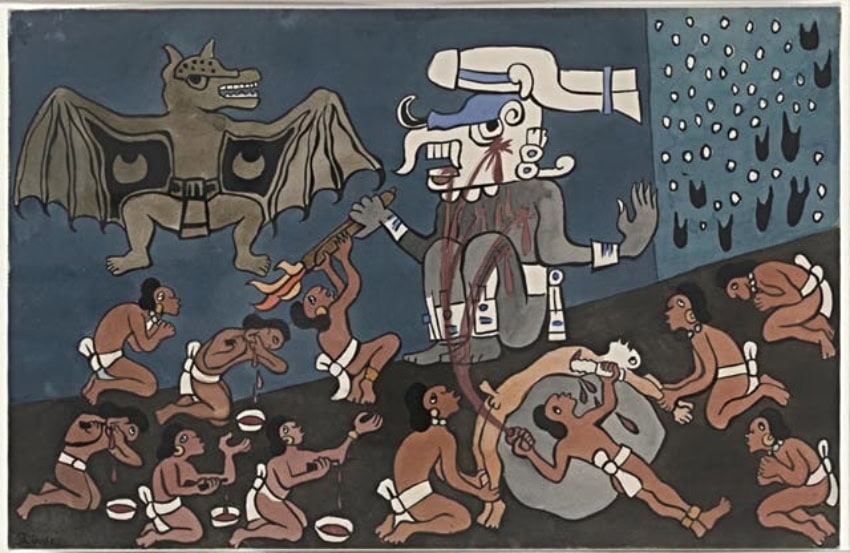
Bloodletting was not simply a sign of brutality. It was the primary offering, the most sacred substance, surrounded by these bodily essences. It possessed great power. From this perspective, what we call violence was not necessarily understood as hatred, jealousy or uncontrolled aggression. It belonged to a different set of religious thoughts and a Weltanschauung, entirely different from our own Westernized views of existence.
Would ordinary people have participated in these human sacrifices, or were they reserved for elites?
Human sacrifice was the highest expression of religiosity, and it was generally institutionalized and centralized. It belonged to the inner political and religious structures of society.
Other people could be present as spectators. At a smaller level, households may have practiced rites involving deer, chickens or other animals. But human sacrifice was most probably not an ordinary household practice, except for times of extreme crises.
“The elite did not necessarily carry out every act themselves. A ritual specialist could perform the physical procedure, while a high-ranking person received the heart and offered it to the gods. That is simplified, of course. The details varied according to the period, region, Indigenous society and occasion.”
We must remember that Mesoamerica was not one uniform culture. It is more like speaking of Europe over a stretch of 3,000 years: You cannot say “the Europeans did this” as though every person, place and century followed one practice. Mesoamerica was a broad, highly complex cultural world.
Early Spanish accounts were often horrified by what they saw. How should we read those accounts?
The Spaniards were shocked, of course, but they were also impressed. They encountered highly developed societies knowledgeable of reading, specialized crafts, books, elaborate calendrical systems and complex political and religious structures.
There was fear of an enemy, but also a degree of admiration. These were not societies that can be reduced to a stereotype of “Indians” or to a single story of sacrifice. Their military disadvantage came from specific conditions — European weapons, horses and the wheel — not from a lack of sophistication.
In the Maya area, conquest also took much longer. Communities used guerrilla tactics, and in some areas, like the Central Petén, the Spanish could not fully penetrate the forested interior for around 150 years.
You suggested that some contemporary bull-related festivities in the Maya region may preserve elements of older ritual logics. What do you mean?
After the Spanish arrival, Indigenous communities were subjected to enormous pressure: violence, massacres and disease. Yet they also knew how to assimilate elements that had been foreign and make them their own.
Bullfighting came with the Spanish, but in some communities it was incorporated into local ritual systems. People no longer performed human sacrifice, but the bull could become the sacrificial being.
“Even today, bullrings in the Maya region used for patron-saint celebrations have a ceiba tree in the middle. This tree represents the axis connecting the sky, the human world and the underworld. It evokes centrality and communication by humans with the sacred realms of their cosmos.”
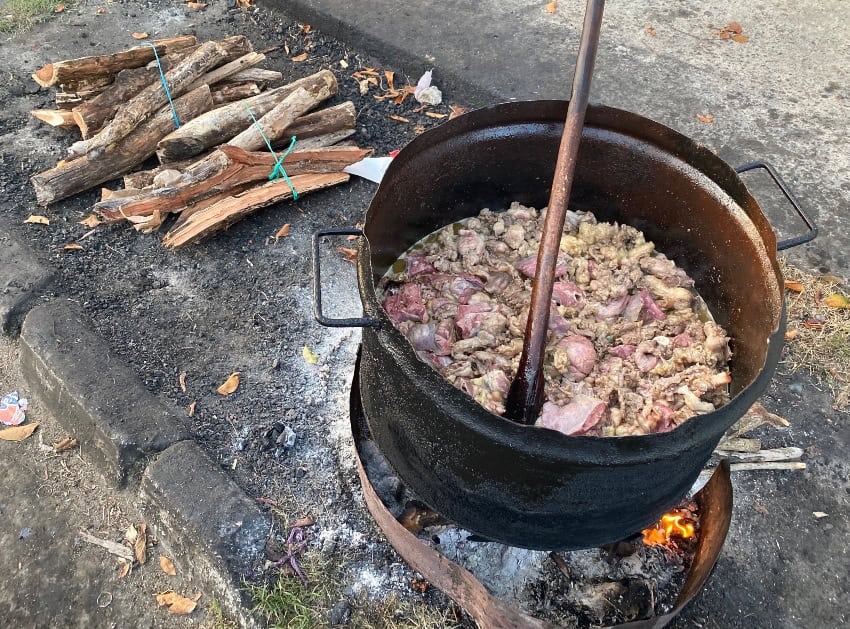
There are also elements such as the first drawing of the bull’s blood, removal of the heart, and the communal preparation and consumption of the entire animal. In Yucatán, for example, the dish chocolomo can be prepared using the animal in its entirety. This can be understood as part of incorporation or ritual consumption.
The Spanish may not have recognized these meanings, or they tolerated them.
KioskNews shows a cleaned-up reading view extracted from the publisher’s page — the original always lives on their site, not ours.