10 Greatest Marvel Movie Sequels Of All Time, Ranked

Senior Music Editor at Screen Rant, Sarah's love of sound and story drive the beat. A globetrotting brand whisperer and award-winning journalist, she’s built cross-cultural narratives around the world—but music has always been her true north. She launched DJ Mag North America, successfully introducing the iconic UK brand to the U.S. market. Previously, she carved a space for EDM inside the pages of VIBE, blending electronic and hip-hop culture long before it was trendy.
Marvel was making superhero sequels long before the Marvel Cinematic Universe turned interconnected storytelling into Hollywood’s favorite blueprint. Spider-Man, Wolverine, the X-Men, and the Avengers have all returned for bigger second, third, and occasionally fourth adventures, with wildly different results. Some of the best superhero movies of the decade have proved just how much room remains to expand these characters after their introductions.
Sequels also have one enormous advantage: the introductions are already over. Audiences know the powers and the people behind them, giving filmmakers room to complicate relationships, test their heroes, and push familiar characters somewhere the first movie could not. That is one reason the strongest superhero movie franchises of the last 10 years have often produced their most interesting work after movie one.
For this ranking, every movie based on Marvel Comics characters is eligible, regardless of whether it came from Marvel Studios, Sony, or 20th Century Fox. That means the MCU has to compete with multiple generations of Spider-Man and X-Men movies, plus more than 20 years of Hugh Jackman playing Wolverine.
The greatest Marvel sequels prove that bigger is not automatically better. Some involve half the universe disappearing. Others endure because one superhero still cannot manage to pay his rent.
10 Thor: Ragnarok

The first two Thor movies never completely figured out how to use one of Chris Hemsworth’s greatest assets: his sense of humor. Thor: Ragnarok finally did, allowing Hemsworth to loosen up as director Taika Waititi rebuilt the character’s corner of the MCU around a much stranger comic sensibility.
The reinvention works because Ragnarok still gives Thor meaningful losses beneath the color and comedy. Asgard falls, Mjolnir is destroyed, and Thor has to understand that being worthy of the throne means more than possessing the right weapon. Hulk’s extended appearance certainly helps, but Hemsworth finally owning Thor as a character earns Ragnarok its spot.
9 Guardians Of The Galaxy Vol. 3

By the time Guardians of the Galaxy Vol. 3 arrived, James Gunn had spent nearly a decade turning an obscure collection of Marvel characters into one of the MCU’s most beloved teams. Their final adventure under Gunn consequently had something superhero sequels cannot manufacture overnight: genuine emotional history.
Rocket takes center stage as the movie finally reveals the horrific experiments that created him. The material gets surprisingly dark without losing the warmth that made the Guardians work in the first place. More importantly, Gunn gives these characters endings instead of merely arranging them for another installment. In a genre engineered to continue indefinitely, that closure lands hard.
8 X-Men: Days Of Future Past

X-Men: Days of Future Past had a ridiculous amount of franchise baggage to manage. It followed X-Men: First Class, brought back much of the original trilogy’s cast, jumped between eras, and attempted to straighten out continuity that had become increasingly tangled. Somehow, the complication became one of the movie’s strengths.
Sending Wolverine back to 1973 creates the bridge between two generations of X-Men, but Hugh Jackman wisely becomes more observer than savior. The emotional center belongs to Charles Xavier, who has to rediscover why his dream matters after losing nearly everything. The Quicksilver sequence is a bonus—and remains one of the most inventive demonstrations of super-speed ever put on screen.
7 Avengers: Infinity War

Most superhero movies ask whether the heroes can stop the villain. Avengers: Infinity War spends nearly two and a half hours gradually making the horrifying case that they cannot.
Thanos gives the enormous crossover a surprisingly clear center. While Avengers and Guardians collide across the universe, each storyline moves toward his attempt to collect the Infinity Stones. Then Marvel actually lets him win. Watching Peter Parker disappear in Tony Stark’s arms remains one of the MCU’s most devastating moments because audiences had spent a decade being trained to expect Marvel’s heroes to eventually save the day. Infinity War used that expectation against them.
6 X2: X-Men United

Released in 2003, X2: X-Men United helped establish how dramatically a superhero sequel could improve upon an already successful original. The first X-Men had the difficult job of introducing an entire mutant world. X2 could simply unleash it.
Nightcrawler’s attack on the White House remains an extraordinary opening, immediately demonstrating what mutants could do when filmmaking technology and imagination caught up with the comics. Yet the sequel’s real strength comes from forcing Xavier’s students and Magneto’s followers into an uneasy alliance against William Stryker. The mutant-versus-human conflict suddenly becomes bigger and considerably more personal.
5 Captain America: The Winter Soldier

Few MCU movies transformed their title character as effectively as Captain America: The Winter Soldier. Steve Rogers begins the movie trying to find his place inside modern America and discovers that the institution he trusted has been compromised from within. Instead of another alien invasion, Captain America finds himself in the middle of the kind of grounded conflict that has powered some of the best street-level superhero movies.
The Winter Soldier gives that larger story its emotional punch. Steve discovers that the assassin hunting him is Bucky Barnes, the childhood friend he believed had died decades earlier. Their relationship turns an already excellent action movie into something deeply personal, while the destruction of S.H.I.E.L.D. creates consequences far beyond Captain America’s own series. Marvel has made bigger sequels, but few are this tight.
4 Spider-Man: Across The Spider-Verse

Spider-Man: Into the Spider-Verse seemed almost impossible to top. Its sequel responded by becoming more visually ambitious and emotionally complicated while challenging the very idea of what a Spider-Man story is supposed to be.
Miles Morales discovers a multiverse filled with Spider-People who essentially believe suffering comes with the costume. Instead of accepting that fate because every Spider-Man before him has, Miles rejects it. That decision turns Across the Spider-Verse into more than another multiverse adventure. It becomes an argument about whether heroes should remain trapped by stories that have already been written for them.
3 Logan

Hugh Jackman had played Wolverine for nearly two decades when Logan finally gave the character the ending he deserved. Much of the familiar superhero machinery disappears. Mutants have largely vanished, Charles Xavier is deteriorating, and Logan himself is physically breaking down after a lifetime of surviving things that should have killed him.
Introducing Laura gives Logan one last person worth fighting for, but the movie never suddenly softens him because a child enters the story. Their relationship is prickly and painful before it becomes moving. By approaching Wolverine’s final journey more like a Western than a traditional superhero blockbuster, Logan fits comfortably alongside some of the most suspenseful Western movies ever made while showing how far a Marvel adaptation could stretch its genre.
2 Avengers: Endgame

There may never be another Marvel movie carrying the expectations that greeted Avengers: Endgame. It had to resolve Infinity War, conclude stories stretching back to the first Iron Man, and somehow provide meaningful moments for a staggering collection of characters. The fact that it works at all is impressive. The fact that it frequently works beautifully puts it near the top.
The final battle delivers practically every spectacle Marvel fans could have requested, but Endgame understands that its biggest moments are personal. Steve Rogers finally gets the life he sacrificed, while Tony Stark makes the ultimate sacrifice after spending much of his MCU journey learning to put something ahead of himself. Its enormous commercial success also helped cement Marvel’s dominance among the highest-grossing superhero movies of all time, but Endgame endures because it feels like the closing chapter of Marvel Studios’ first great era.
1 Spider-Man 2

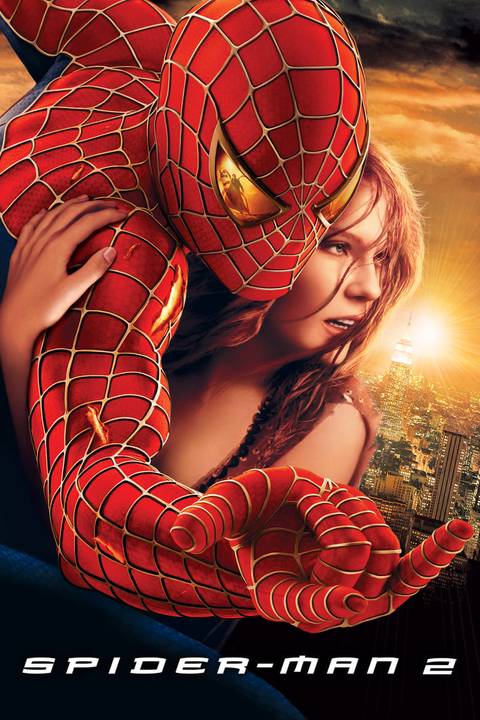
Sam Raimi understood something about Peter Parker that superhero movies sometimes forget: having superpowers can make your life considerably worse. Spider-Man 2 finds Peter exhausted, broke, struggling at school, disappointing the people he loves, and beginning to lose the abilities that make him Spider-Man. More than two decades later, the character is still evolving onscreen, with Spider-Man: Brand New Day pushing Marvel’s Peter Parker into another chapter.
That makes Peter’s eventual decision to put the suit back on genuinely triumphant. Alfred Molina’s Doctor Octopus gives him a villain who is tragic rather than simply threatening, and the train sequence remains a benchmark for superhero action more than two decades later. Yet the reason Spider-Man 2 still sits above Marvel sequels made with vastly larger budgets is wonderfully simple. Beneath every fight and spectacular set piece is a story about the cost of choosing to help other people. Marvel has made bigger sequels since 2004. It still hasn’t made a better one.
- Release Date
- June 30, 2004
- Runtime
- 127 minutes
- Director
- Sam Raimi
- Writers
- Alvin Sargent, Alfred Gough, Miles Millar, Michael Chabon
- Producers
- Avi Arad, Laura Ziskin
KioskNews shows a cleaned-up reading view extracted from the publisher’s page — the original always lives on their site, not ours.