32 Years Later, This Stephen King Movie's Final Line Officially Defines His Career

Thomas Butt is a senior writer. An avid film connoisseur, Thomas actively logs his film consumption on Letterboxd and vows to connect with many more cinephiles through the platform. He is immensely passionate about the work of Martin Scorsese, John Ford, and Albert Brooks. His work can be read on Collider and Taste of Cinema. He also writes for his own blog, The Empty Theater, on Substack. He is also a big fan of courtroom dramas and DVD commentary tracks. For Thomas, movie theaters are a second home. A native of Wakefield, MA, he is often found scrolling through the scheduled programming on Turner Classic Movies and making more room for his physical media collection. Thomas habitually increases his watchlist and jumps down a YouTube rabbit hole of archived interviews with directors and actors. He is inspired to write about film to uphold the medium's artistic value and to express his undying love for the art form. Thomas looks to cinema as an outlet to better understand the world, human emotions, and himself.
Perhaps it's ironic that even though he's been known for decades as the master of literary terror, Stephen King's most beloved and widely seen film adaptation is a non-horror/supernatural one. Still, The Shawsank Redemption, adapted from King's 1982 novella, Rita Hayworth and Shawshank Redemption, encapsulates the author's transcendent power as a storyteller. His fascination with people facing insurmountable threats and the kinship of a tight-knit community peaked with The Shawshank Redemption, an unimpeachable cultural touchstone that was initially overlooked at the box office, only to gain cult status as it aired repeatedly on cable.
Directed by Frank Darabont and starring Tim Robbins and Morgan Freeman in legendary, career-defining roles as Andy Dufresne and Ellis "Red" Redding, respectively, this prison drama is best known for its exhilarating third act, where Andy finally breaks free from the confines of Shawshank Penitentiary. But the film's aching heart, Red, seals the deal with a simple yet profound closing line that blurs the line between a fairy-tale ending and complete uncertainty.
'The Shawshank Redemption's Closing Line Leaves Red's Fate Ambiguous

The Shawshank Redemption doesn't have the innate shock and awe of Carrie or The Shining, but it's charged with an infectious emotional thrust that has cemented it as Stephen King's most enduring adaptation on the big screen. The film's witty dialogue, refined character arcs, and fully lived-in world made it an instant hit on TNT and other Turner-owned stations, where it was aired often after its tepid box office performance. However, when Andy begins his long-awaited prison escape, no one wants to change the channel. The magic of Shawshank doesn't end with the wrongfully accused banker crawling through a river of s--t and coming out clean, though, as Red must complete his long and troubled arc as a man who seemed content with staying inside forever.
After stunningly making parole by giving a candid statement to the board, Red is now a free man, but he fears that he'll wind up with the same fate as jailbird Brooks (James Whitmore), who died by suicide after failing to adjust to the outside world. A brief treasure hunt leads Red to learning about Andy's whereabouts. Wanting to see his close friend again, he hops on a bus and heads to the beach, Zihuatanejo, off the U.S. Virgin Islands. Even as Andy and Red embrace each other and Thomas Newman's score blares, the audience is holding their breath as the credits roll, because Red himself indicated that he might not survive in this free world. "I hope I can make it across the border. I hope to see my friend and shake his hand. I hope the Pacific is as blue as it has been in my dreams. I hope," Red narrates to close out The Shawshank Redemption. The "I hope" part is the most telling of all.
'The Shawshank Redemption' Confronts the Harsh Realities of Life Outside Prison
Shawshank's final scene has all the hallmarks of a triumphant happy ending, down to the image of Andy and Red hugging on the picturesque beach, feeling like a dream. But Red's closing remarks while riding on the bus shade the all-encompassing optimism of the last shot. Had Red just expressed unencumbered jubilation about being free and reuniting with the man who taught him how to believe in hope, then Shawshank's ending would not pack the same punch. However, those last two words, "I hope," act as modest prayers for Red. Although Andy controlled his own destiny with his escape and indictment of Warden Norton (Bob Gunton), Red can't predict whether he'll survive in the outside world, as isolation and working a mundane job at a grocery store proved to be alienating. Optimistically speaking, he is at least using Andy's humane teachings by using hope to manifest a positive future on the beach.
The Shawshank Redemption became such a cherished cultural artifact due to its evergreen emotionality. You don't have to have served a prison sentence to understand the plight of Andy and Red. Everyone has felt that they don't belong, or that they are walking into a scary, unknown void. Stephen King's original novella highlighted the importance of humanity in these harsh times, and Frank Darabont's sweeping, operatic direction turned this familiar morality fable into an opus of life and prosperity. For Red, saying "I hope" was a necessary reminder to keep praying for life to lift his spirits. Just because he's released from the harrowing walls of Shawshank Penitentiary doesn't mean his humanity has been restored.
Even with the grave uncertainty of this moment, Red is unafraid, refusing to give in to prison's dehumanizing aftershocks for institutionalized people who depended on this oppressive life. The waters of Zihuatanejo may be wide open, but psychologically, they can close in on you quickly.
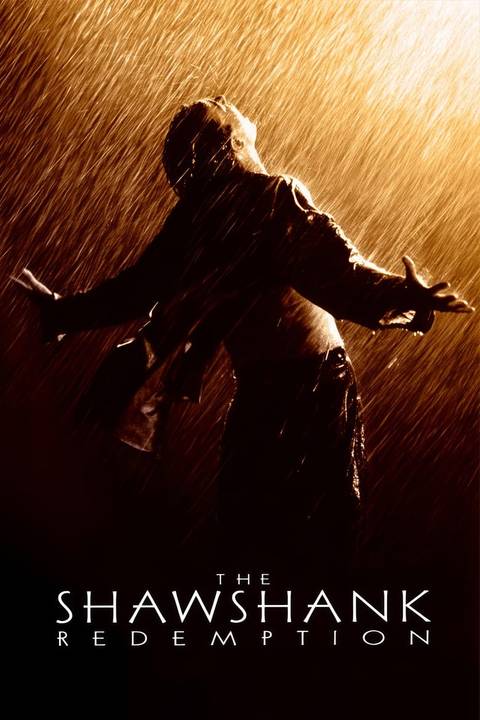
The Shawshank Redemption
- Release Date
- September 23, 1994
- Runtime
- 142 minutes
- Director
- Frank Darabont
- Writers
- Frank Darabont
KioskNews shows a cleaned-up reading view extracted from the publisher’s page — the original always lives on their site, not ours.