Schools are closed. Are we ready for PdPR again? — Shazlin Niza Ab Razak
OCTOBER 19 — As many families were settling in for the night, phones across Malaysian homes suddenly lit up with an announcement that caught parents off guard.
No school tomorrow.
Not because of a public holiday or examination break, but because the air outside had become unhealthy.
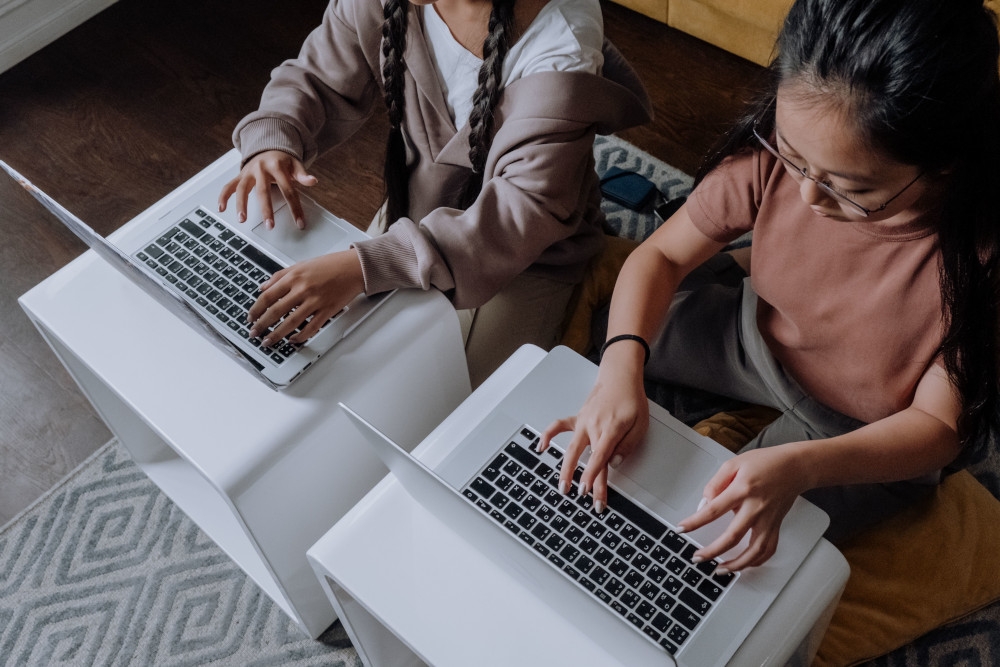
Many of today’s younger primary school pupils did not experience Covid-era PdPR as students. Some were babies. Others were toddlers or preschoolers. Even those old enough to remember the pandemic may never have experienced structured online learning independently. — Pexels pic
Today, schools across several states and affected areas are closed because of the worsening haze.
And just like that, many Malaysians had almost relegated to the Covid-19 years returned to our vocabulary: PdPR, Pengajaran dan Pembelajaran di Rumah, or home-based teaching and learning.
For some students, the announcement may have sounded like wonderful news. No school!
For parents, the reaction was probably rather different. Who will look after the children? Do I still go to work? Are classes online? What happens to today’s test?
Amid the flurry of WhatsApp messages and last-minute family arrangements, an important question emerged: After everything Malaysia went through during Covid-19, are we actually ready for PdPR again?
Let us be clear. When air quality threatens the health of students and teachers, closing schools is not an overreaction. It is a responsible and necessary precaution.
Education Minister Datuk Seri Fadhlina Sidek has stressed that the safety and health of students and school personnel remain the ministry’s priority. She has also acknowledged the difficulties caused by short-notice closures and said future decisions would be communicated earlier to give parents more time to prepare.
The decision to protect our children is right. The real test is what happens next. For educators, there is something almost surreal about seeing PdPR return.
During Covid-19, teachers became online educators almost overnight. Dining tables became workstations, bedrooms became classrooms and WhatsApp became a noticeboard.
We became accustomed to: “Can you hear me?” “Please mute your microphone.” And, of course, the classic: “Teacher, Internet problem.”
Teachers adapted. Parents adapted. Institutions adapted. It was an unprecedented educational experiment, and while we did not get everything right, we learnt.
But there is something we may have overlooked.
Many of today’s younger primary school pupils did not experience Covid-era PdPR as students. Some were babies. Others were toddlers or preschoolers. Even those old enough to remember the pandemic may never have experienced structured online learning independently.
To us, PdPR is returning. To some of them, it is entirely new.
Can a seven-year-old navigate an online platform independently? Can an eight-year-old remain engaged throughout a virtual lesson? Who helps when both parents are at work, a password is forgotten or the Internet connection suddenly disappears?
The education system may have experience. This generation of young learners may not.
Having technology does not automatically mean we are prepared. Open Teams. Send a Google Meet link. Upload a worksheet. Done? Not quite.
A student can log in and mentally disappear. A camera can be switched on while attention is switched off.
Digital attendance is easy to measure. Digital learning is not.
This distinction becomes even more significant with younger pupils, who require interaction, guidance and structure.
PdPR should therefore not mean transplanting an entire school timetable onto a screen. Six hours at school should not become six hours of video calls.
A short live explanation followed by meaningful independent activities may be pedagogically more effective.
The question should not be, “How long were our students online?” It should be, “What did they actually learn?”
There is another reality we cannot ignore.
Every affected student may have been told to learn from home, but not every home is an equal classroom.
For one child, PdPR may mean a personal laptop, high-speed WiFi and a parent nearby to help.
For another, it may mean a parent’s phone, prepaid data, siblings competing for the same device and nobody available to troubleshoot when something goes wrong.
Same haze. Same school. Same teacher. Completely different learning conditions.
Any meaningful contingency plan must recognise this digital inequity, particularly for younger pupils who cannot reasonably be expected to navigate online learning entirely on their own.
Haze can deteriorate quickly. Decisions may therefore need to be made quickly too. But our response should already exist.
Students should know which platform to use. Accounts should work. Teachers should know whether lessons will be synchronous, asynchronous or blended. Parents should know where official information will appear. Alternatives must exist for children who cannot participate effectively online.
These questions should not have to be answered at 10pm after a closure notice appears.
The announcement can be sudden. Preparedness cannot.
Today it is haze. Tomorrow it may be floods or another disruption we have yet to anticipate. We cannot control the wind or command the haze to disappear. But we can build an education system resilient enough to respond.
So yes, close schools when the air becomes unsafe. Protect our children and teachers. Health must come first. Covid-19 gave the adults in our education system a rehearsal. It did not necessarily give today’s youngest learners one.
For many of them, this may be their first real encounter with learning beyond the classroom.
The school gates may be closed. Their education cannot be.
*The author is an English Language Lecturer at the Centre for Foundation Studies in Science (PASUM), Universiti Malaya, and may be reached at [email protected]
** This is the personal opinion of the writer or publication and does not necessarily represent the views of Malay Mail.
KioskNews shows a cleaned-up reading view extracted from the publisher’s page — the original always lives on their site, not ours.