‘Hope Rhea Chakraborty feels vindicated after watching Pooja Meri Jaan’: Navjot Gulati
Navjot Gulati wrote his latest directorial, Pooja Meri Jaan, six years ago. Produced by Dinesh Vijan’s Maddock Films, the courtroom drama had been awaiting release for years before it dropped on ZEE5 earlier this month. Gulati, who had accused the production house of sidelining it amid its quest to build the Maddock Horror Comedy Universe, now insists that the discourse should be around what he’s addressed through the film, instead of around why it was stuck in limbo. “If you want to know about my struggles, watch Industry instead,” he says, referring to the 2024 miniseries on Amazon miniTV.
Pooja Meri Jaan revolves around a theatre actor facing a legal and media trial for allegedly abetting the suicide of her colleague, who was attracted to her and was found hanging inside his apartment after she rejected his marriage proposal. Given its thorny themes, Gulati is relieved, but also sad, that the film continues to be extremely relevant despite the delay in release. “That’s not something we’re happy about, right? Because you want society to progress, understand the basic ideas, and move on. But unfortunately, we’re very evidently regressing as a society. So, the film has become even more relevant with the passage of time,” the filmmaker tells SCREEN in an exclusive interview.
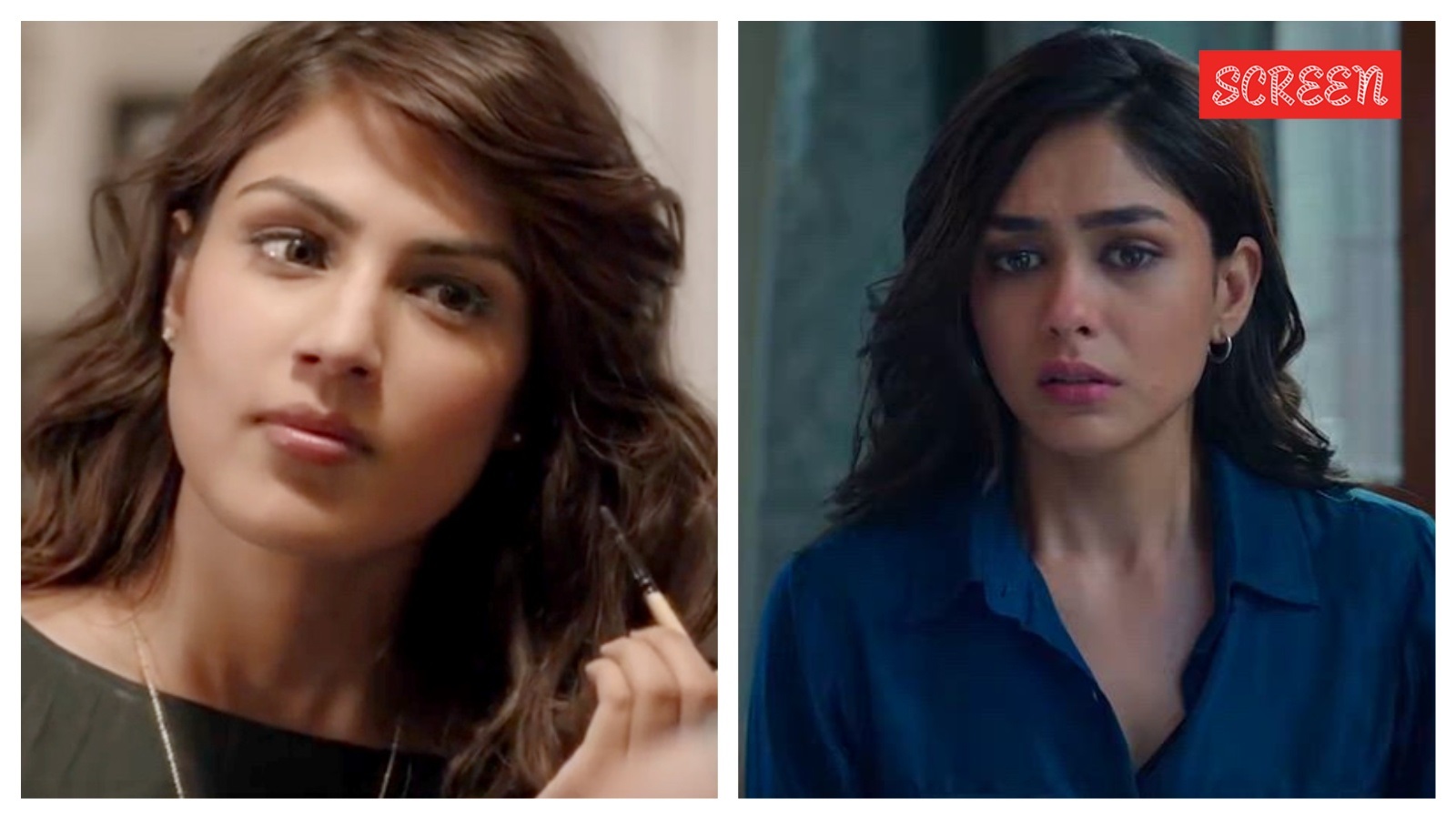
In what’s a classic case of “Truth is stranger than fiction”, after Navjot locked his screenplay, a strikingly similar incident began playing out in real life. Rhea Chakraborty was arrested and blamed by leading news channels for allegedly abetting the suicide of fellow actor Sushant Singh Rajput, who was found hanging inside his Mumbai apartment in June 2020. Navjot doesn’t deny getting influenced by that media trial. “If I’m making a film on a subject which is going on in front of me on live television, I’d obviously be observing and taking notes. Whatever happened to her is very sad. I hope she watches this film and feels vindicated, that somebody took her side,” he says. But he explains why he chose not to approach Rhea at the time to make her film more informed — “When somebody has gone through so much, and that too publicly, I’ve watched it on live television. There’s no need to ask. Why would I make her uncomfortable again by discussing things she’s gone through?”
The way he constructed the screenplay, it leads the audience to believe that the titular character of Pooja (Mrunal Thakur) actually has a part to play in causing the suicide of Aniket (Vikram Singh Chauhan). “I knew the house would be divided, and a lot of people would question the intent. Because for the first hour, you’re led to believe the girl is wrong. But honestly, in our country, the second half matters more. I feel it was necessary to do it because it covers all viewpoints. Also, it makes for a more entertaining film. If I keep telling you in a straight line, you’d get bored. I have to engage you first for more effective messaging,” argues Navjot.
Add to the mix the character of Sana (Huma Qureshi), Pooja’s lawyer, who also has her own journey in trusting her client completely, and the slope becomes even more slippery. “I didn’t approach them as two girls who play friends-turned-foes-turned friends. I see people as people. Huma’s character Sana is caught between two friends. She played it like she’s lost a friend. She didn’t play it like she lost a male friend and is now doubting a female friend. That was Huma’s approach. Also, her character was written to be the audience’s gaze. At first, she doubts Pooja, and so does the audience. Eventually, she starts believing in her, and so does the audience. Because that’s the character arc,” explains the director.
Navjot approached Mrunal right after her 2022 hit Telugu period romance, Sita Ramam. While she played a character on the other extreme end in that film, it was only after re-watching her 2018 breakthrough, Tabrez Noorani’s Love Sonia, that Navjot felt she possessed the range to play Pooja. “It was very easy for Mrunal because she could connect to whatever was happening to Pooja in the film. She’s been through similar situations. Most of the females in this country go through it, right? She could relate to it big time and portray the emotions effortlessly,” says the filmmaker.
The micro and macro of Pooja Meri Jaan
Like for Mrunal, Pooja Meri Jaan was also as personal for Navjot. “It is, in a way, my apology letter to someone I was obsessed with. I’ve been through similar beats as Aniket. This film is my way of saying I’m sorry about it. That’s how I function,” he confesses. He also credits three key women for shaping the film the way it has now — co-writer Kanishka Singh Deo, co-director Vipasha Arvind, and editor Sanyukta Kaza. “I can’t become a woman, but the idea is to take help from as many women to tell women’s stories,” he says, quoting the key example of when Pooja gives it back to her ex-boyfriend for “not keeping an Excel sheet” of every time a man has made a move on her.
Story continues below this ad
But despite the cynicism throughout the film — and even in society outside of it — Navjot opted for a happy ending instead of “antagonizing the society”. “I always wanted to end on a positive note,” he says, adding, “As we know, society right now is very hopeless. Cinema, at best, can offer some respite. That’s why I wanted an ending where there’s some glimmer of hope.” Some critics have claimed that ending, more than escapism, is more of a cop-out. Responding to the criticism that Pooja Meri Jaan is more of a cautionary tale for women than it is for men, he argues, “If you’re expecting society to change overnight, then that’s not going to happen. If you have to make your life liveable, you’ve to be aware of your surroundings. Whether it’s a man or a woman, if you become somebody who knows how to set boundaries, then that’s not something wrong, right?”
Navjot acknowledged that despite always being made to look over their shoulders in a man’s world, women are holding their own today. “I feel women are inherently smarter in today’s day and age. There are so many women in power. You see a Neha Bora from AISA (All India Students’ Association), who became the face of the students’ protests. That tells you women are the present and the future. I’m pretty sure women can take care of themselves. People expect the same level of equality between men and women. That hasn’t happened yet. Should it happen? Yes. When will it happen? I don’t know,” he says.
Navjot also addresses another real-life chain of events running parallel to the aftermath of his film. The fans of Nana Patekar, an actor who died of a heart attack earlier this month, have been going after Tanushree Dutta for calling him “evil” for allegedly sexually assaulting her in 2008, which spearheaded the #MeToo movement in India in 2018. “Tanushree Dutta has the right to be angry. Nana Patekar’s fans also have the right to put forward the other perspective because it was never proven in the court of law. It was just allegations, right? And I’m pretty sure there must be truth in what happened,” says Navjot, before pointing out that the discourse is missing the larger question.
Also Read — Ramayana advance booking: Ranbir Kapoor film crosses Rs 10 cr; tickets cost up to Rs 3,170
Story continues below this ad
“Do you believe wholeheartedly in one side of the story? Or do you have the patience to understand the other side also? Personally, I wasn’t there, so I can’t take a stand for either of them. I can take the stand for the girl in a fictional story because that’s the story I want to tell. But does that mean in every real-life incident, it’s the same? No. It’s always going to be subjective,” argues Navjot. He points out that the men who want to skew the narrative in their favour are even doing that by amplifying on Instagram Reels a scene from his film, where Vijay Raaz’s lawyer character speaks for men’s rights. “If you want to brand or label this film on the basis of just that, then it’s your doing. My film is covering the whole spectrum. You can’t control that. I’m pretty sure even after watching the film, there’ll be men who say Aniket was right. It’s people like them that I’ve made this film for. Maybe they understand this toxic behaviour is wrong and needs to end,” says the filmmaker.
KioskNews shows a cleaned-up reading view extracted from the publisher’s page — the original always lives on their site, not ours.