MBSB: Malaysia’s broader data centre industry less exposed to US AI chip curbs
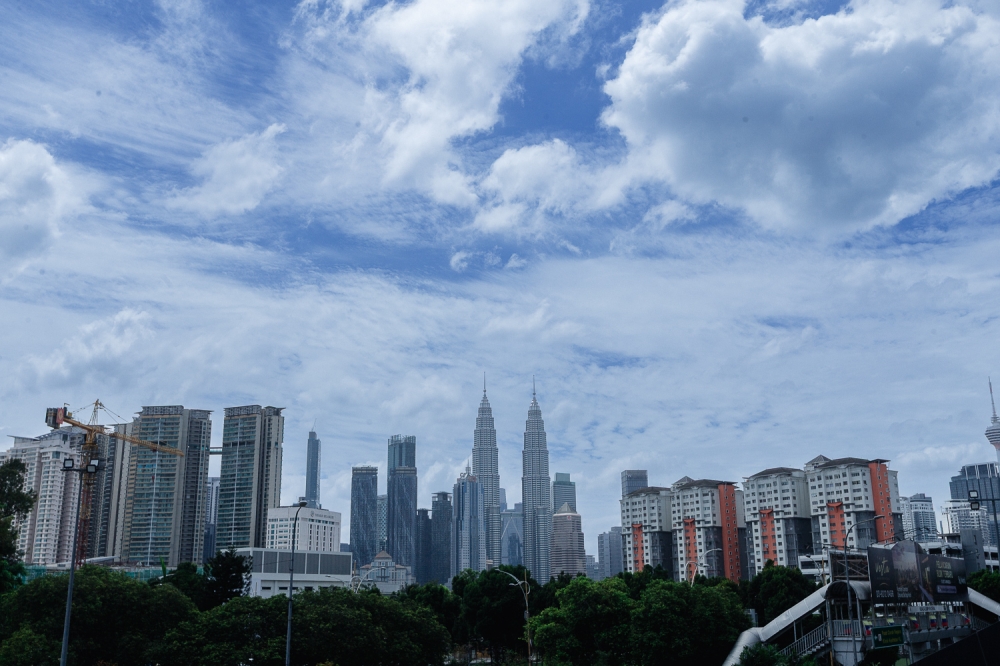

Malaysia’s broader data-centre industry is expected to be less exposed to proposed US restrictions on remote access to advanced artificial intelligence chips. — Picture by Raymond Manuel
First Published: Monday, 16 Nov 2026 5:02 PM MYT
KUALA LUMPUR, Nov 16 — Malaysia’s broader data-centre industry is expected to be less exposed to proposed United States (US) restrictions on remote access to advanced artificial intelligence (AI) chips.
Demand for conventional cloud, colocation and enterprise computing from non-restricted customers should remain comparatively resilient.
MBSB Investment Bank Bhd (MBSB IB) said the proposed restrictions should not be interpreted as a blanket prohibition on US AI chip deployment in Malaysia or evidence of a structural slowdown in global data-centre demand.
“Rather, the measures could increasingly differentiate operators based on customer profiles, regulatory compliance and end-use transparency.
“Nevertheless, prolonged licensing uncertainties could delay certain AI-specific investments and, by extension, incremental demand for electricity, substations, grid connections and related engineering works,” it said in a research note today.
The investment bank said the proposed US restrictions were aimed at limiting China’s access to advanced AI capabilities, while under existing US export controls, the most advanced American AI chips generally cannot be exported directly to China without the required authorisation.
However, Chinese technology companies could potentially obtain equivalent computing capabilities by renting access to Graphics Processing Unit (GPU) clusters located outside China without physically importing the underlying hardware.
MBSB IB said operators with significant exposure to Chinese customers and those directly providing GPU-as-a-Service would be vulnerable to the new regulations.
“In a more restrictive or worst-case scenario, this could lead to delays or cancellations of planned AI DC investments.
“We caution against extrapolating these risks to Malaysia’s entire data-centre industry, as conventional cloud, colocation and enterprise computing demand from non-restricted customers should remain comparatively less exposed,” it said.
On YTL Power International Bhd’s alleged links to the NVIDIA-Megaspeed controversy, MBSB IB said it was important to distinguish the allegations surrounding NVIDIA and Megaspeed International from YTL Power’s own operations.
It said YTL Power had been caught up in the broad-based sell-off amid the developments, following allegations by Culper Research that Megaspeed was a major customer of YTL Power, with Chinese technology giant Alibaba being the undisclosed ultimate customer.
MBSB IB noted that YTL Power’s operations mainly followed a colocation model, whereby it provided space, power and cooling to third-party tenants rather than directly operating GPU computing infrastructure.
“Thus far, we have not identified credible evidence implicating YTL Power in the alleged chip diversion,” it added. — Bernama
KioskNews shows a cleaned-up reading view extracted from the publisher’s page — the original always lives on their site, not ours.