3 things you might not know about daylight saving time
Heads up: The clocks are about to change. The evening of Halloween gets an extra hour as the clocks fall back an hour, meaning you can sleep in on Sunday, November 1.
Complaints about daylight savings are as old as daylight savings itself, and pretty much everyone has an opinion about the practice. As with any such topic, there are all kinds of myths and misunderstandings out there.
Farmers didn’t ask for daylight savings
This one comes up a lot: the idea that farmers are the reason we have daylight savings. In this version of the story, farmers, who work outside and need to align their workdays with the daylight, were the ones who made the argument for the practice.
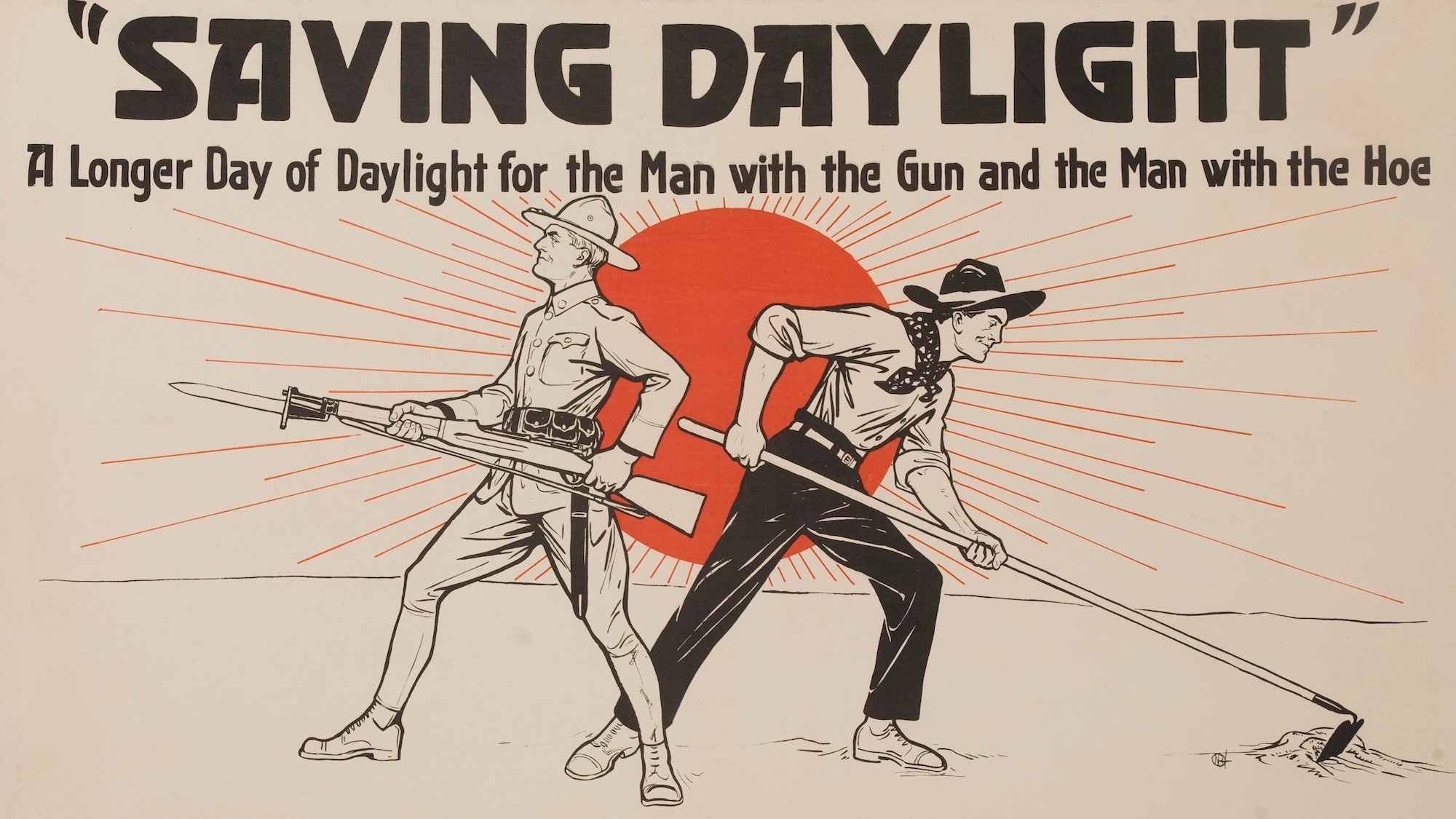
In truth, farmers were the main group opposed to daylight savings during World War I. According to the Library of Congress: “The agriculture industry fervently opposed the measure because farming schedules are based on sunrise and sunset not the clock.”
After the war there was a bill to repeal daylight savings, which passed through both houses of Congress. President Woodrow Wilson vetoed that bill, and his statement about the veto acknowledged this wouldn’t make farmers happy.
“I realize the very considerable and in some respects very serious inconveniences to which the daylight-saving law subjects the farmers of the country,” he wrote. Wilson sided with the industrial sector. The veto was overridden, leading to a long period where daylight savings was practiced only in certain areas. For example: New York City observed daylight savings, but rural areas in New York State did not (not what you’d expect if farmers broadly supported daylight savings).
None of this is to say that some farmers don’t support daylight savings time today—it’s just that farmers aren’t the reason the practice exists in America. If anything, they tried to stop it.
Benjamin Franklin didn’t invent daylight savings
There are some “facts” repeated so often that hardly anyone questions them, and “Ben Franklin invented daylight savings time” remains one of them. The problem is that it’s not true.
I’d understand if you’re skeptical—I’m a Canadian journalist trying to steal an achievement from one of America’s founding fathers. But you don’t have to take my word on this one—The Franklin Institute, a museum dedicated to Franklin’s legacy, states that “Daylight saving time is one thing that Franklin did not invent.” The United States didn’t even implement daylight savings until 1918, well over a century after Franklin passed away.
So where did the idea that he invented it come from? Probably from a satirical Journal de Paris article Franklin penned back in 1784.
In that piece he jokingly encouraged the residents of Paris to wake up earlier in the morning, in order to spend less money on candles. He also proposed a tax on shutters, rationing of candles, a prohibition of carriages on the streets after sunset, and church bells ringing at the crack of dawn every day. He, it goes without saying, wasn’t being entirely serious.
So where did the idea for daylight savings come from? New Zealand entomologist George Hudson first proposed intentionally shifting the clock in an 1895 talk to the Wellington Philosophical Society, then followed up with a paper in 1898.
The US already tried year-round daylight savings
This isn’t a myth, exactly, but it is something that rarely comes up in contemporary discussions about daylight savings. Multiple US states have proposed doing away with standard time entirely. Nationally, the Sunshine Protection Act, which passed the House over the summer, would institute the change from sea to shining sea.
Here’s the thing, though: this isn’t the first time. The US tried making daylight savings permanent during the height of the 1970s energy crisis. The problem was that people hated it. What was supposed to be a two-year experiment lasted less than a year because of a massive change in public opinion.

The Real Reasons Permanent Daylight Savings Time Never Stuck
Support for the change started high, as an October 1974 New York Times article lays out: 79 percent of the public favored the idea in December of 1973, but by February of 1974, that dropped to 42 percent—a 37-point swing. A bill to restore standard time in winter passed the House by a 362 to 16 vote.
What caused the backlash? Dark winter mornings. Particularly prominent were complaints from parents, who didn’t like their children walking to school in the dark.
A 1975 study by the US Department of Transportation concluded that a year-round switch possibly isn’t a great idea, proposing instead a schedule change. “We conclude that modest overall benefits might be realized by a shift from the historic 6-month DST system (May through October) to an 8-month DST system (March through October),” the paper concludes. This, notably, is pretty much what the US has been doing since 2007.
The past isn’t a prediction of the future—it’s possible switching to year-round daylight savings would go differently today. Walking to school is less common, for one thing, and streets are better lit. All the same, it’s worth realizing this has been tried before.
KioskNews shows a cleaned-up reading view extracted from the publisher’s page — the original always lives on their site, not ours.