How Bangladesh Garment Workers Protest Is An Advantage For India

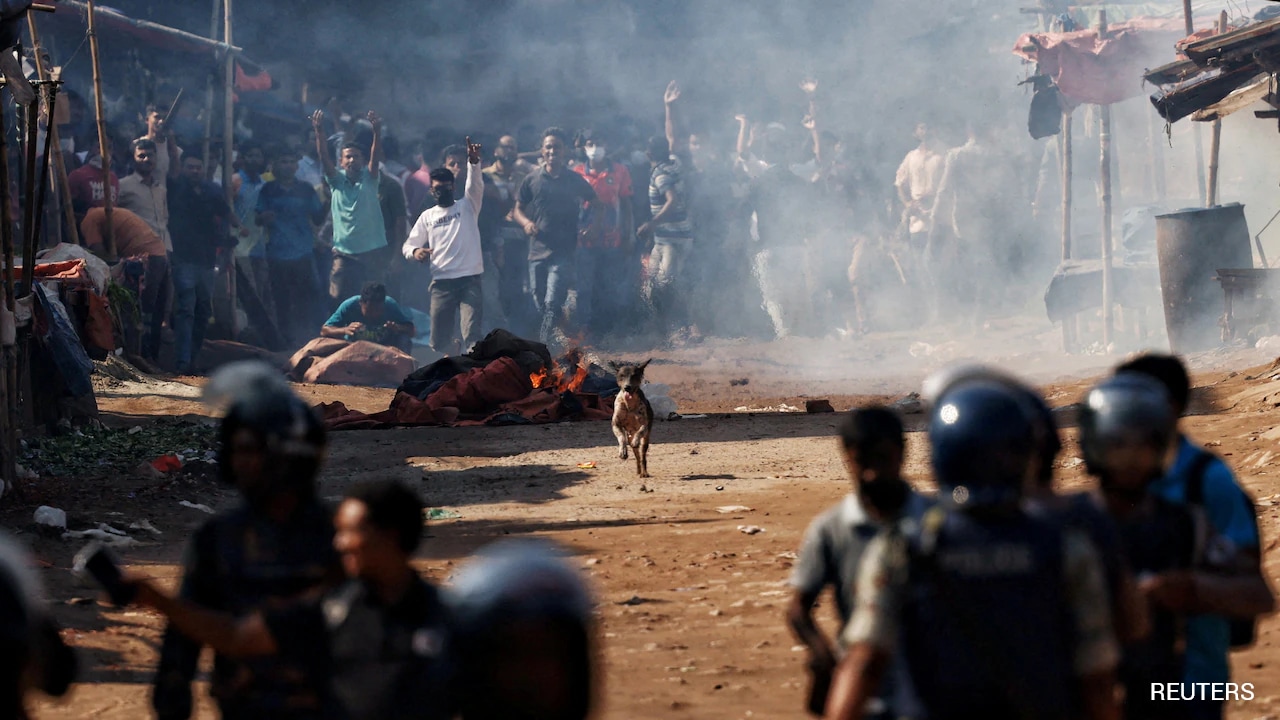
Bangladesh, the world's second-biggest garment exporter, has witnessed widespread protests by workers demanding higher pay, affecting manufacturing for major global brands like H&M, Primark and Uniqlo.
The impasse has not ended despite the government hiking the minimum wage by 36 per cent on Wednesday, with many factories still shut, resulting in delays in deliveries for clothing giants across the world.
The monthly minimum wage of ready-made garment (RMG) workers has been raised to TK 17,000 from TK 12,500 amid a demand for a minimum wage of TK 30,000.
Many of the major brands are now looking at neighbouring India amid the disruption in Bangladesh, where the readymade garments and textile industry employs around four million workers and generates an income of nearly 40 billion USD annually, which accounts for 10% of the country's GDP.
According to a Reuters report, between November 1 and 18, major global brands diverted about $254 million worth of orders from Bangladesh, with most moving to India.
The shift was also confirmed by the Bangladesh Garment Manufacturers and Exporters Association (BGMEA), the leading trade body in the sector in Bangladesh.
The sector has already suffered production losses worth US$428 million in just 18 days due to ongoing instability and disruptions.
A survey by the BGMEA revealed that buyers had already shifted 59 million pieces of confirmed garment orders, worth approximately US$254 million, to other countries.
In a statement to local media, BGMEA President Mahmud Hasan Khan said, "If someone is competing with us, the closest are India and Pakistan. But I will say, due to infrastructure reasons, India is much ahead of us. They have their own cotton, their own machinery, they have deep seaports, and they don't need transhipment; they need less time. They have no labour issues, and they have recently concluded an FTA with the European Union."
The Bangladesh government has dismissed the reports of export orders shifting to other countries. Ruhul Kabir Rizvi, Bangladesh Prime Minister Tarique Rahman's political adviser, called the reports misleading and described them as part of a coordinated campaign to undermine the government.
Rizvi said the government had responded promptly to workers' concerns through discussions and steps to ensure their legitimate dues and minimum wages.
Bangladesh has been a global hub for textiles and apparel manufacturing and is currently the second-largest exporter of RMG worldwide, after China. In 2024, the sector recorded USD 38.48 billion in export earnings, with knitwear contributing USD 20.52 billion and woven garments USD 17.95 billion.
While Bangladeshi garments still maintain a strong presence in traditional markets, led by the European Union, with key export destinations such as Germany, Spain, France, the Netherlands, Poland, Italy, and Denmark, the ongoing stir has become a major threat to keeping the traditional markets and customers with them.
The United States remains the largest single-country export market, followed by the United Kingdom and Canada.
KioskNews shows a cleaned-up reading view extracted from the publisher’s page — the original always lives on their site, not ours.