Turkana steps up Ebola preparedness with Sh2.3m supplies, frontline workers’ training
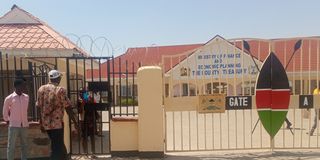
Turkana County Treasury office
Photo credit: Sammy Lutta | Nation Media Group

By Sammy Lutta
Correspondent
Nation Media Group
Turkana County has stepped up preparedness for a possible Ebola outbreak, receiving Sh2.3 million worth of medical supplies from development partners as it trains frontline health workers and strengthens surveillance in high-risk areas.
The county is classified among Kenya’s very high-risk areas because of its proximity to Uganda, Ethiopia and South Sudan, as well as commercial fish trade routes linking Lake Turkana to the Democratic Republic of Congo through Uganda. The presence of refugees from neighbouring countries also raises concerns about cross-border movement and the potential spread of infectious diseases.
The supplies, donated by the International Rescue Committee (IRC), are intended to strengthen infection prevention and control (IPC) in health facilities across the county and complement existing interventions to protect healthcare workers and communities.
County Director of Health Products and Technologies Mr David Moru said the consignment includes examination gloves, surgical masks, hand sanitisers, disposable aprons, safety boxes, waste bins, handwashing facilities, chlorine, liquid soap and paper towels.
Other items include protective equipment, sprayers and health education materials to support preparedness at facility level.
“These supplies will be distributed across sub-county health facilities to strengthen access to essential infection prevention and control commodities,” Mr Moru said.
County Director of Preventive and Promotive Health Dr Daniel Esimit said the donation builds on ongoing county efforts, including training healthcare workers, risk communication and community engagement.
“We have been sharpening our readiness for some time now. These supplies are an additional measure to staff capacity development, risk communication and community engagement,” Dr Esimit said.
He said the support demonstrated the importance of collaboration between the county government and development partners in strengthening health system readiness, improving infection prevention and control, and enhancing the capacity to respond to a potential Ebola threat.
Dr Esimit said 70 frontline healthcare workers had already been trained in Ebola preparedness and response as part of efforts to improve the county’s ability to detect and contain a possible outbreak.
The training brought together healthcare workers from the referral hospital, sub-county hospitals and facilities near the borders. They received practical instruction on the proper use of personal protective equipment, hand hygiene, environmental cleaning, waste management and safe patient handling.
“We expect to bank on them to reduce the risk of transmission within health facilities and communities,” he said.
Dr Esimit added that strengthening frontline workers’ skills in infection prevention and control, early detection and emergency response would improve the county’s ability to protect communities and contain a potential threat before it escalates.
He said Turkana’s risk profile was also influenced by the presence of refugees from countries affected by Ebola, some of whom move across borders, making continued vigilance and surveillance essential.

Turkana County Government offices.
Photo credit: Sammy Lutta | Nation Media Group
The county health authorities, he said, remained committed to monitoring potential threats and implementing proactive measures to safeguard public health.
Beyond health facilities, a multi-sectoral Joint Support Supervision team has intensified community sensitisation in Lomokori and Lochor-Alomala in Lokiriama Sub-County.
The team is educating cross-border communities about Ebola Virus Disease (EVD) and other zoonotic diseases, with the aim of strengthening early identification of suspected cases, appropriate management and referral to health facilities.
Development partners are also supporting other aspects of the county’s preparedness, with funding from the US Department of State helping to sustain interventions aimed at strengthening detection and response capacity.
Amref Health Africa is supporting surge capacity, infection prevention and control, risk communication and community engagement, and stakeholder coordination. The organisation has also procured tablets for screening teams.
FHI 360, which leads the Strengthening Infectious Disease Detection Systems activity in Kenya, is supporting the establishment and furnishing of the Public Health Emergency Operations Centre (PHEOC), while the Centre for Health Solutions is supporting sample referral.
The combined interventions are intended to strengthen preparedness across the health system, from screening and early detection at community and border level to infection control in facilities, sample referral and emergency coordination.
Follow ourWhatsApp channel for breaking news updates and more stories like this.
KioskNews shows a cleaned-up reading view extracted from the publisher’s page — the original always lives on their site, not ours.