10 Great '90s Miniseries That Outclass Today's Prestige Streaming Dramas

Tom is a Senior Staff Writer at Screen Rant, with expertise covering everything from hilarious sitcoms to jaw-dropping sci-fi epics.
Initially he was an Updates writer, though before long he found his way to the TV and movies team. He now spends his days keeping Screen Rant readers informed about the TV shows of yesteryear, whether it's recommending hidden gems that may have been missed by genre fans or deep diving into ways your favorite shows have (or haven't) stood the test of time.
Tom is based in the UK and when he's not writing about TV shows, he's watching them. He's also an avid horror fiction writer, gamer, and has a Dungeons and Dragons habit that he tries (and fails) to keep in check.
Miniseries account for some of the most successful TV shows in the age of streaming, with single-season shows regularly grabbing the pop culture zeitgeist. However, the modern era far from owns the format. Miniseries have been a small-screen staple for years, and few decades saw them explode in both quality and popularity quite like the 1990s.
The best 1990s miniseries do not merely hold up alongside today's. Many actively outshine them. Whether adapting classic literature, exploring political scandals, or taking science fiction into strange new territory, these limited series from the end of the 20th century accomplished remarkable things despite comparatively modest technology and budgets. The greatest '90s miniseries understood that a limited episode count should concentrate a story rather than stretch it, resulting in master-crafted productions that still represent the apex of the format.
The Politician’s Wife (1995)

British political dramas rarely get as deliciously ruthless as The Politician's Wife. The three-part Channel 4 miniseries aired in 1995 and begins when Flora Matlock (Juliet Stevenson) discovers that her Conservative politician husband, Duncan Matlock (Trevor Eve), has been having an affair. Rather than simply leave him, Flora gradually begins dismantling the career that he has prioritized above virtually everything else, transforming the series from domestic drama into a tense political revenge story.
Juliety Stevenson’s performance is phenomenal, and won the International Emmy Award for Drama 1995. Watching today, The Politician's Wife remains impressive primarily because of how efficiently it transforms its characters. Many modern prestige political dramas would take eight episodes to cover Flora's journey, adding subplots and supporting characters along the way. The Politician's Wife needs only three. Every betrayal meaningfully changes the balance of power, while its political backdrop gives the personal conflict much greater stakes. It’s a lean, intelligent miniseries that places character development ahead of spectacle.
Gulliver’s Travels (1996)

Long before the filmmaking technologies of today made enormous fantasy worlds commonplace, NBC spent two nights in 1996 taking audiences through Jonathan Swift's Gulliver's Travels. The 1990s miniseries stars Ted Danson as Lemuel Gulliver, whose unbelievable stories of tiny people, giants, floating islands, and intelligent horses leave those around him questioning his sanity. Danson is joined by Mary Steenburgen, Peter O'Toole, Omar Sharif, and Kristin Scott Thomas to make a formidable supporting cast (that includes an early appearance from future Sandman star Tom Sturridge).
The visual effects inevitably show their age, but the ambition of this five-time Primetime Emmy winner does not. Gulliver's Travels succeeded because it treated Swift's novel as considerably more than an excuse for fantasy spectacle. Modern fantasy dramas may be able to create more convincing giants and impossible landscapes, but they frequently struggle to match the combination of scale, wit, strangeness, and emotional heart that makes the Gulliver’s Travels miniseries such an achievement.
Middlemarch (1994)

The UK’s BBC was a powerhouse period drama producer in the 1990s, and the 1994 adaptation of Middlemarch is one of the network's definitive achievements. Screenwriter Andrew Davies adapted George Eliot's sprawling story into six episodes, with Juliet Aubrey starring as Dorothea Brooke. Her idealistic ambitions and disastrous marriage to Edward Casaubon (Patrick Malahide) form one thread in an enormous web of romance, social expectations, money, professional aspirations, and disappointment.
What makes Middlemarch exceptional even compared to modern miniseries is the ease with which it handles that complexity. Davies' script makes an enormous novel accessible without stripping away its intellectual substance. Contemporary prestige dramas often equate complexity with endless plotlines and deliberate ambiguity. Middlemarch is genuinely complex, yet remarkably clear. Its rounded characters and patient storytelling make many far more expensive contemporary period dramas seem surprisingly shallow by comparison.
Storm Of The Century (1999)

Unlike many Stephen King television events from the 1990s, such as 1990’s IT or 1994’s The Stand, Storm of the Century was not adapted from one of his novels. King wrote the story specifically as a TV screenplay, and ABC aired the three-part miniseries in 1999. The story revolves around the inhabitants of Maine's Little Tall Island, who find themselves trapped by a devastating blizzard just as mysterious stranger André Linoge (Colm Feore) arrives. Linoge knows everyone's darkest secrets, and he soon makes the community an appalling proposition.
The fact that Stephen King wrote Storm of the Century for TV is a key reason it shines. Rather than feeling like a novel compressed to work on the small screen, the 1999 miniseries is a masterclass in pacing. Each revelation escalates the situation until the community itself becomes more frightening than the storm outside, making it impossible not to binge. Modern horror TV shows may look more polished, but Storm of the Century remains harder to shake because its terror is delivered in such a well-written, immaculately-paced package (and it has one of King's bleakest endings too).
Wild Palms (1993)

Watching Wild Palms today can feel strangely like discovering a streaming drama that somehow escaped from 1993. ABC's five-hour miniseries takes place in a then-futuristic 2007 and follows attorney Harry Wyckoff (James Belushi) as he becomes entangled with a powerful organization built around emerging virtual-reality technology. It’s an unapologetically strange combination of cyberpunk, conspiracy thriller, and media satire. Still, while Wild Palms is undeniably messy, its chaos is also its greatest strength.
Rather than carefully explaining every strange development, Wild Palms throws audiences into an increasingly disorienting future dominated by manipulated information and technology. What’s more, its ideas about virtual realities and media-controlled politics have only become more poignant across the decades. Modern prestige sci-fi miniseries frequently promise similarly provocative concepts before settling into familiar mystery-box structures. Wild Palms offers no such predictability, and was boldly willing to be abrasive, confusing, and stylistically extreme. It may be rough around the edges, but that’s precisely what makes it timeless.
The Odyssey (1997)

Decades before Christopher Nolan’s blockbuster movie, NBC's 1997 The Odyssey miniseries tackled the foundational work of Western literature with a much smaller budget. Somehow, it worked. Andrei Konchalovsky directed the ambitious international production, and won a Primetime Emmy for his efforts, with Armand Assante starring as Odysseus. Its effects cannot compete with the photorealistic creatures available to modern productions like Nolan’s movie, but spectacle is only part of why The Odyssey miniseries is worth diving into.
The miniseries adaptation of The Odyssey makes Odysseus' seemingly disconnected adventures feel like parts of one exhausting journey, with Assante selling both the hero's cunning and his growing desperation to reach home. Most importantly, the miniseries has incredible narrative momentum. Contemporary fantasy TV shows often spend entire episodes arranging pieces for future seasons. The Odyssey crosses seas, civilizations, and supernatural realms at breakneck speed without sacrificing the emotional anchor holding everything together.
Tales Of The City (1993)

Few miniseries from any decade feel as intimate as Tales of the City. Based on Armistead Maupin's novel, the six-part adaptation premiered in the UK on Channel 4 in 1993 before PBS broadcast it in the United States in 1994. Laura Linney stars as Mary Ann Singleton, a young woman who moves to 1970s San Francisco and finds herself drawn into the interconnected lives surrounding eccentric landlady Anna Madrigal (Olympia Dukakis).
The importance of Tales of the City comes partly from its unusually frank depiction of LGBTQ+ life which, in the early ‘90s, was groundbreaking. However, reducing Tales of the City to its historical significance undersells how entertaining it is. Its overlapping relationships create an authentic sense of community, while Linney and Dukakis provide a strong emotional center for the sprawling ensemble cast. Modern prestige TV has become considerably more comfortable telling stories about LGBTQ+ characters, but Tales of the City still rivals its successors because its characters never feel like walking anthropomorphized social issues. They feel like genuine human beings.
Merlin (1998)

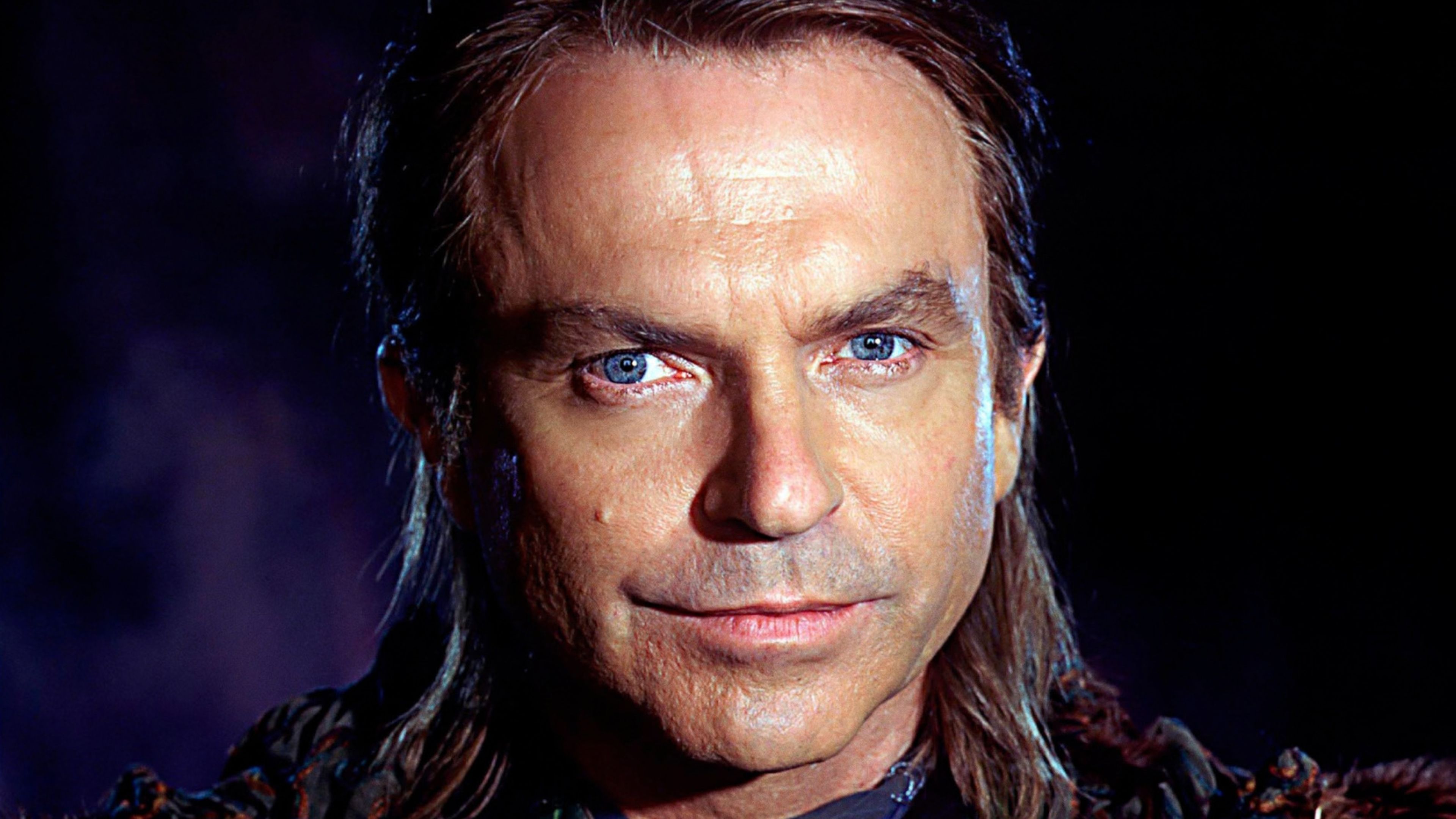
Before fantasy TV shows commanded blockbuster budgets, NBC's Merlin turned Arthurian mythology into a sweeping three-hour event. Airing across two parts 1998, the miniseries retells the legend largely through Merlin (played to perfection by Jurassic Park’s Sam Neill). Rather than merely advising King Arthur (Paul Curran), this version of Merlin becomes the central figure in a generational conflict involving Queen Mab (Miranda Richardson), Morgan Le Fey (Helena Bonham Carter), and the changing nature of magic itself.
The enormous ensemble cast of the 1990s miniseries also includes James Earl Jones, Martin Short, Rutger Hauer, and Isabella Rossellini, while the production received 15 Primetime Emmy nominations, winning for. What’s more, Merlin still holds up today even compared to modern fantasy miniseries thanks to its dedication to substance over style. Kingdoms rise, relationships collapse, and supernatural forces battle for relevance, yet Merlin's personal losses are what gives every twist and turn of the plot weight. Merlin confidently delivers a complete legend in two parts, using its runtime restriction as an advantage rather than a hindrance.
From The Earth To The Moon (1998)

HBO demonstrated the potential of prestige television long before the term was coined thanks to 1998's From the Earth to the Moon. Executive produced by Hollywood legend Tom Hanks, the 12-part miniseries dramatizes the Apollo program from its beginnings through the final lunar missions. Rather than focusing exclusively on Neil Armstrong (Tony Goldwyn) and Apollo 11, it explores engineers, astronauts, journalists, scientists, and families across the entire program, winning the Emmy for Outstanding Miniseries in the process.
Episodes didn’t only change perspective but storytelling style too. Modern prestige dramas with an anthology format regularly use stylistic experimentation as a selling point, but From the Earth to the Moon did so while maintaining a completely cohesive narrative. Its visual effects and presentation are secondary to the stories being told, and the 1998 series achieved a balance that many comparable modern sci-fi dramas, miniseries or otherwise, struggle to replicate.
Pride And Prejudice (1995)

Few literary adaptations have cast a longer shadow than the BBC's 1995 Pride and Prejudice. Period drama heavyweight Andrew Davies adapted Jane Austen's novel across six episodes, with Jennifer Ehle starring as Elizabeth Bennet and Colin Firth delivering his career-making performance as Mr. Darcy. The series follows their initially hostile relationship like every other version of Pride and Prejudice. However, none feel as more-or-less flawless as the 1990s miniseries.
The 1995 version of Pride and Prejudice celebrates everything that made the book so beloved, from Austen's supporting characters and social observations to the gradual romantic development of its central love story. Ehle and Firth make Elizabeth and Darcy's changing perceptions convincing through tiny shifts in performance rather than melodramatic declarations. Three decades later, countless prestige period dramas boast greater budgets and cinematic photography, but the Pride and Prejudice miniseries continues to prove that precise casting and finely-tuned pacing are considerably more important than production value.
KioskNews shows a cleaned-up reading view extracted from the publisher’s page — the original always lives on their site, not ours.