Senate ousts Paraguay's former President, prosecutors place Peña under house arrest
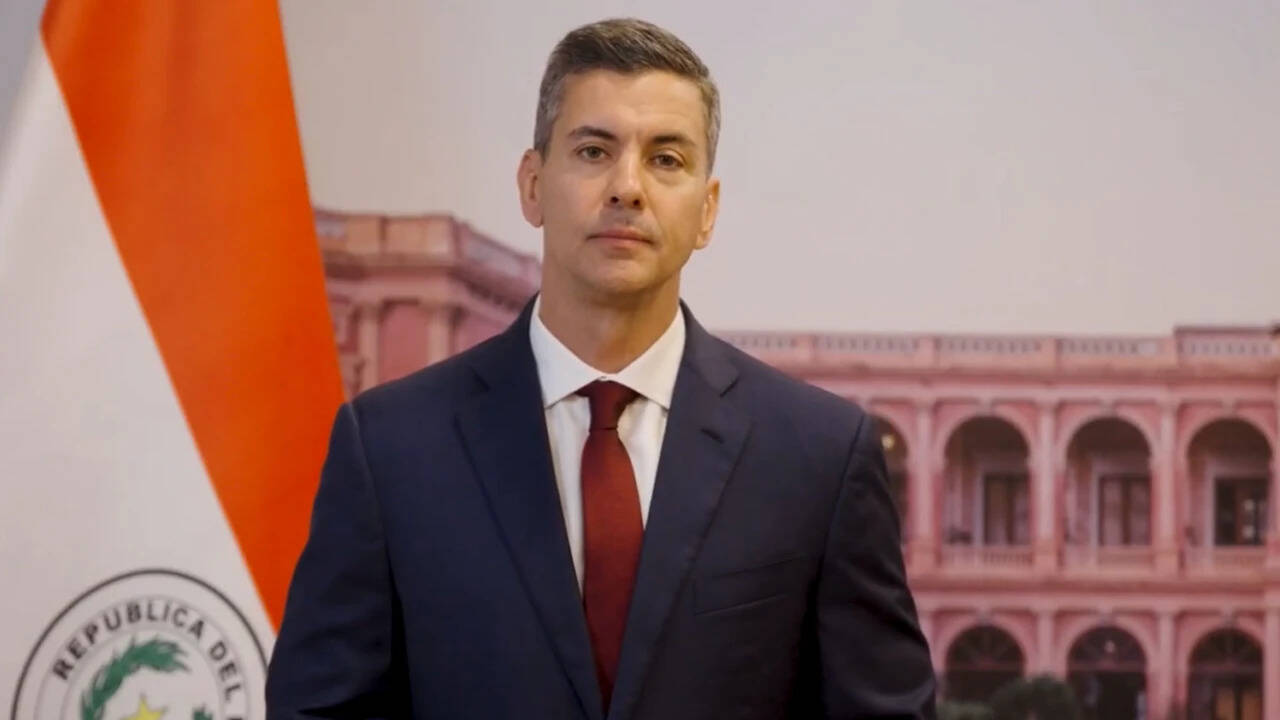

Lawmakers have accused Peña of using his political influence to direct hundreds of millions of dollars in public funds to Ueno Bank while regulators overlooked risky lending to companies linked to the lender's owners. Peña has denied wrongdoing.
Ousted Paraguayan president Santiago Peña was placed under house arrest in Asunción on Friday, November 6, on charges including breach of trust and influence peddling, hours after the Senate impeached him over the collapse of Ueno Bank, which left millions of customers unable to access their savings.
Peña has been ordered to remain at one of his homes until he appears before prosecutors on Saturday.All 44 senators present voted to remove Peña from office over misconduct, making him the second Paraguayan president to be ousted through impeachment since the end of Alfredo Stroessner's 35-year dictatorship in 1989. The charges against Peña include using public office for personal gain. Some carry prison terms of up to 10 years.Lawmakers have accused Peña of using his political influence to direct hundreds of millions of dollars in public funds to Ueno Bank while regulators overlooked risky lending to companies linked to the lender's owners. Peña has denied wrongdoing.Police surrounded his residence on Friday night as protesters gathered outside, waving Paraguayan flags and vowing to keep watch until morning.Prosecutors have also ordered the arrest of Carlos Carvallo, who headed the finance company that later became Ueno before Peña appointed him central bank chief in 2023.
It was not immediately clear whether Carvallo had been taken into custody.Vice President Pedro Alliana was sworn in as president on Friday to complete Peña's term, which runs until August 2028. Alliana, who is also under investigation in connection with the bank, faces pressure to ensure depositors recover their money and those responsible for the collapse are held accountable.“The Paraguay we receive today has urgent needs,” Alliana said after taking office.In a farewell message issued before the impeachment verdict, Peña said he did not want his “presence to be a cause of greater division or instability”.“I say goodbye with gratitude, without ignoring the anguish of those who are waiting for answers today,” he wrote.
Ueno Bank collapse triggers political crisis
The impeachment followed the collapse of Ueno Bank, one of Paraguay's largest lenders, which regulators seized earlier this week after identifying serious financial irregularities.The digital lender had more than three million customers, according to company figures, and had expanded rapidly with the help of public funds. Its customers were unable to withdraw cash, access their savings or use their cards after regulators intervened.More than one million Paraguayans had opened their first bank accounts with Ueno, according to the bank. Its customers included pensioners, state employees and even members of the national football team, which the lender sponsored.The fallout extended beyond depositors. A ride-hailing app that relied on Ueno shut down, leaving around 3,000 drivers without work. The state electricity company also said $21 million in loans from the Inter-American Development Bank and Taiwan, meant for public works, was trapped at the bank.Paraguay's bonds recorded some of the steepest losses in emerging markets during the week, while the guaraní weakened against the dollar.Some depositors began receiving their money back on Thursday. The initial payments covered accounts holding up to 10 million guaraníes, worth around $1,500. Deposits are insured up to approximately $35,000, a limit the central bank says covers 97% of Ueno's customers.The central bank has described the collapse as an isolated case and maintained that the wider financial system remains safe.
Allegations of political influence and regulatory failures
Ueno grew from a relatively obscure financial company into one of Paraguay's biggest banks by deposits within a few years.
More than $800 million in public money helped fuel its expansion.The allegations against Peña centre on his previous stake in Ueno's holding company, which he sold in March 2025, and his appointment of Carvallo to head the central bank.Lawmakers have also accused Peña of allowing the state pension fund to deposit $355 million with Ueno, exceeding legal limits.Regulatory scrutiny intensified over loans to companies linked to the bank's controlling shareholder, Grupo Vázquez.
The central bank reportedly found that some related-party loans exceeded legal limits and lacked adequate collateral. Poorly documented loans and expenses incorrectly counted as assets also contributed to the lender's financial troubles.Analysts have argued that Ueno's political connections helped it avoid regulatory scrutiny despite growing concerns over its finances.“Under Peña, the central bank began to lose credibility, lose neutrality and then relax all its control mechanisms to favor the business group that had Ueno Bank as one of its pillars," said José Tomás Sánchez, a political theory professor at the National University of Asunción.Peña had defended the bank until weeks before its collapse. Last month, he told reporters that a regulatory inquiry did not mean Ueno would shut down and accused the media of creating panic.Separately, prosecutors have charged 27 people linked to Ueno with offences including breach of trust and attempted fraud. A judge ordered six former directors, including founder Miguel Vázquez, to be held in pre-trial detention.
Two others were placed under house arrest with electronic monitoring.Authorities have also seized luxury cars, a yacht and two small planes linked to Vázquez.
Political fallout and Peña's loss of support
Peña's removal followed a rapid breakdown of support within his ruling Colorado Party, particularly after former president and party leader Horacio Cartes turned against him.Peña had resigned on Thursday as the crisis deepened. However, lawmakers proceeded with impeachment proceedings, with the lower house voting 78-0 to approve the charges before sending them to the Senate.The Senate's decision to impeach him meant he lost the immunity he would have retained had lawmakers accepted his resignation.Under Paraguay's Constitution, former presidents become senators for life and enjoy parliamentary immunity unless removed through impeachment.Peña, a former International Monetary Fund economist, had risen through the political ranks with Cartes' backing. Cartes, a tobacco magnate, had appointed him finance minister and supported his presidential bids.However, Peña later sought to build an independent political base, with Ueno's expansion becoming a key part of his growing influence, analysts said.Tensions between the two intensified as concerns about the bank's lending practices grew. In September, senators loyal to Cartes began questioning the central bank over risky lending to related companies.After Ueno was seized on Tuesday, Peña's political position weakened further.
Cartes publicly backed his removal, leaving the president without support within his own party.“Cartes put the nail in the coffin,” said Andrew Nickson, a Paraguay expert at the University of Birmingham. “Peña had no political base to rely on, and he was left high and dry.”The impeachment brought an abrupt end to a presidency that had been viewed as among South America's more stable administrations.
KioskNews shows a cleaned-up reading view extracted from the publisher’s page — the original always lives on their site, not ours.