Where are we now in Rodrigo Duterte’s ICC case?
Already have Rappler+?
to listen to groundbreaking journalism.

EX-PRESIDENT. Former president Rodrigo Duterte keynotes the proclamation rally of his senatorial candidates at the Club Filipino in San Juan City on February 13, 2025.
Rappler
Duterte's trial will begin on November 30, but a lot of things have happened and are happening before his historic appearance at the ICC trial chamber
AT A GLANCE
- Former Philippine President Rodrigo Duterte is detained at the International Criminal Court (ICC) facing charges of crimes against humanity related to his war on drugs.
- The ICC Trial Chamber III is preparing for a full trial set to begin on November 30, 2025, following several status conferences to discuss the prosecution's case and trial logistics.
- Duterte's legal team has undergone changes, and recent filings include a request for the prosecution to refile charges, while the prosecution asserts that Duterte is fit for trial.
This is AI-generated. Read the article for full context. Report any errors.
Former president Rodrigo Duterte, once strongman of the Philippines, remains detained at the International Criminal Court (ICC) headquarters over his crimes against humanity case that stemmed from his bloody war on drugs.
On Wednesday, September 16, the ICC Trial Chamber III will hold its third status conference with the following on the agenda:
- Prosecution’s case: List of witnesses, number of hours to be given to the prosecution to present its case, list of evidence, disclosure to the defense, and additional incidents
- Trial’s schedule from November 30 until the ICC’s spring recess in 2027
Duterte will face a full-blown trial on November 30, marking the start of hearings where the prosecution will be presenting its evidence against him, while his legal counsels will be defending him against the allegations.
He was arrested in March 2025, and since then, things have moved relatively fast in The Hague, Netherlands.
Status conferences
Duterte’s three counts of crimes against humanity case is still pending with Trial Chamber III. The court has been conducting status conferences ahead of the actual trial on November 30.
These conferences are done so that parties could discuss matters related to the case before proceeding to full trial. Besides schedules, the court is expected to also discuss anticipated evidence, as well as language that will be used in the hearings.
ICC assistant to counsel Kristina Conti said earlier that these conferences are done to ensure that the trial will proceed smoothly.
So far, the court has held two conferences: On May 27, when it announced that the trial will begin on November 30, and then on June 23, when the chamber cautioned lawyers against granting media interviews.
Lead up to the trial
After his arrest on March 11, 2025, Duterte faced the all-women chamber of the Pre-Trial Chamber (PTC) I on March 14.
During this initial hearing and Duterte’s first and only appearance so far, the court checked his identity and the language they could use for the proceedings.
In February 2026, the pre-trial chamber held confirmation of charges hearings for Duterte’s case. During the four days of hearings, both the prosecution and the defense provided a glimpse of their evidence.
The prosecution sought to convince the court that there were substantial grounds to believe that Duterte allegedly committed crimes against humanity.
Almost two months after the pre-trial, on April 23, the chamber confirmed all the three charges against the former president. thus, elevating the highly-anticipated case to the trial stage.
While these pre-trial hearings were happening, the Duterte camp was also challenging his case on grounds of jurisdiction, asking whether the court had the mandate to handle his case.
A day before the pre-trial chamber’s decision on the confirmation of charges, the ICC Appeals Chamber denied with finality Duterte’s jurisdiction appeal. This cleared the way for the trial.
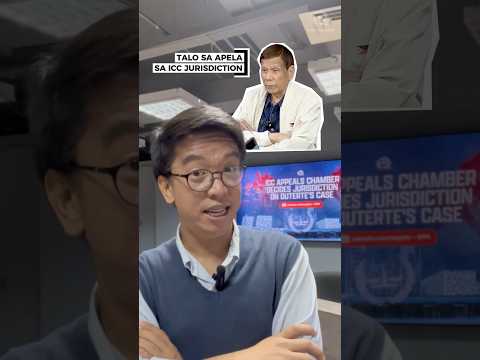
Meanwhile, before the start of the status conferences, Nicholas Kaufmann withdrew as Duterte’s lawyer. The former Philippine president picked the former president of the ICC Bar Association, Peter Haynes, as his new counsel to represent him during the trial stage.
Duterte was absent during his pre-trial hearing on jurisdiction, as well as in his status conferences. He, however, will be compelled to face the court physically during the trial proper.
Recent filings, resolutions
On May 21, the Pre-Trial Chamber I denied Duterte’s appeal of the chamber’s ruling which confirmed his ICC cases.
A day later, on May 22, the ICC Trial Chamber III ruled that Duterte was still not qualified to avail himself of temporary liberty and should then remain in detention. Every year, the ICC chambers conduct a review to check if detention is still warranted for an accused.
The trial chamber, on June 28, also ordered the freezing of the money that Duterte was carrying at the time of his arrest. The amount of cash seized was, however, not publicly disclosed.
In a motion dated August 31, Duterte also asked the trial chamber to order the prosecution to refile the cases against him. Haynes argued that the prosecution’s document containing the charges or DCC “is not fit for [its] purpose” and should be stricken out.

“The Defense is not appealing the outcome of the confirmation hearings (in which the PTC confirmed charges, meaning Duterte will proceed to trial). But what it is seeking to do is to have the court order the Prosecutor to refile the DCC,” ICC assistant to counsel Ross Tugade explained.
This September, the prosecution submitted its pre-trial brief or the summary of its case against Duterte. The parties — the victims’ representation included — also submitted their observations about Duterte’s continued detention.
“Based on the unanimous findings in the Experts’ Reports, the Chamber should conclude that Mr. Duterte is capable of meaningfully exercising his procedural and fair trial rights and that he is fit for trial,” said the prosecution. – Rappler.com
KioskNews shows a cleaned-up reading view extracted from the publisher’s page — the original always lives on their site, not ours.