Rich nations must pay their share, says Nepal minister as glacial‑collapse floods expose climate risks
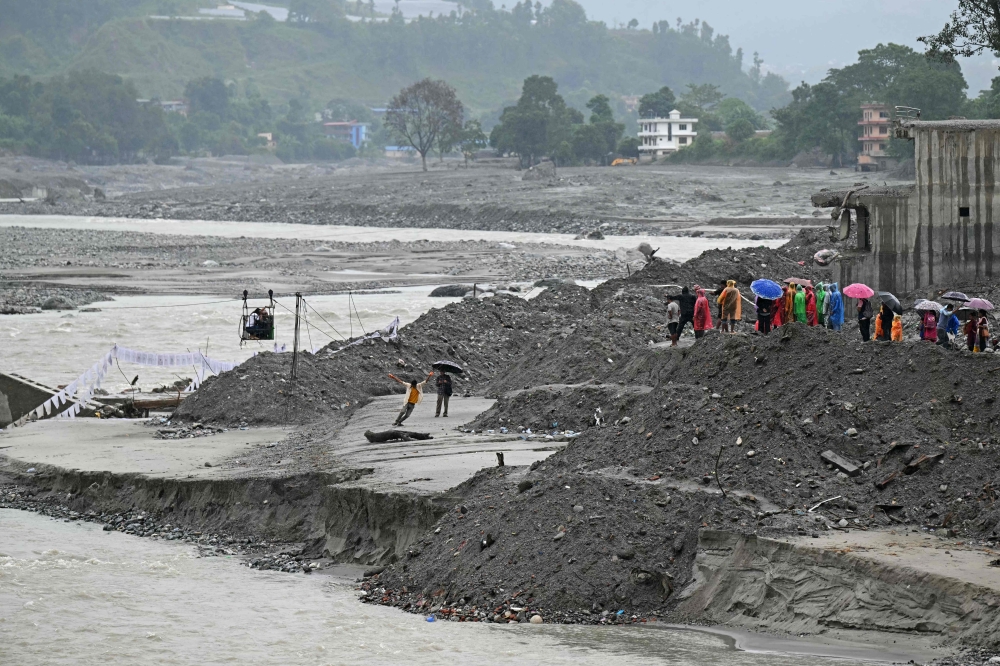

People wait amidst rain to cross the Trishuli river via a zip line, in the aftermath of August 26 flash flood, at Devighat in Nepal’s Nuwakot district on September 24, 2026. The catastrophic August 26 flood was triggered by a Himalayan glacial mountain collapse on the China-Nepal border, that scientists have linked to climate change. The tsunami-like floodwaters tore through mountain districts, destroying roads, bridges and hydropower dams, and killed at least 1,446 people. — AFP pic
First Published: Saturday, 26 Sep 2026 7:00 AM MYT
NEW YORK, Sept 26 — Wealthy nations must do their fair share to help countries that are least responsible for the climate crisis, yet bear its brunt, Nepal’s foreign minister told AFP on Thursday.
The Himalayan nation suffered one of the worst catastrophes in its history late last month when a tsunami-like flood, triggered by a high-altitude glacial mountain collapse along the Nepal-China border, cut a swathe of destruction.
More than 1,400 people died, 6,000 are still missing, and the economic devastation runs in the billions of dollars.
“What we’re trying to convey to the world is this: these issues of climate change are not theoretical anymore,” Minister of Foreign Affairs Shisir Khanal said in an interview at Nepal’s permanent mission, during the United Nation’s high-level week.
“These are becoming real, and the frequency of such disasters are likely to happen more often over the next few years as the temperature rises, as the glaciers melt.”
Scientists from the World Weather Attribution (WWA) have described the event as a “compound crisis” in which local geological instability combined with long-term warming that has led to glacier retreat and permafrost thaw.
Nepal has contributed negligibly to the breakdown of the global climate system, Khanal added.
More than 90 per cent of its electricity comes from hydropower, over 70 per cent of new cars sold are electric, and the nation contributes just 0.1 per cent of global greenhouse gases.
“So why should we, who have not had any contribution to this issue, only bear the burden?”
Rich countries should not only help when disaster strikes, he said “but provide us with financing so that we can build resilient communities.”
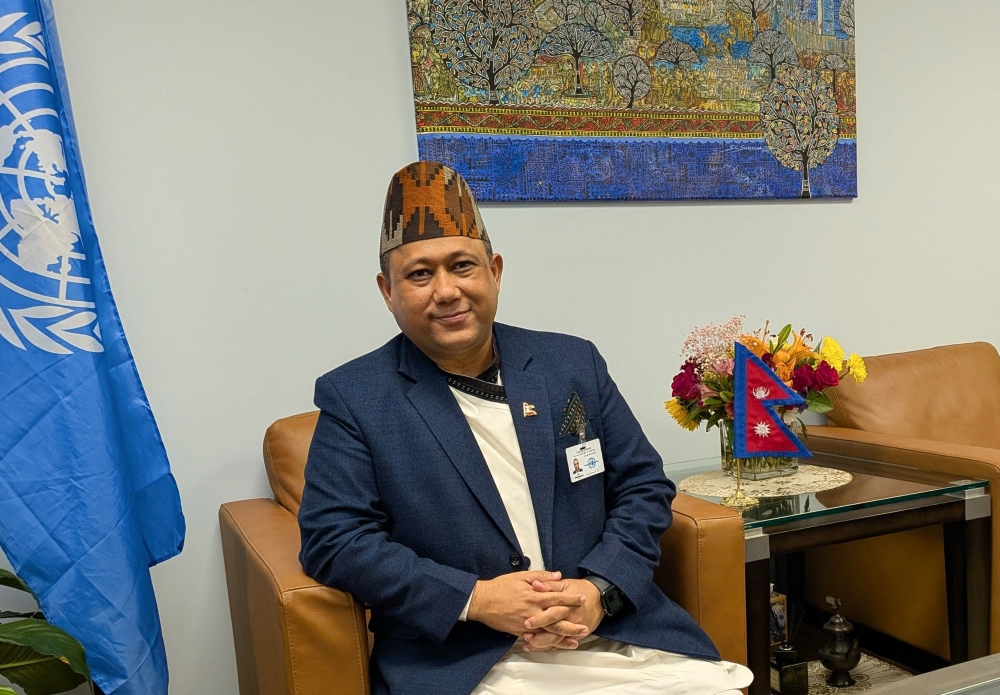
Nepal’s foreign minister Shisir Khanal poses at Permanent Mission of Nepal to the UN on the sidelines of the 81st United Nations General Assembly in New York September 24, 2026. Climate change disasters are real, happening now — and the rich world must pay its share to help those countries least responsible for the crisis yet bearing its brunt, Nepal’s foreign minister told AFP yesterday. — AFP pic
US$5 billion disaster cost
Khanal said his meetings in New York had been productive, with the United States announcing US$31 million (RM126 million) in new flood recovery support.
The G7 informally promised support at a meeting on Wednesday, he said, and Britain has also vowed to help.
Still, the scale of the challenges is enormous: preliminary estimates by his government put the cost of the disaster at US$5 billion.
Nepal has asked the UN’s Loss and Damage fund for US$20 million, the maximum allowed, but a tiny fraction of what it needs.
The fund, established in 2022 in the aftermath of catastrophic floods in Pakistan, has yet to make even its first disbursement and is dramatically underfunded — and climate justice advocates see Nepal as a key test of its credibility.
Khanal said, however, he had been encouraged by cash assistance and rescue teams sent by Nepal’s neighbours, as well as the Nepalese diaspora who had sent money directly to the Prime Minister’s Relief Fund.
Previously, he said, the diaspora preferred to donate to international organisations and local nonprofits — but that has changed since the election of new Prime Minister Balendra Shah, a former rapper who won power on the back of a youth-led movement.
Jeremy Konyndyk, a former USAID official under Joe Biden, has criticised President Donald Trump’s administration for sweeping aid cuts to Nepal after it took office, including for flood prediction and glacier inventories.
“There’s no early warning system that probably exists in the world right now to imagine a compounded disaster of that nature,” Khanal said. “But obviously what USAID and other institutions used to provide us is financial and technical assistance.”
Nepal now needs more such assistance from the world to develop more complex systems involving satellites to monitor the rate of glacial melt and provide advance warnings, he said. — AFP
KioskNews shows a cleaned-up reading view extracted from the publisher’s page — the original always lives on their site, not ours.