Ethiopia’s forever wars are lesson for Iran - opinion
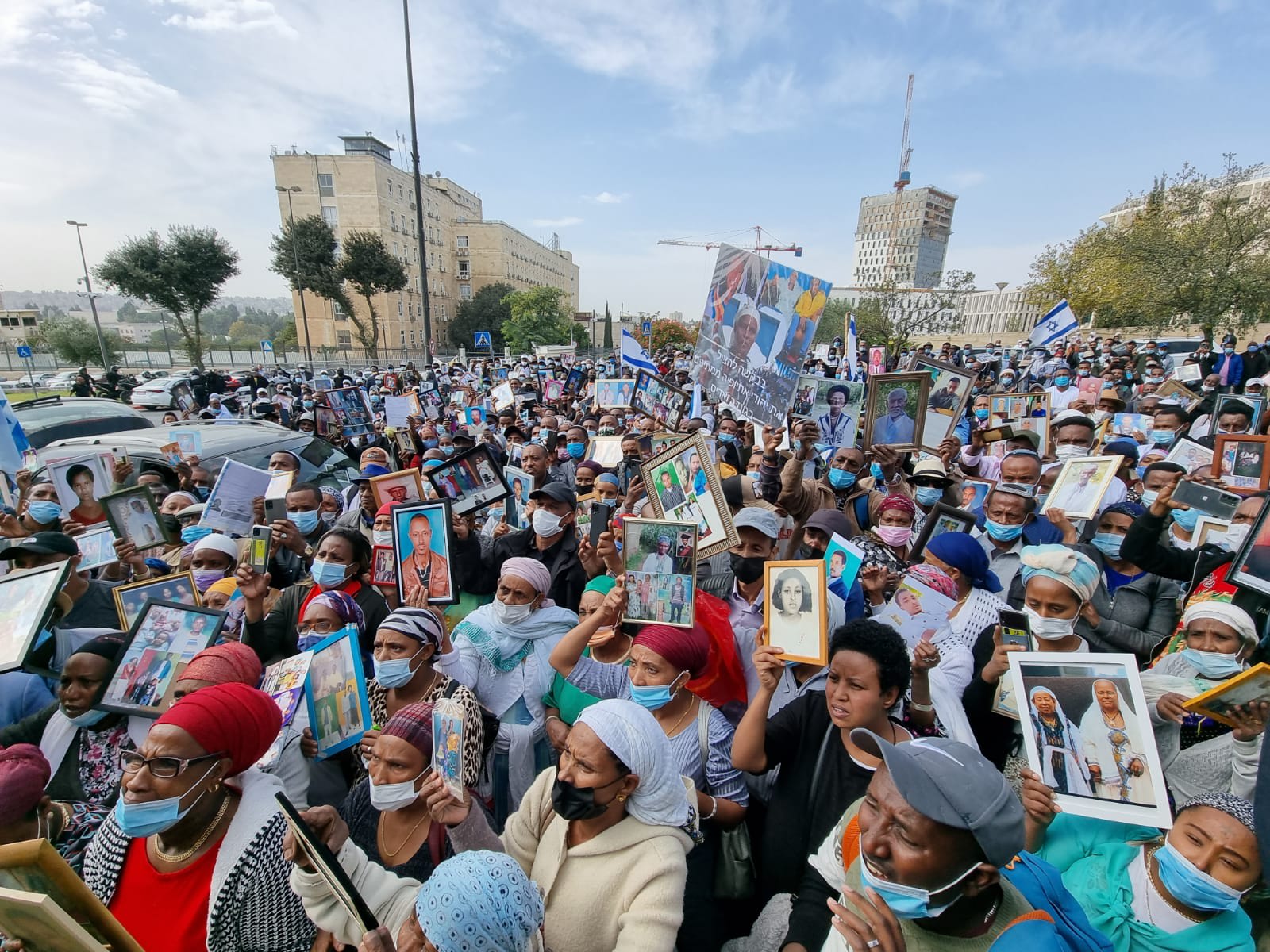
Modern Ethiopia’s immense tragedy serves as a troubling example of the structural failure of the ethnic-linguistic federalism imposed upon a historical African giant, with devastating consequences for the second most populous nation in Africa.
Beyond triggering internal conflict, this model’s right to secession enabled Eritrea to secede in 1993 (and was since enshrined in Ethiopia’s constitution in 1995). As a result, Ethiopia lost access to the sea and became the world’s most populous landlocked country. This is an existential national security crisis.
Ethiopia’s experience is a warning to those advocating similar ethnic-linguistic federalism for historically cohesive states, including Iran. Modern Ethiopia’s story also illustrates the dangers of such an approach, as political fragmentation and competing ethnic interests have contributed to recurring conflict and national disintegration.

Ethiopia is historically celebrated as one of the oldest civilizations in the world, endowed with a rich and magnificent culture. The ancient Persian prophet Mani, writing in the third century CE, during the Sasanian Empire, recognized Axum (ancient Ethiopia) alongside Persia, China, and Rome as one of the four great civilizations of the world.
Yet, this millennia-old continuity was abruptly shattered in the late 1960s, hijacked not by foreign conquest, but by a toxic wave of radical Marxism. In 1969, a Marxist student activist named Wallelign Mekonnen published a highly controversial essay that marked the modern misfortune and tragedy of Ethiopia.
His fatal premise was that Ethiopia was not a cohesive, singular nation, but rather a collection of distinct “multi-nations,” where every single nation and ethnic group possessed the right to self-determination, including secession. This concept effectively turned neighbors into rivals overnight by legalizing national fracture.
Marxist military forces overthrew the centuries-old Ethiopian monarchy in 1974.
The seeds planted by Mekonnen’s ideology began to dictate state policy. The revolutionary forces that later took power ultimately institutionalized a new ethnic-linguistic federal system.
The architecture of fracture: Ethnic-linguistic federalism
Following the capture of the capital, Addis Ababa, by rebels in 1991, a system of regions based on ethnic-linguistic federalism was eventually institutionalized. The practical implementation of this system yielded disastrous consequences. People who had lived together for generations were suddenly driven out and expelled from their homes simply because they belonged to a different ethnic group.
Furthermore, each ethnic region maintained its own regional paramilitary forces.
Though the ethnic Tigrayan group constitutes about 6% of Ethiopia’s total population, the Tigray People’s Liberation Front-led forces took over the capital in 1991 and ruled the country for 27 years. During this era, the Tigrayan regional forces built the most formidable, battle-tested, and heavily armed regional militia in the country.
Eritrean independence
Driven by identity-based political changes and following a protracted war, Eritrea declared independence from Ethiopia in 1993, and Ethiopia completely lost its access to the sea.
Despite possessing a highly strategic geographic position along the Red Sea coast, Eritrea failed to prosper and devolved into a poor country, ruled by one of the most isolated, closed, and brutal dictatorships in the world.
In 1991, as Ethiopia descended into political chaos and rebel forces approached Addis Ababa, Israel launched one of the most remarkable rescue operations in the country’s history – Operation Solomon.
In less than two days, around 14,300 Ethiopian Jews were flown to Israel, escaping the rapidly deteriorating security situation. In a matter of hours, the operation changed the fate of thousands of people and became a defining chapter in the history of Ethiopian Jews. For Israel, the operation remains a source of national pride.
In 2018, Abiy Ahmed became the new prime minister of Ethiopia, promising to restore order, strengthen national unity, and dismantle or integrate regional paramilitary forces. Predictably, the Tigrayan regional forces fiercely resisted the central government’s efforts.
In 2020, operating under the banner of the TPLF, the regional forces of Tigray launched a coordinated military assault against government forces and later advanced toward the capital. They were ultimately defeated, but the human cost of this ethnic-centric conflict was staggering – between 2020 and 2022 alone, more than 500,000 people perished in the ensuing civil war. Women were among the primary victims of this tribal warfare.
Somaliland dimension
Before European colonizers arrived in the Horn of Africa, the contemporary states of Somalia (formerly an Italian colony), Somaliland (a British protectorate), and Djibouti (a French colony) did not exist.
In 1960, southern Somalia gained independence from Italy, and British Somaliland gained independence from Great Britain. Upon its independence, 35 nations, including the permanent members of the UN Security Council and Israel, recognized the State of Somaliland.
Five days later, Somaliland voluntarily entered a union with southern Somalia. However, the union proved disastrous; Somaliland suffered brutal persecution and systemic mass killings by the central government in Mogadishu. Consequently, in 1991, Somaliland dissolved the union, reasserting its independence as a distinct, sovereign nation.
This was the case of a sovereign nation that voluntarily joined a union and subsequently separated from it.
Eritrean independence stripped Ethiopia of its entire coastline, making it a landlocked nation. Consequently, Ethiopia’s vital imports have been forced to flow almost exclusively through neighboring Djibouti. Desperate for a sovereign sea outlet, Ethiopia began looking for alternatives.
Somaliland, which has over 800 km. of coastline along the Gulf of Aden, extended a historic proposition to Ethiopia: a long-term land lease to grant Ethiopia direct sea access, in exchange for official diplomatic recognition of Somaliland’s independence.
Ethiopia has not yet officially recognized Somaliland because of political considerations, although the two countries signed a Memorandum of Understanding in 2024 to lease a 20 km. stretch of coastline.
Regional alignments and hostility
This evolving geopolitical arrangement and the presence of Israel and the UAE in Somaliland have provoked a fierce counter-alignment:
1) The Turkish and Islamist alignment in Somalia:
Turkey has established a massive military presence and military bases in Somalia, a nation engulfed in a brutal civil war where a significant portion of the territory remains under the active control of the Islamist Al-Shabaab terrorist group.
Turkey’s objective of countering the UAE and Israeli presence in Somaliland will suffer a significant blow if Ethiopia officially recognizes Somaliland and establishes a close military alliance with Israel.
2) The resurgence of domestic insurgency and Eritrea:
The 2022 peace agreement in Ethiopia was suddenly shattered last month when the armed TPLF forces launched violent military offensives against Ethiopian federal government forces.
In response, Addis Ababa vehemently accused the Eritrean government of actively backing the TPLF rebels. Consequently, Ethiopia completely severed all diplomatic relations with Eritrea.
The strategic alliance with Israel
Following Israel’s official recognition of Somaliland in 2025, a critical geopolitical pathway opened for Ethiopia.
Confronted with hostile Islamist currents, Turkey’s heavy presence and Islamic terrorists in Somalia, and a Muslim Brotherhood-aligned government in Sudan, Ethiopia urgently needs serious strategic allies – above all Israel, alongside the UAE and India. This alignment centers on the development and security of Somaliland’s Port of Berbera, providing Ethiopia with a counterweight against regional adversaries and securing its maritime trade and national interests.
For Ahmed’s government, now in the midst of more civil turmoil, permanent access to the sea is more than an economic objective. Through recognition of Somaliland and a strategic alliance with Israel to access its battle-tested military technology, it has become a vital requirement for national security and state survival.
The Iranian lesson
Ethiopia’s ongoing tragedy is not an isolated African crisis. Rather, it is a live-action preview of what awaits Iran, with its multitude of ethnic groups, if it falls into the intellectual trap of ethnic-linguistic federalism.
The choice for historically cohesive nations appears obvious: either maintain a unified, citizen-based national fabric, or embrace tribal divisions and accept a future of eternal conflict, economic strangulation, and ultimate disintegration.
Tina Ghazimorad is the communications director to Prince Reza Pahlavi and an Iranian journalist who previously served as editor-in-chief of news at Manoto TV, a UK-based Persian-language television network.
KioskNews shows a cleaned-up reading view extracted from the publisher’s page — the original always lives on their site, not ours.