From personalised health dashboard to body servicing: Inside S’pore’s massive healthy ageing experiment
SINGAPORE - Imagine reaching your 70s and beyond with the strength to get up from the floor without using your hands, or the stamina to hike mountain trails across China or the Andes.
In super-aged Singapore, where seniors aged 65 and above will constitute one in four residents by 2030 and centenarians are more common than ever, this vision represents the future of ageing.
The country is shifting from sick care to preventive care, aiming to add more healthy years to life and to shorten the years spent in poor health, disability and dependence.
The strategy is being propelled by a massive research push that aims to convert the nation into a test bed for extending healthspan – the number of years someone lives in good health – enabling Singaporeans to start managing their health early.
The $350 million longevity bet under the Research, Innovation and Enterprise 2030 (RIE2030) framework was launched in May 2026.
Although biological age clocks, which test cellular health rather than calendar years, and geroscience, the study of the biological causes of ageing, represent its cutting-edge roots, the strategy spans much further. Crucially, it also addresses the socio-environmental factors that influence how we age.
The aim of this grand challenge is to help Singaporeans age more healthily, with a focus on safeguarding mental sharpness and physical mobility, to help prevent conditions like dementia or frailty.
lt brings together research institutions, healthcare partners and enterprises to develop solutions, ranging from diagnostic tools to biomarkers – biological molecules found in blood, other body fluids or tissues, that tell doctors what is going on in the body and whether it is normal.
It will also look at health monitoring technologies and assistive rehabilitation, and address key ageing challenges such as cognitive impairment and physical function decline.
Under Singapore’s Healthier SG preventive care initiative, residents can step into a general practitioner (GP) clinic to get a personalised health plan, though doctors today are largely limited to tracking standard health screenings like blood pressure, cholesterol, mammograms, and stool tests to rule out diseases, and recommending simple lifestyle habits such as exercise or community activities.
Within several years, however, things could look different. Residents could potentially visit a GP to test for early cognitive decline, receive a biological age assessment to find out if they are ageing faster or slower than expected, followed by a precision plan to target physiological decline before illness or frailty sets in.
Chong Yap Seng, the executive director of the Grand Challenge on Maximising Healthy and Successful Longevity compares this proactive prevention approach to routine vehicle maintenance. “You don’t bring your car in only when you have an accident or (when) it stops working; you advise people (to send it) for regular servicing. We need that for humans as well,” he said.
Democratising longevity
Over the next five years, the health longevity grand challenge, which is led by the National Research Foundation, in partnership with the Ministry of Health, will establish baseline data on how Singapore’s population ages at a biological level.
This means looking beyond chronological age to see how cells, tissues, and molecular systems gradually deteriorate over time. For example, scientists can track chemical changes in DNA (epigenetic clocks) to evaluate cellular health or measure inflammatory proteins released by lingering, damaged cells that wear down the body over time.
The goal is to validate new biomarkers and screening tools for brain health and physical function, and interventions that can be effectively deployed across the broader population, said Chong.
“This means that for the average Singaporean, instead of getting diagnosed with dementia or sarcopenia (loss of muscle mass) when it is already quite advanced, your GPs might potentially be able to detect and intercept these conditions much earlier,” he said.
“Overall, we are also likely to have more evidence, based on our biology, genetics, environment and lifestyle patterns, on healthy longevity interventions that actually work for Singaporeans.”
These interventions can range from lifestyle modifications and social or digital innovations to the use of supplements or prescription medications, he added.
For example, if physical function tests show early signs of muscle loss, doctors could possibly prescribe a targeted plan using specific exercise regimens and supplements to slow the biological decline.
In contrast to expensive longevity clinics around the world that target affluent clients with costly packages, unvalidated therapies, and high-tech options such as hyperbaric oxygen chambers or red light treatment, the Singapore Government is pursuing an approach focused on democratising healthcare – making it available to all.
Brian Kennedy, director of the Centre for Healthy Longevity at the National University Health System (NUHS), said: “We’re not studying $100,000 interventions at the university. We’re doing things we can scale, like repurposed drugs and supplements... and biomarker (tests) that cost $200 or less.”
Chong said that while global scientists can easily publish promising longevity research in academic papers, most nations fail to move the needle because they lack a way to scale these discoveries to the general public.
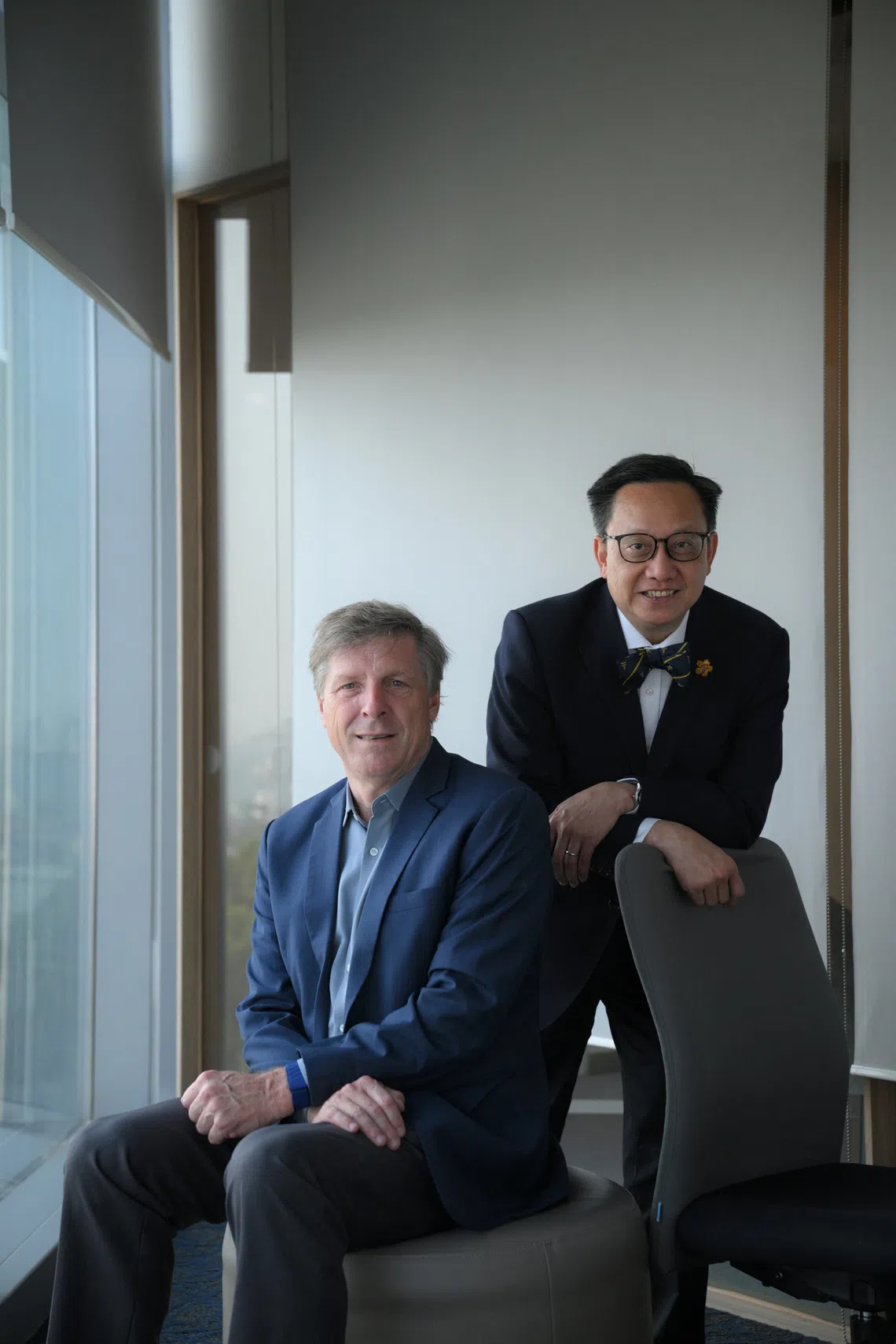
Director of the Centre for Healthy Longevity at NUHS Brian Kennedy (left) and executive director of the Grand Challenge on Maximising Healthy and Successful Longevity Chong Yap Seng.
ST PHOTO: MARK CHEONG
Here, the network of active ageing centres (AACs), which are community hubs that keep seniors socially and physically engaged, are a “wonderful platform for the distribution of public goods”, he said.
These centres form a core pillar of Age Well SG, a $3.5 billion national programme aimed at helping Singaporeans age well in the community over the next decade.
While Age Well SG serves as an operational and infrastructural system, the ageing grand challenge is the research engine that could come up with the breakthroughs to further power it.
Integrating the grand challenge’s research into AACs ensures that scientific breakthroughs in brain and muscle health don’t stay in university labs, but are delivered directly to seniors near their homes.
Kennedy, who is chief scientist of the healthy longevity grand challenge, highlighted Singapore’s unprecedented financial and strategic commitment.
“I would say Singapore is becoming a leader in Asia, and one of the unique things we do is we have the whole system. We have mechanistic studies (lab research exploring the cellular drivers of ageing), we have preclinical studies (testing therapies on cells and lab models), and then we have clinical approaches too. And so we can run the whole spectrum,” he said.
An expert in the biology of ageing, Kennedy is Distinguished Professor in Biochemistry and Physiology at NUS Medicine. Before coming to Singapore, he was president and CEO of the Buck Institute for Research on Ageing in California, one of the world’s premier independent research institutions dedicated entirely to geroscience.
“When I came (to Singapore) nine years ago, they were already talking about what we can do about ageing... My goal is to help the population of Singapore have a longer healthspan, and I think this is an ideal place to be a role model for how to age in a healthy and happy way.”
Spotting decline before symptoms appear
Research indicates that curing all cancers, for instance, would only raise global life expectancy by roughly three years, because patients soon succumb to other age-related conditions, Kennedy said.
Instead, geroscience targets the underlying biological network of ageing that triggers these conditions in the first place, delaying the onset of multiple chronic illnesses, he said.
Many people, however, neglect to go for health screenings, which is a first step before going into longevity medicine, he stressed.
Because individuals age at different rates, tracking baseline biomarkers such as blood sugar, cholesterol, and blood pressure helps doctors catch silent physiological decline early.
When combined with wearable tracking, body composition analysis, and simple tests like handgrip strength, these metrics can detect muscle loss, assess cellular resilience, and predict overall mortality risk years before clinical symptoms appear, and in time for the person to do something about it.
This proactive philosophy is already taking shape on the ground. At Alexandra Hospital’s Healthy Longevity Research Clinic, Laureen Wang and her team have demonstrated that they can identify cardiometabolic risk before overt disease sets in, and improve health risk factors.
Rather than relying on high-tech quick fixes, much of this progress comes down to driving sustainable behaviour changes such as optimising sleep, nutrition, and exercise, and increasing patient engagement.
“This in turn has helped to improve the physical function, biomarkers, gut health and ‘biological age’ of some of the participants,” said Wang, a consultant cardiologist who heads the clinic.
“Whether this translates to additional healthy years requires much longer follow-up data but we measure for now what we can measure.”
Wang said the clinic’s goal isn’t unique to longevity clinics.
“It is the goal of every good preventive medicine practice where we are identifying risk early, modifying it, and trying to compress the period of disease or reduce the harm it causes and disability at the end of life.”
“The vocabulary has changed to ‘gero-diagnostics’, ‘gero-therapeutics’, ‘healthspan’ but the underlying game plan is older than the branding.”
Tracking biological age
The healthy longevity grand challenge will validate a set of health measures that primary care doctors would be able to use to track whether a person is ageing faster or slower than expected, allowing doctors to spot those at higher risk of early cognitive or physical decline, before major problems appear.
It is not clear what these tests are yet, but they could include things like biological age clocks, the use of wearable data to track someone’s lifestyle habits that contribute to health, gait evaluation and brief cognitive assessments.
A key priority for the grand challenge is to get a reliable measure of one’s biological age or biological resilience that is validated for Asian populations, as no single clock is currently the undisputed gold standard for telling us how far or close we are to a natural death.
A reliable biological clock is also essential for testing new anti-ageing treatments. Instead of waiting decades to see if a treatment extends a person’s life, scientists can use biological age tests to prove whether an intervention is successfully slowing down ageing.
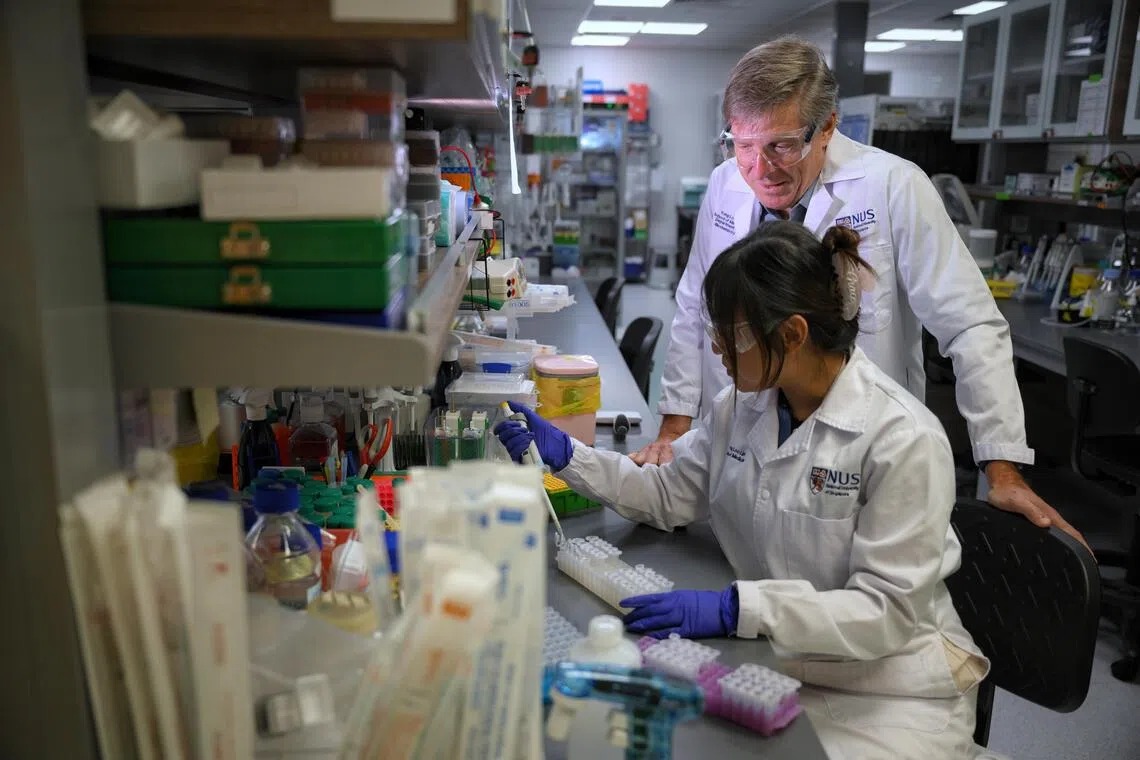
Director of the Centre for Healthy Longevity at NUHS Brian Kennedy supervising research assistant Grace Keh as she extracts RNA from tissue samples treated with geroprotective compounds on Aug 27.
ST PHOTO: MARK CHEONG
Chong said most people are blind to their physiological decline, so seeing their biological age on a clock can serve as a moment of awakening that drives real lifestyle or medical changes.
He shared the story of a 50-year-old researcher who ran a biological clock test on himself, expecting his biological age to be much younger because he was very fit and had no family history of heart disease.
Instead, the test revealed his biological age was 51, and flagged that it was his cardiovascular system that was making him older than he should be, said Chong.
This prompted a heart scan that detected early, hidden arterial blockage, allowing his doctor to prescribe statins to stave off a potential heart attack before symptoms ever appeared.
Unlike chronological age, biological age is adaptable and can potentially be reversed through healthy lifestyle habits and targeted wellness interventions.
Andrea Maier, the co-founder and director of the NUS Academy for Healthy Longevity at the National University of Singapore and a world-renowned researcher in precision geromedicine, said biological age is rarely a single, static figure.
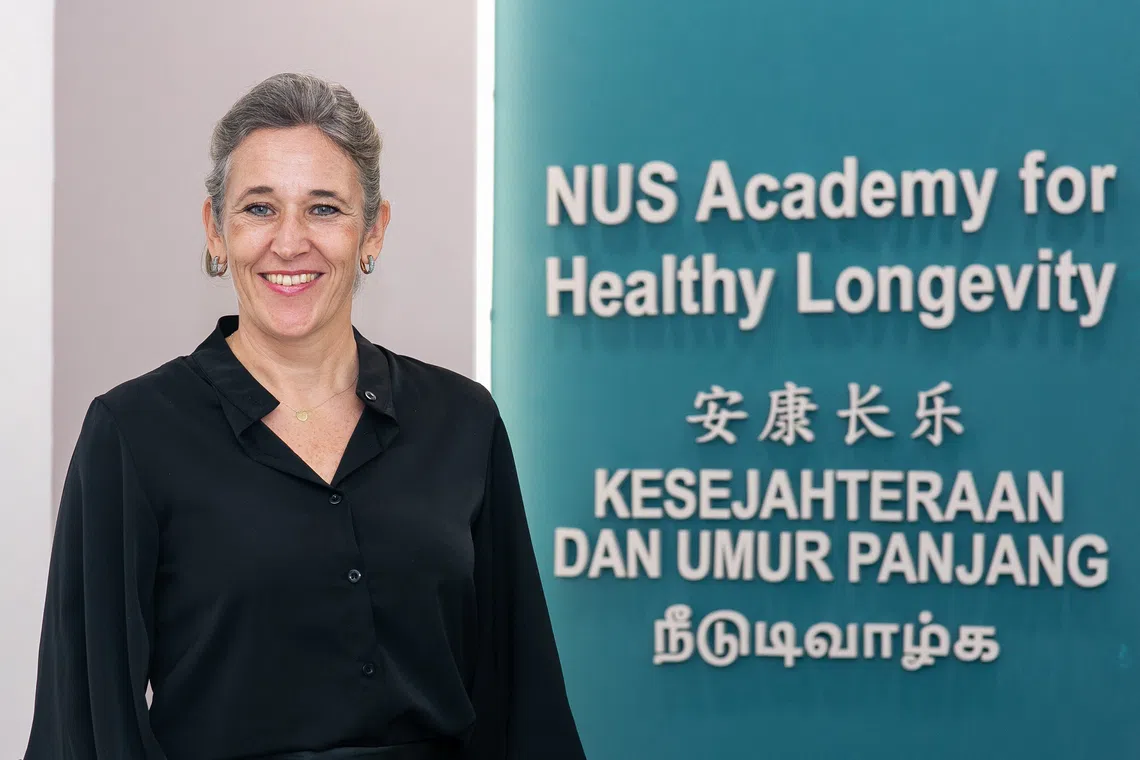
Andrea Maier, the co-founder and director of the NUS Academy for Healthy Longevity, said biological age is rarely a single, static figure.
PHOTO: NUS MEDICINE
Because different organs age at varying paces, diverse biological clocks, ranging from DNA and blood protein tests to standard clinical blood panels, evaluate distinct biological processes inside the body and can yield different numbers for the same person.
“We cannot rely on a single metric for age. In electric vehicles, for instance, the battery and the engine age separately,” she explained.
“We have to create a body dashboard where you get the different signals, and then it’s up to you if you’re going to intervene or not.”
Testing the anti-ageing pipeline
To move beyond general health advice, local institutions are testing targeted clinical interventions that target biological decline.
While lab studies show that inflammation, metabolic dysregulation, and physiological stress drive unhealthy ageing, therapies that ameliorated these effects in preclinical models are now being tested on humans.
At the NUS Academy of Healthy Longevity’s PROMETHEUS (Precision germedineme: Tailored healthy ageing with lifestyle, supplements and drugs) study, for instance, researchers test precision geromedicine interventions tailored to adults aged 50 to 80, to measure whether specific lifestyle protocols and certain supplements actively slow down the ageing trajectory.
The project is competing in XPRIZE Healthspan, a mega US$101 million (S$128 million) global contest to restore muscle, brain, and immune function by 10 to 20 years, by measuring outcomes in participants aged 65 to 80.
The NUS academy is also conducting a one-year trial to evaluate whether daily multivitamins reduce biological age in adults aged 40 to 60 whose biological markers outpace their chronological years. “Supplements can play a huge role in ageing… but they should be given to individuals who need them. We need to measure this,” said Maier.
In addition to supplements, Maier has designed a trial for low-dose rapamycin, a leading longevity candidate, to determine if the immunosuppressant can delay biological ageing.
Decoding Asian biology
One-size-fits-all medical advice is rarely effective in preventing decline because everyone ages differently. Crucially, localising healthy ageing research is essential because Western longevity metrics do not always fit Asian populations.
Chong said: “Most of what we know about ageing comes from Western populations, Western lifestyles, and Western genetics.
“But Asians age differently. Our biology is different, and the risk profiles are different.”
Lisa Ooi, assistant chief executive of A*STAR’s Biomedical Research Council, pointed to local evidence showing that more than one in four healthy-weight young Chinese women in Singapore possesses low muscle mass and lower bone density despite appearing healthy by conventional body mass index standards.
This thin phenotype risk represents a silent precursor to frailty that standard international metrics easily miss, she said.
To address issues like this, Singapore is looking at data across a number of research cohorts, including those from SG100K, a major population health study that maps and analyses the genetic data, lifestyle, and health outcomes of 100,000 multi-ethnic residents, and the long-term birth cohort Growing Up in Singapore Towards Healthy Outcomes (GUSTO) study.
A regional test bed for global longevity care
To prepare future physicians, Chong, who is dean of NUS Medicine, said the school is now embedding lifestyle medicine into the core medical curriculum, so that doctors aren’t taught only to diagnose and treat diseases but also to optimise health.
Doctors need to be able to measure health, so that they can help to optimise it. It need not be complicated, as it can be measured using simple tests like grip strength or gait speed, he said.
“How fast you walk is probably one of the best measures of how healthy you are, because it requires your whole body to function in a particular way,” he said.
Staying healthy as we grow old requires at least four things – eat healthy, stay active, sleep well, and find purpose, he said, noting that individuals who lose purpose in life often lose their health and die much earlier.
The school also recently launched global-first programmes, including a Master of Science in Nutrition and Lifestyle Medicine and certificate courses in healthy longevity.
“Upskilling healthcare professionals in a broader way (will enable Singapore to) democratise health longevity medicine in the end, because that’s what we want, that’s what we stand for,” Maier said.
“We built a framework to be one of the global leaders in the field of geroscience and geromedicine, and especially, globally, we are leading in the implementation into clinical practice.”

As part of this effort, the healthy longevity grand challenge is tasked with developing a Singapore Healthy and Successful Longevity Index, which will comprise a large suite of indicators – including measures of physical function – that show, at a population level, whether the country as a whole is ageing healthily and successfully.
By uniting cutting-edge geroscience with low-cost, accessible primary care checks, Singapore is building an inclusive public health framework that proves living better for longer can be made available to everyone.
“We are very well positioned to be the regional test bed for scaleable, data-driven, culturally adapted models for global longevity care,” said Chong.
“Not just in theory, but in real life.”
If Singapore succeeds, reaching old age will not be measured by the number of chronic conditions managed, but by the next mountain waiting to be climbed, or the next adventure that’s calling.
KioskNews shows a cleaned-up reading view extracted from the publisher’s page — the original always lives on their site, not ours.