Poll: Most voters say Trump has hurt the economy as competitive midterm election looms
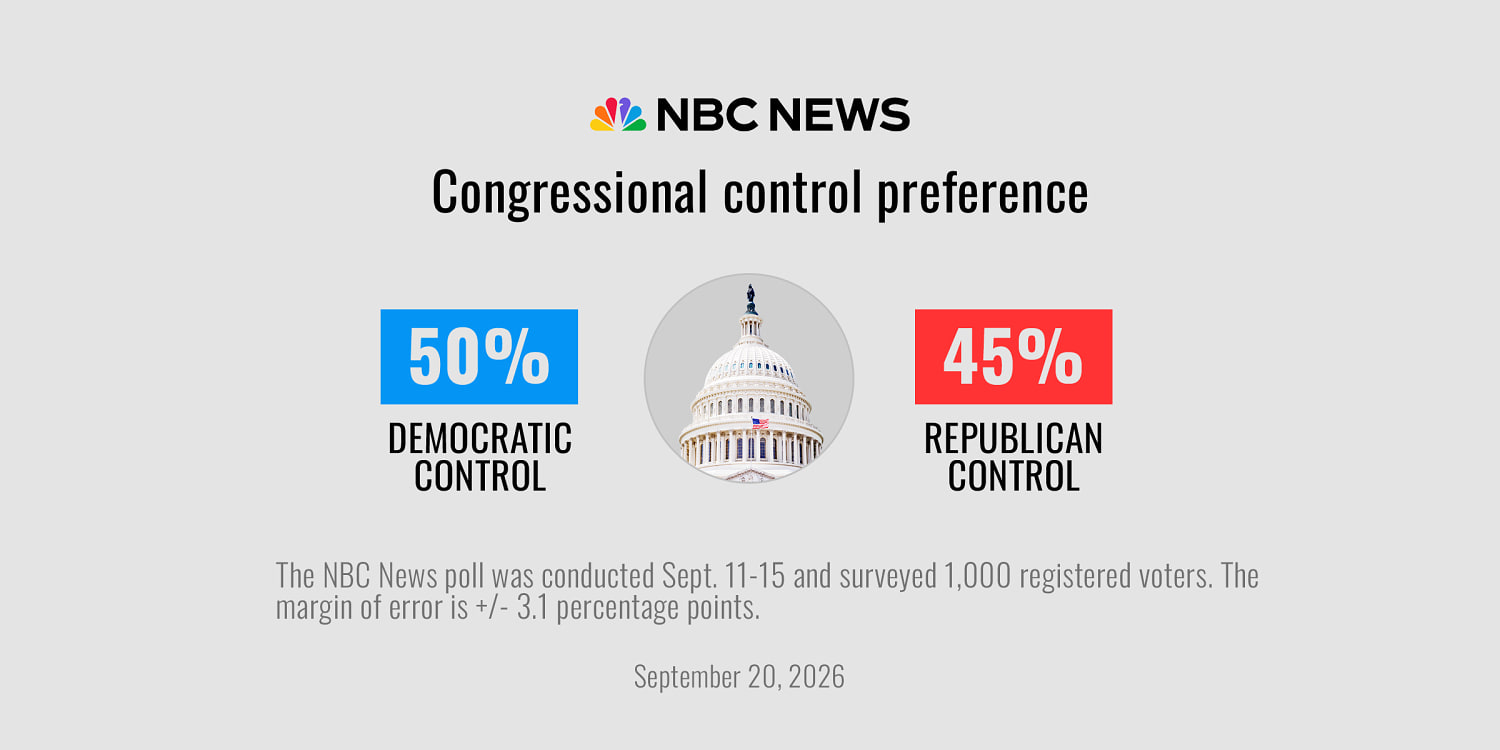
“Donald Trump has achieved his goal of making this election about him at a historic level. The problem for Trump and Republicans on the ballot in November is that he has also made history in the highest share of voters who say their vote is in opposition to Trump,” said Democratic pollster Jeff Horwitt of Hart Research Associates.
Republicans on the campaign trail are trying to shore up their standing by arguing that Democrats are too extreme to trust with congressional majorities.
But the poll indicates voters are more anxious about restraining Trump: 50% say they’re more concerned that Republicans will go too far in supporting Trump if they keep control of Congress, while 42% are more concerned Democrats will obstruct the president if they win control of Congress. Independents lean 45%-30% toward greater concern that Republicans will go too far supporting Trump.
McInturff acknowledged the challenges for the GOP posed by the political environment, even as the party’s geographic advantages keep Democrats fighting on their turf.
“The issue environment is tilting substantially towards the Democrats,” McInturff said.
Trump’s struggles continue
A majority of voters, 56%, disapprove of Trump’s job performance, including overwhelming shares of Democrats and independents and 16% of Republicans. The share of voters who strongly approve of Trump, 25%, is the second-lowest mark recorded in the NBC News poll across Trump’s first and second terms.
The disapproval rating closely tracks the 55% who say Trump’s policies have hurt the economy, while 26% say they have helped and 18% say they have not made much of a difference. At this point in the 2018 election cycle, more voters said Trump’s policies helped the economy (41%) than hurt (26%).
And the survey suggests some of Trump’s signature economic policies are falling flat.
While Republicans are touting Trump’s signature tax cut and spending measure known as the “big, beautiful bill,” which was enacted in 2025, 42% of voters say they are less likely to support a candidate backing the measure, while 36% say they are more likely to support such a candidate.
Trump’s latest gambit — an announcement at the recent Republican convention that he wanted to issue $5,000 payments to every adult if Republicans keep control of Congress — isn’t garnering much interest. While 21% of voters say they’re more likely to back a candidate who supports Trump’s plan, 46% say they’d be less likely.
A plurality of Republicans say it would make no difference in their vote choice, while Democrats are uniformly against the idea and 45% of independents would be less likely to support a candidate in favor of the plan. Among independents, 13% say they’d be more likely to support a candidate who backs Trump’s plan.
Voters are also continuing to express opposition to the Iran war, with 57% saying they are less likely to support a candidate who supports the war, versus 24% who are more likely to support that candidate. One-third of voters say the war has been worth it, while 62% disagree.
And Democrats also have a 4-point advantage, within the poll’s margin of error, on the question of which party voters say they trust to handle the war with Iran.
Trump has continued to insert himself into the midterms, including endorsing nearly all Republicans in competitive congressional races. But 52% of voters are less likely to support a candidate endorsed by Trump, while 30% are more likely to support a Trump-backed candidate.
Democratic opportunities — and challenges
Clear dissatisfaction with the president opens the door for Democrats as they fight for control of Congress this fall.
Forty-three percent of registered voters say their vote for Congress is intended to signal opposition to Trump, while 27% say they plan to vote to send a signal of support for Trump and 28% say their vote won’t be a signal either way.
Among independents, almost half (46%) see their vote as a signal of opposition to Trump, while just a handful (10%) say their vote is a signal of support for the president.
Democrats have a 1-point lead when voters are asked which party they trust more in dealing with the economy — a result within the poll’s margin of error. It’s the third consecutive NBC News poll with both parties sitting about even on that question. In the same survey just three years ago, Republicans enjoyed a 21-point advantage when it came to handling the economy.
Democrats also have a 7-point edge on controlling inflation, as well as slight leads on dealing with the war in Iran and dealing with corruption — government corruption was the second-most popular choice when voters were asked to rank the most important issue facing the country, with concern about the issue heightened among members of both parties and independents.
The Democratic Party also has double-digit leads on dealing with data centers and dealing with healthcare.
Republicans still hold significant advantages over Democrats on handling crime, border security and immigration, including a 21-point lead on border security. But that is down from the 36-point edge the GOP held over Democrats on the issue in Sept. 2022, after Trump has made aggressive immigration enforcement a hallmark of his second term.
Democrats also have a narrow lead on interest in the election, as well as among party identification. But it’s not all rosy for the opposition party.
The Republican Party is viewed more positively by voters: 36% have a positive view of the GOP, while 49% view the party negatively. On the Democratic Party, voters are split 29%-50%.
Meanwhile, the Democratic Socialists of America is viewed positively by 22% of voters, as Republicans try to link other Democrats to the left-wing group, which rose in prominence following some major primary wins in the past two years.
One poll respondent — Aidan Valenzuela, a 19-year-old Texan who doesn’t affiliate with either party — told NBC News that he hasn’t plugged into the election yet and is still unsure whom he’ll vote for. But he said his father grew up during the Cold War and that he’s wary of Democrats who describe themselves as democratic socialists.
“Any relation toward socialism or communism in general gives me the ick. It’s like a buzzword that generally just makes me not want to sway in that direction,” he said.
Half of voters say they’d be less likely to vote for a candidate who “supports many of the Democratic Socialists of America’s proposed policies,” while 31% say they’d be more likely to support those kinds of candidates.
Candidates calling to abolish ICE, a big point of emphasis among progressives, draw similarly unpopular scores with voters.
That said, for all the Democratic infighting over policies like “Medicare for All,” 53% of voters say they would be more likely to support a candidate who favors the policy, while 36% said it would make them less likely to vote for that candidate.
When asked a similar question with slightly different wording to note the healthcare would be financed in part by taxes, 49% say they’d be more likely to support a candidate that backed the policy and 39% say they’d be less likely.
Horwitt, the Democratic pollster, noted that his party “remains in a terrible position as a brand nationally,” even as the poll paints a dismal picture for Trump and Republicans.
“This speaks more to deep dissatisfaction with Trump and Republicans than a ringing endorsement of Democrats,” he said. “The party in power does not have a positive story to tell on the major issues of the day: inflation, corruption and the Iran war. Voters are continuing to look for change.”
The NBC News poll surveyed 1,000 registered voters Sept. 11-15 via a mix of telephone interviews and an online survey sent via text message. The margin of error is plus or minus 3.1 percentage points.
KioskNews shows a cleaned-up reading view extracted from the publisher’s page — the original always lives on their site, not ours.