105 US Lawmakers Urge FBI Hate Crime Probe Into US Temple Mass Shooting Plot
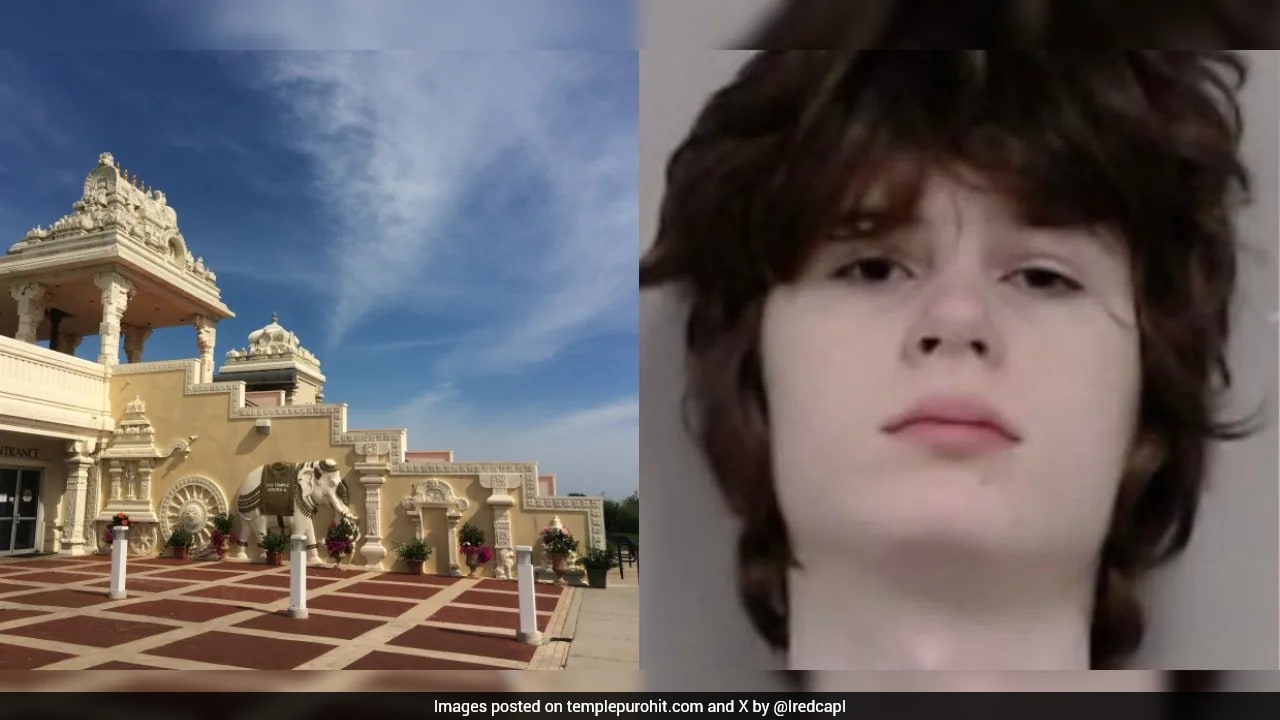
A bipartisan-free Democratic-led group of 105 US lawmakers has urged the Federal Bureau of Investigation (FBI) to investigate an attempted mass shooting at a Hindu temple in Aurora, Illinois, as a potential federal hate crime, citing concerns over anti-Indian, anti-Hindu and broader anti-South Asian hostility.
Alexandros Paporakis, 19, was arrested on October 11 for plotting a mass shooting at the Sri Venkateswara Swami (Balaji) temple.
Led by Indian American Congressman Raja Krishnamoorthi, the lawmakers sent a letter dated October 20 to FBI Director Kash Patel seeking details of the Bureau's investigation into the alleged plot at the Sri Venkateswara Swami (Balaji) Hindu temple.
They also called for greater scrutiny of credible online threats against Indian Americans, Hindu Americans, Sikhs and other South Asian communities.
READ | "Growing Anti-India Hate": Centre On US Teen's Hindu Temple Shooting Plot
Krishnamoorthi and his family were worshipping at the temple when the alleged attempted attack occurred on October 11, according to a statement issued by the congressman's office.
"The alleged combination of targeted racial hatred, a religious setting, and preparations for mass violence demands a comprehensive federal response," the lawmakers wrote, urging the FBI to ensure that potential hate-crime violations receive explicit attention.
I led 105 lawmakers in demanding the FBI investigate the attempted mass shooting at my family's Hindu temple in Aurora as a potential hate crime. We must confront the rising tide of anti-Indian hate and the online threats putting our communities at risk. https://t.co/gkckZeXbyZ https://t.co/rc9gGPQTUU
— Congressman Raja Krishnamoorthi (@CongressmanRaja) October 20, 2026
The letter was signed by members of Congress from across the country, including the entire Illinois House Democratic delegation, every Indian American member of Congress, and senators Dick Durbin, Tammy Duckworth, Andy Kim and Chris Van Hollen.
Alleged plot raises concerns over targeted violence
According to prosecutors, Alexandros Paporakis, a resident of Palatine, Illinois, drove to the temple on October 11 intending to carry out a shooting but fled after his rifle allegedly failed to fire.
Statements from local police departments and the FBI's Chicago field office said Paporakis was arrested that day and subsequently charged with making a terrorist threat and unlawful possession of weapons.
Prosecutors allege that he authored an eight-page manifesto expressing white supremacist views and describing violence against people of Indian descent at a Hindu house of worship.
READ | 'Saved By God': What US Teen Told Co-Worker About Failed 'Kill Indians' Plot
Investigators reportedly recovered a rifle, hundreds of rounds of ammunition, body armour and white supremacist imagery. The lawmakers said the alleged combination of targeted hostility, weapons and preparations for mass violence warranted a comprehensive federal investigation.
The letter acknowledges the FBI's reported assistance to local investigators while pressing the Bureau to clarify whether the case is being examined for both racial or ethnic bias and religious bias.
The lawmakers have asked whether the FBI is coordinating with the Justice Department's Civil Rights Division and the appropriate US Attorney's Office, to the extent consistent with the ongoing investigation.
Lawmakers seek answers on online threats
Beyond the Aurora case, the letter raises concerns about the scale of online hostility targeting South Asian Americans and whether digital platforms are being used to spread threats, identify potential victims or facilitate violence.
Citing a September 2026 report by the Center for the Study of Organized Hate, the lawmakers said more than 542,000 anti-South Asian hateful posts appeared on X between January 2025 and June 2026. The monthly volume reportedly rose from 12,904 posts in January 2024 to 43,843 in June 2026, an increase of approximately 240 per cent.
A Carnegie Endowment for International Peace survey, also cited in the letter, found that 48 per cent of Indian American respondents had encountered racist posts targeting Indians or Indian Americans very or somewhat often since the start of 2025. One in four respondents reported having been called a slur.
"These findings underscore the importance of examining whether online threats and extremist networks are facilitating targeted violence," the lawmakers wrote.
They want the FBI to explain how investigators distinguish protected expression, including offensive speech, from credible threats and conduct that warrants a criminal investigation.
The letter also asks what mechanisms exist to share actionable threat information with state and local law enforcement and potentially targeted houses of worship, and whether the Bureau has adequate personnel, language expertise and analytical capacity to investigate anti-Indian, anti-Hindu and broader anti-South Asian threats.
Criticism of federal messaging
The lawmakers also criticised what they described as messaging by the Trump administration that risks reinforcing racial and religious stereotypes.
They cited a Department of Homeland Security social media post depicting a Sikh man with the message, "Get off our roads, you don't know how to drive Mr. Singh."
The letter also referred to a Department of Education post declaring "Make College Football Great Again" after a Texas Republican complained about the presence of South Asians at a University of Texas football game.
The lawmakers argued that such messaging risks lending official legitimacy to racial and religious stereotyping.
"Federal agencies should make clear that debates over immigration or public safety never justify collective suspicion of Indian, Sikh, Hindu, or other South Asian communities," they wrote.
The criticism comes amid wider debates in the United States over immigration, identity, online hate speech and the responsibilities of public institutions in addressing hostility towards minority communities.
The letter does not argue that offensive speech should automatically trigger criminal investigations. Instead, it asks the FBI to clarify how it assesses credible threats while respecting First Amendment protections.
FBI response sought by October 29
The lawmakers have requested a written response by October 29, 2026, subject to restrictions arising from the ongoing investigation.
Their five principal questions concern whether the Aurora case is being investigated as a potential federal hate crime; whether online platforms or other individuals may have facilitated the alleged plot; how the FBI identifies credible threats against South Asian communities; what protective resources are available to affected congregations; and whether additional investigative capacity is needed.
The letter concludes with an appeal for both a thorough investigation and greater reassurance for communities concerned about their safety.
"No one should fear being targeted because of their ancestry, appearance, or faith, and no congregation should have to wonder whether gathering for worship will make its members targets of mass violence," the lawmakers wrote.
They urged the FBI to "investigate the evidence fully, pursue all applicable offenses, and provide affected communities with a clear account of the steps being taken to protect them."
The requested response could provide further clarity on the federal investigation and the government's approach to online threats against Indian American and other South Asian communities.
For Hindu Americans and other minority communities, the case has raised questions extending beyond the alleged plot itself: whether threats directed at places of worship are being adequately identified, whether law enforcement agencies have the resources to respond, and how authorities can protect vulnerable communities without curtailing constitutionally protected expression.
KioskNews shows a cleaned-up reading view extracted from the publisher’s page — the original always lives on their site, not ours.