Hegseth pledges stronger military framework with Philippines, but lacks details
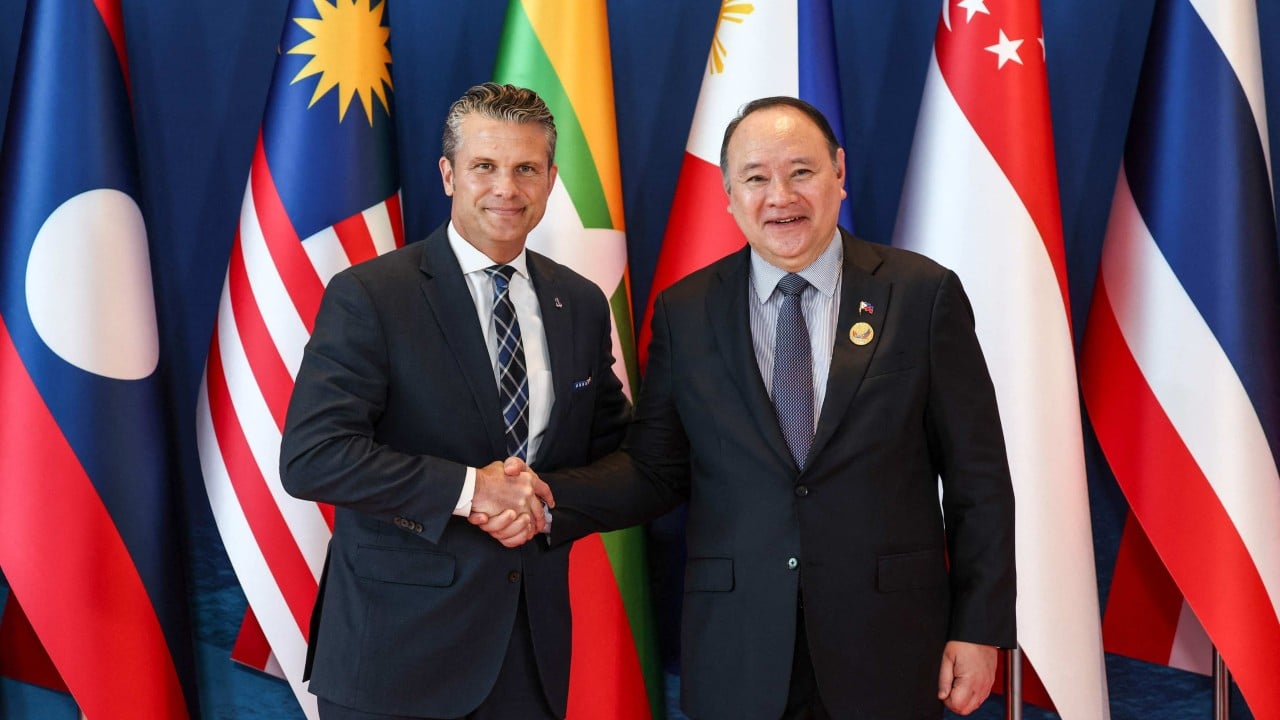
US Defence Secretary Pete Hegseth announced additional military cooperation funding for the Philippines and agreed with Manila on efforts for enhanced interoperability between their forces on Wednesday, as Washington sought to strengthen its defence posture along the first island chain.
The Pentagon disclosed neither the size of the funding increase nor a timetable for the coordination initiative following Hegseth’s meeting with Philippine Defence Secretary Gilberto Teodoro Jnr in Cebu on the sidelines of the Asean Defence Ministers’ Meeting Plus (ADMM-Plus).
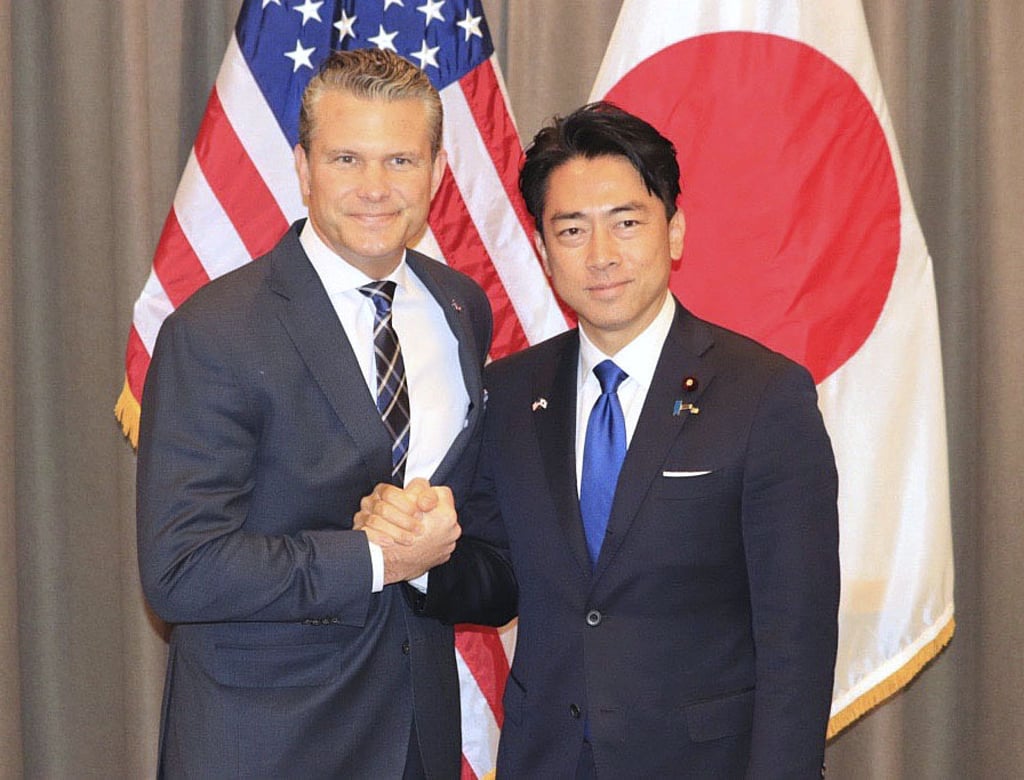
In separate talks, Hegseth and Japanese Defence Minister Shinjiro Koizumi agreed to accelerate efforts to use facilities flexibly and run exercises to practise operating from dispersed locations, according to the Pentagon.
The announcements concern a central element of Washington’s regional defence strategy: positioning forces along the island chain stretching from Japan through Taiwan to the Philippines to prevent China from achieving its military objectives in a conflict.
According to the Pentagon press release, Hegseth announced an increase in his department’s security cooperation funds for the Philippine military for “interoperability along the first island chain”, and agreed with Manila to launch an “alliance command and control modernisation sprint” during his meeting with Philippine defence minister Teodoro.
16:04
Watch: Asean defence ministers meet with US counterpart Pete Hegseth
The command and control effort is meant to improve “real-time bilateral coordination and strengthen alliance resilience” between US and Philippine forces, the Pentagon said.
However, the Pentagon has not said how much additional funding is involved, what systems, procedures or timeline it will pay for, or what changes this agreement will bring.
Hegseth agrees to ‘accelerate’ military operations with Japan
In a separate meeting with Japanese defence minister Koizumi, Hegseth agreed to “accelerate actions” to enable more agile and resilient operations, including flexible use of facilities and chances to rehearse distributed operations, the Pentagon release said.
“They underscored the importance of increased defence investment and continued strategic alignment to strengthen deterrence and implement an effective denial defence in the first island chain,” the Pentagon release said.
“Secretary Hegseth and Minister Koizumi discussed efforts to strengthen deterrence through enhanced bilateral access, presence and realistic training and exercises across Japan, including live fire exercises.”
However, the release also did not say which facilities, what new access or when these changes will be made.
The South China Morning Post has emailed inquiries to the Pentagon for details about Hegseth’s meeting with Japanese and Philippine counterparts.
SCMP Plus is a new premium news platform that gives you an
all-inclusive edge to stay ahead on China news.
To access our exclusive content you’ll need to subscribe.
Already a subscriber?
LOG IN
The first island chain is a string of islands running from Japan through Taiwan to the Philippines and the South China Sea. The term “denial defence” refers to the US approach of arranging forces so China cannot achieve its military goals in that area, or can do so only at a cost it would not accept.
The national defence strategy, published in January, instructed that Washington aim for “strong denial defence along the first island chain” in an effort to prevent China from being able to “dominate” the US or its allies in the area within this line, while also urging allied nations to do more for collective defence against potential regional contingencies.
“The approach we’re taking we described as strong, quiet and clear,” said Hegseth during his remarks at the Asean ministers’ meeting that took place after the bilateral meetings.
“Strong enough to deter coercion and aggression, quiet enough to avoid needless escalation or public theatrics – to let our actions speak for themselves.
“But clear enough that our friends, our partners and potential adversaries understand precisely where the United States stands and that we will defend our interests and the interests of our allies and partners.”
Japan and the Philippines, both members of the “Squad” defence and security grouping with the US and Australia, have recently seen an increase in US counterstrike, anti-ship and long-range precision-fire capabilities, including the deployment of the Typhon missile system and High Mobility Artillery Rocket System (Himars) during US military exercises.
Both host US forces: around 55,000 service members serve under United States Forces Japan, and American troops conduct rotational deployments to the sites in the northern Philippines under the Enhanced Defence Cooperation Agreement (EDCA) – a bilateral military pact signed by the US and the Philippines that permits US military forces rotational access to designated Philippine military bases.
Territorial disputes sour US-Japan relations with Beijing
The two countries’ relations with Beijing have soured over territorial disputes in the East China Sea and South China Sea, with Chinese Coast Guard ships regularly patrolling near Japanese-controlled islands and colliding with and firing water cannons at Philippine vessels.
Tensions with Tokyo deepened after Japanese Prime Minister Sanae Takaichi suggested Japan could take military action if Taiwan were attacked.
Beijing views Taiwan as part of China to be reunited with the mainland, by force if necessary. Most countries, including the US, do not recognise Taiwan as an independent state, but Washington opposes any attempt to change the status quo by force and is committed to supplying the island with defensive weapons.
Hegseth also took part in a Squad defence ministers’ meeting, according to his social media post, and met Australian Deputy Prime Minister and Defence Minister Richard Marles, with whom he discussed coordinating on “regional deterrence” and preserving a “favourable balance of power in the Pacific”, according to the Pentagon.
Hegseth’s meeting included his counterparts from Squad and other Asia-Pacific allies and partners such as South Korea, Singapore and India.
KioskNews shows a cleaned-up reading view extracted from the publisher’s page — the original always lives on their site, not ours.