AFTER THE BELL: El Niño is now the strongest on record — a war room is needed
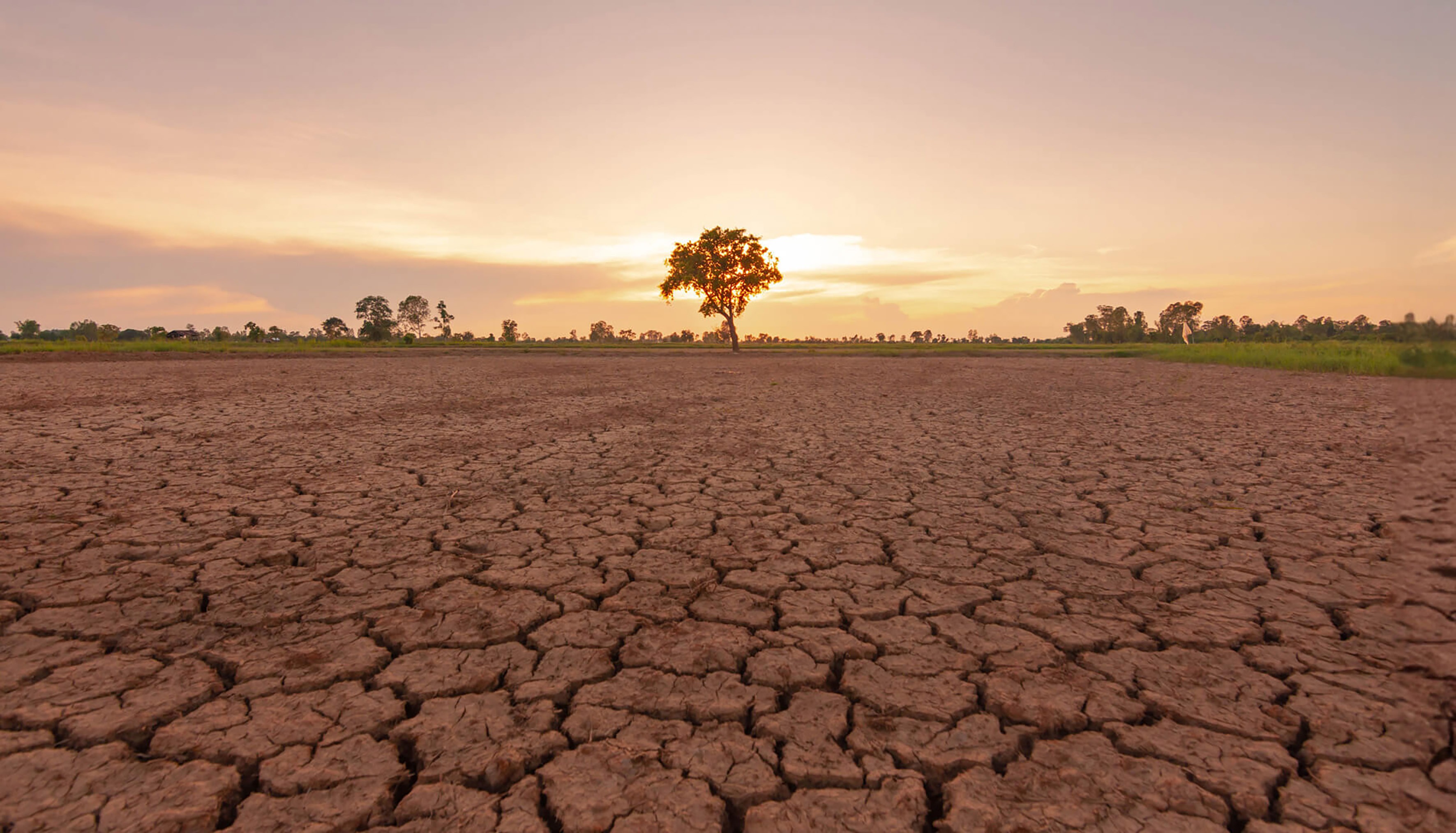
Brace yourself, folks, for a scorcher of a summer and a sweltering test for our ailing state, which should set up a “war room” to prepare for the coming calamity before it’s too late.
James Hansen, a renowned climate scientist at Columbia University’s Earth Institute, says that the current El Niño is already a record breaker and we ain’t seen nothing yet.
“The ongoing El Niño is already the strongest in the modern record,” Hansen wrote in a newsletter issued with colleagues on 21.
“The El Niño has blossomed. It is off the charts. Usual measures of El Niño have blown past prior record levels in the period with good data, even though maximum effects are still several months in the future.”
The preferred metric of Hansen and his colleagues is the heat anomaly in the upper 300m of the Equatorial Pacific Ocean. “Anomaly” is climate speak for the deviation from average temperatures, and El Niño is triggered when these rise past certain thresholds in the Equatorial Pacific.
According to Hansen’s calculations, this anomaly “already exceeds the 1997-98 super El Niño”.
This is a chilling prognosis and forecast and it comes from one of the best scientists in the business – Hansen is the former director of the Nasa Goddard Institute for Space Studies. His observations on this front are scientific gold and he has dubbed this event the “super-duper El Niño” – a new nickname to go alongside “Godzilla” and others.
What’s concerning is that fewer than three months after it formed in the tropical Pacific, a scientist of Hansen’s calibre is calling it the strongest on record and as he notes, its full impact – and intensity – is still several months in the future.
For South Africa, this almost certainly portends a summer of blazing drought during the key growing season for maize and other grains – and things will be far worse in other countries in the region, such as Malawi, which rely heavily on rain-fed subsistence agriculture.
South Africa fortunately is in a good position on some fronts to weather this storm. Last season’s bumper maize crop provides a nice surplus to cushion the looming blow, and food inflation is currently at 16-year lows.
Soil moisture and dam levels are also brimming, thanks to the recent La Niñas – El Niño’s extreme opposite which typically brings good rain to this region. According to data compiled by the Department of Water and Sanitation (DWS), dam levels in all nine provinces currently exceed 80%.
War room
But there is no room for complacency if this El Niño – which is not expected to fade before March or April next year – is already off the charts in August.
The Government of National Unity should, among other things, consider establishing an El Niño “war room” to confront this head-on – the warnings have grown graver with each passing week and the science is ironclad.
This would focus the attention of the President, relevant ministers and departments to craft strategies and allocate scarce resources appropriately.
And the situation will be made worse by ongoing state failure.
One of the most egregious examples on this front and a red-hot issue in the upcoming municipal elections is the decay and unfolding collapse of South Africa’s H2O infrastructure.
In its latest Green Drop, Blue Drop and No Drop reports, the DWS estimated that 47% of South Africa’s water goes down the drain before it reaches customers. Water losses amounted to R14.89-billion in the 2023/24 financial year.
South Africa simply cannot afford to see so much water evaporate because of mismanagement, corruption and incompetence at the best of times and certainly not when a record-breaking El Niño is about to unleash its talons this summer.
State failure combined with an El Niño on steroids will inevitably lead to water restrictions and shortages, raising the political temperature.
One hotspot to watch will be the former homelands, which remain islands of rural poverty where mostly subsistence and small-scale farmers still lack title deeds and livestock graze on communal lands.
For many of these rural households cattle are a key measure of wealth with immense cultural value. But in an extreme drought, this asset will become a liability and herds will need to be ruthlessly culled as grazing lands wither and water sources dry up.
This will be a rural disaster of note and could well be more brutal than past El Niños. And yet little to this day has been done to reform agriculture in these regions which in many ways are bearing the brunt of extreme climate events – another glaring example of state failure.
“This super-duper El Nino arrives on a planet already infected by human-made global warming. Heatwaves are increasing, at sea and on land,” Hansen notes.
Indeed, a new and searing climate milestone has just been reached.
Europe’s Copernicus Climate Change Service said on Monday that the daily average sea surface temperature reached its highest level on record, edging past the previous record reached in March 2024.
“The Copernicus Climate Change Service (C3S) confirmed the record, with a temperature of 21.1°C on 22 August, exceeding the previous record of 21.09°C. The C3S ERA5 dataset extends back to 1979,” it said.
“The timing of the record is particularly notable. Global ocean temperatures are typically highest in March and April, following the austral summer.”
This is because the southern hemisphere is far bluer than the northern hemisphere. South of the equator the planet is 80% ocean while to the north it is 60%.
But this new record was set in August. All climate indicators at the moment are off the charts and flashing red.
“Increasing global climate anomalies, poleward shifting of climate zones, increased rainfall extremes, more rapid flash droughts and fires, and marine heatwaves are a result of accelerating human-made global warming. The abnormal El Niño strength is itself likely human-driven,” Hansen noted in his newsletter.
It’s all extremely alarming as El Niño continues to gather steam from already unprecedented levels of intensity.
And the government needs to show it is serious through initiatives such as a war room. We must hope for the best but prepare for the worst. DM
KioskNews shows a cleaned-up reading view extracted from the publisher’s page — the original always lives on their site, not ours.