As a GP, these daily habits make me feel better at 56 than I did at 26
Life as a junior doctor specialising in hospital medicine was hectic. I was in my 20s and used to eat badly, my meals were out of sync because of shift work and I rarely found time to exercise. Then, as a working mother, I was all over the place for years, working as a GP while getting up at night with young children.
But in recent years I’ve revamped my wellbeing and become regimented with my schedule. I feel better at 56 than I ever did when I was young.
As a hormone expert, I see some women who think they can just start taking hormone replacement therapy and sit back and let it all happen; that their energy levels will be transformed, as well as their skin and their mental health. Well, it’s not like that. We should be doing a lot more to try to prevent diseases and improve our healthspan – the number of healthy years we enjoy – and not just our lifespan.
These are the daily habits that help keep me on track.
6am: Yoga and headstands to kick-start the day
My alarm goes off early. I like to get my exercise done and out of the way. I have migraines that rule my life, so I have to be obsessively routine about everything I do. If I eat at a different time, or don’t follow my exercise regimen, it will often cause a migraine.
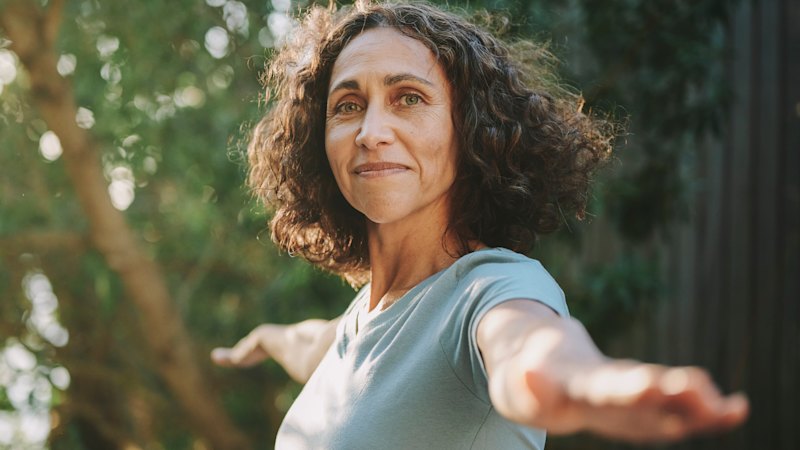
At least five mornings a week I do yoga – either 30 minutes on my own or 90 minutes with an Ashtanga yoga teacher. When I’m on my yoga mat I don’t have my phone, and I find that with balancing postures I really have to concentrate, so I can’t ruminate. If I skip my yoga sessions, it doesn’t take long for my mental health to wobble.
For about a year, I’ve alternated yoga with doing weights twice a week, lifting 10 to 30kg. As we get older, we often lose muscle strength, so doing anything to keep muscles and bones strong is important. Osteoporosis is my big worry. I also really don’t want to get bingo wings, which sounds vain but is motivating.
I always end with a headstand to improve my core strength and keep my mind focused.
After, I do shavasana for up to 10 minutes, lying down, legs and arms slightly apart. It’s like a free-form meditation to clear my mind. My instructor used to tell me it was the most important part of the session, and I would think “Don’t be ridiculous”, but over time I’ve realised it really is.
6.30am: Intense heat to beat the migraines
Having an infrared sauna, which we had installed last year, helps me to avoid migraines. It was expensive, and there’s limited evidence as to why it helps, but anything that can help reduce their frequency and severity feels worth it.
Infrared has been shown to reduce inflammation – the crux of everything for metabolic diseases, cardiovascular disease, dementia and cancers – which is probably why it works for migraines.
6.55am: HRT o’clock
After my shower, I use my hormone replacement therapy. I had been using higher-than-licensed doses of oestrogen, which I know has been controversial, but I couldn’t absorb it fully; the gel floats off my skin, and patches don’t stick on very well. Now the doctor I see has prescribed me a compounded preparation of estradiol (a custom mix created by a specialised pharmacist), so my dose is a lot lower because I’m absorbing it better.
I also use testosterone as a cream through my skin, plus progesterone to help with my mood, clarity of thought and migraines as well. Then I also use vaginal prasterone (DHEA) for dryness and urinary symptoms, which converts to oestrogen and testosterone. This has been transformational because I used to have frequent urinary tract infections and now I don’t.
7am: Homemade muesli and supplements for breakfast
Before I have breakfast, I head outside and walk barefoot on my lawn while looking for my tortoises, Hadrian and Pinky. I’ve had Hadrian my whole life. He was my mother’s and is 59. It’s a great excuse to get some morning light and fresh air.
My breakfast is always a handful of muesli, Greek yoghurt and whatever fruit is in season. Every couple of months I make a massive witch’s cauldron of muesli because the sugar content in the shop-bought varieties is too high and would trigger migraines. I roast oats and then add chia seeds, flax seeds, sultanas, oat bran and wheat germ and stir it all up and store it in a massive Tupperware container.
I drink hot water with a slice of lemon – I gave up caffeine years ago on the advice of a doctor helping me with my migraines – and then it’s time for my supplements.
Each day I take fish oil, vitamin D, plus magnesium, which helps my migraines and contains vitamin Bs to aid the absorption of the magnesium. I also take an iron supplement because I always seem to have low iron, and two or three times a week I take a probiotic. My guts are pretty good, so I don’t need it daily.
Noon: A mood-boosting lunchtime and crystal water
There’s a reason I front-load a lot of goodness into the start of my day: once I’m at work I have little time for anything else.
I always have water on my desk, which I put through a crystal vitaliser that my daughter, who is very into crystal healing, bought me at a retreat in Greece. It contains grounding crystals, which are supposed to help you stay present and reduce stress, and I use a charcoal filter that traps impurities too. Sometimes you don’t know whether things work, but they’re not making me feel worse.
I used to have Weetabix for breakfast with sugar on and then be starving by about 10am, but now I ensure I have enough protein and fat with my meals to see me through to lunch or dinner.
Lunch tends to be a mix of three homemade salads. I make a lot of Ottolenghi-style food, roasting vegetables in olive oil and then adding herbs, chickpeas and feta cheese for some protein, plus seeds and a handful of nuts.
On the drive home I’ll always have an apple to balance my blood sugar. It’s how I broke the habit of sticking something in the toaster the second I walked through the door.
7pm to 9pm: Dinner and prepping food for the next day
I have dinner with my husband not long after I get home, so I’m not eating too close to bedtime. I find it helps digestion.
I batch-cook a lot of casseroles for the freezer, buying organic meat from the butcher and adding vegetables and lentils to make it more cost-effective. Then I can pull out a portion and serve it with quinoa or brown rice so it’s quick and easy. If I’m short on time, I’ll make an omelette with capsicum, spinach or tomatoes and onions or roast some sweet potato.
I had pancreatitis about 15 years ago and was really sick. I used to love sweet foods, and it takes a while to change your eating habits, but now I look at doughnuts and think I absolutely don’t want them.
I don’t drink alcohol because I was getting palpitations, and the cardiologist recommended I give up caffeine and alcohol. The issue was probably hormonal rather than down to what I was drinking, but then my migraines became less frequent, so I’ve stuck with it.
10pm: The evening wind down and inhaled hydrogen
I keep a hydrogen inhalation machine next to my bed. There’s really good data, especially from Japan, on the benefits of inhaled hydrogen. It is anti-inflammatory, so I use that to try to prevent migraines. I use a nasal cannula (a clear plastic tube worn below the nostrils) to inhale the hydrogen while I’m reading for pleasure – anything that’s not medical – for 10 to 30 minutes before lights-out. But if I have a migraine coming on, I will try to wear the cannula for as long as possible.
I also have an Osmio hydrogen water bottle, which enriches water with hydrogen. It cost £200 ($380), but since I bought it lots of cheaper versions have become available that are only about £40.
People who follow me on Instagram think I’m really confident, but really I’m not. I need to keep reminding myself that I can ignore people who don’t like me and let their opinions bounce off me, and I do this through meditation.
Before I go to sleep, I meditate for several minutes. All I do is visualise having Teflon all around my body and refusing to let any negative thoughts enter my brain. I literally picture myself deflecting them. It comes with all sorts of benefits, but for me, it helps reset, de-stress and clear my mind.
I know all this sounds like a lot of effort and expense, but I don’t drink alcohol, I don’t go out for meals very often, and I don’t really socialise beyond seeing my family because I’m quite socially awkward. I would prefer to spend my money on my health, and to be migraine-free is worth so much to me because I can literally carry on with my life.
As told to Amy Packer.
Dr Louise Newson is a UK-based GP and hormone expert. She is a bestselling author and the founder of the Balance hormone health app.
Telegraph UK
Make the most of your health, relationships, fitness and nutrition with our Live Well newsletter. Get it in your inbox every Monday.
KioskNews shows a cleaned-up reading view extracted from the publisher’s page — the original always lives on their site, not ours.