More than 1m young people are out of work, and AI is about to wipe out millions more jobs. What should we do?

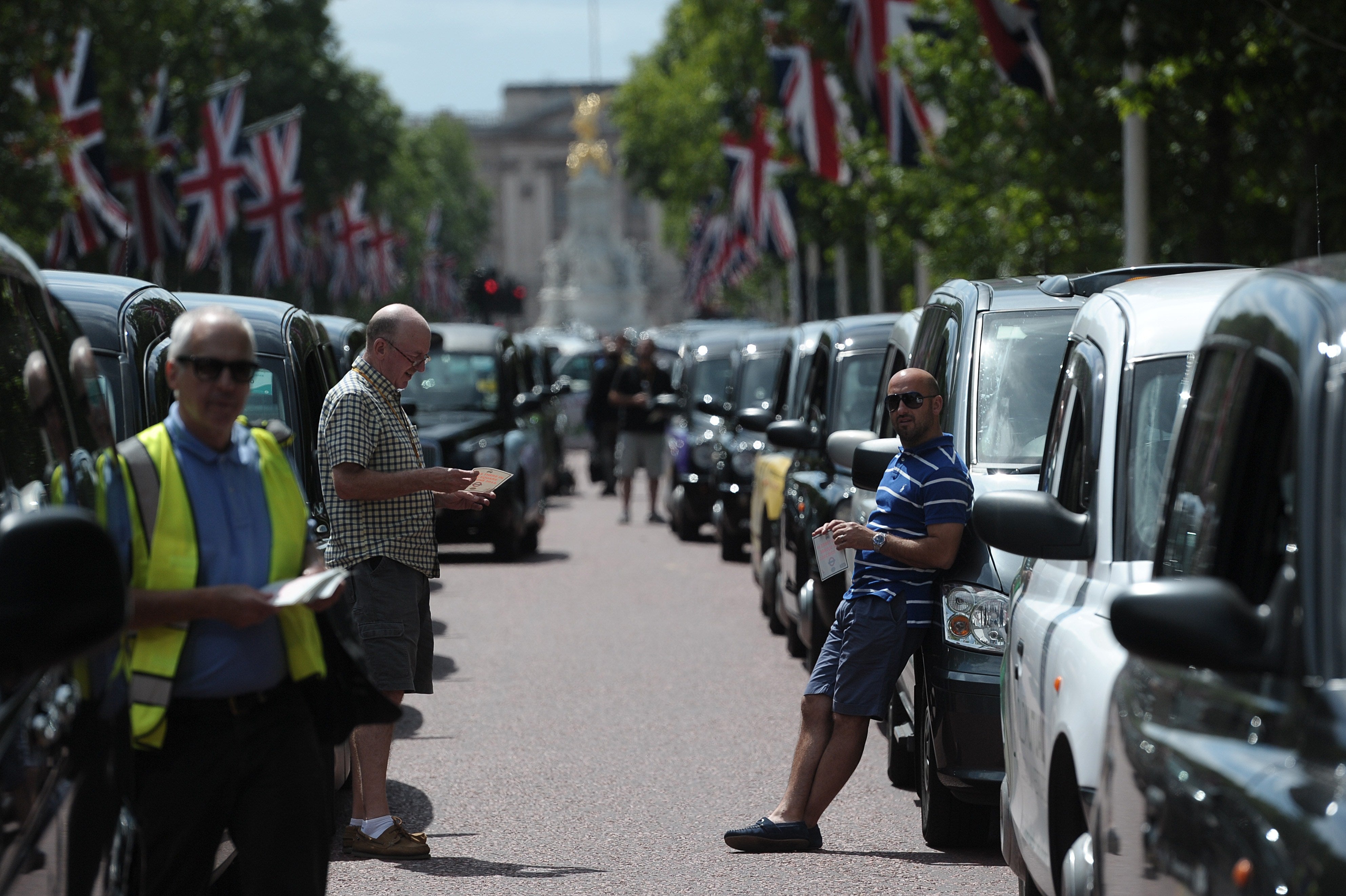
Thousands of stationary black cabs had gridlocked the length of Whitehall, halting traffic around Westminster and the West End.
It was June 2014, and drivers were protesting against a newly-launched private hire service called Uber.
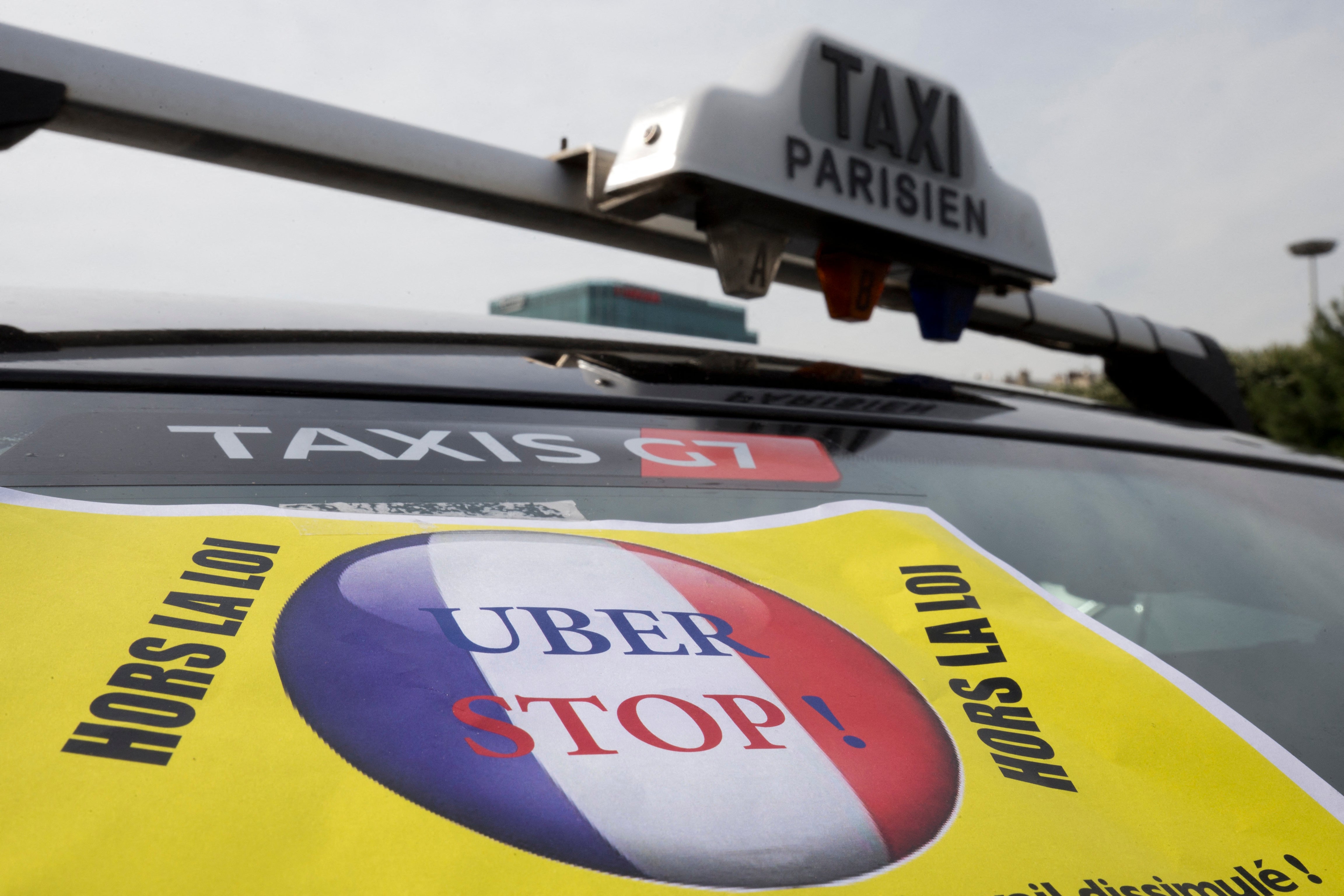
By the following summer, France had cracked down on Uber’s ride-sharing option after disorder saw cars overturned, windows smashed, tires set on fire.
Cab drivers in Paris said they were being undercut by the taxi app and its various services, now ubiquitous in cities across the world, while back home there were complaints about supposed differences in regulations, making competition unfair.
The emergence of new technologies and the threat they pose to jobs has caused unrest throughout history. But anything that has come before could all pale in comparison with what is to come.
Economist Carl-Benedikt Frey, associate professor of AI & work at the Oxford Internet Institute, paints a bleak picture on how he believes artificial intelligence (AI) will impact the future of work in the UK.
Looking back on the anti-Uber protests, he told The Independent: “That was not a technology that was going to replace them (drivers); that was a technology or company that meant more competition.”
As for the future, “I think civil unrest will come long before mass unemployment”, he added.
The fear that AI will “replace” humans, whether merely on a professional level or in a more fatal sense, is held by many.
In May, research by King’s College London (KCL) revealed that more than half of the British people believe AI will create widespread unemployment – and one in five think it will do so at such a rate which would create civil unrest.
According to Dr Frey, backlash towards AI – whether that is on an environmental level or through the construction of vast data centres – shows it is a “tremendously unpopular technology, even without having produced anything like mass unemployment”.
That sentiment will only deepen once its impact on incomes and livelihoods takes hold further, with new AI models increasingly capable of more and businesses drawn in by their cost-cutting abilities, he believes.
Dr Frey explained: “If AI threatens to reduce people's incomes, even by 5 per cent or 10 per cent – 10 per cent being roughly the amount by which Uber reduced incumbent drivers' incomes - you can see unrest from that as well.
“Taxi services as a share of the entire economy is relatively small; generative AI is a general-purpose technology that will touch on many different industries and occupations, if not all of them.
“Certainly, we can see a lot of discontent and unrest long before anything like mass unemployment materialises.”
A 2024 report by the Institute for Public Policy Research (IPPR) found that, without government intervention, nearly eight million jobs in the UK could be lost to AI, leading to a “jobs apocalypse”.
The think tank states that entry-level, part-time, and administrative jobs are the most exposed to being replaced by AI in a worst-case scenario over the next three to five years.
Likewise, at least a million jobs in London are "highly or significantly exposed" to AI, a report published by City Hall in April said.
Last month, the Office for National Statistics said the number of people aged between 16 and 24 not in employment, education or training – so-called Neets – sat at 981,000 from April to June.
It represented a drop from the 1,012,000 Neets in January to March but means that at 13 per cent, the UK’s rate remains among the highest in Europe.
Some places have just one vacancy for every 22 young people, new findings from the IPPR show.
Rotheram in South Yorkshire was found to be the local authority with the fewest suitable vacancies, at just 46 for every 1,000 young people – 58 per cent below the UK average.
This was followed by East Renfrewshire in Scotland (53 per cent below), Broxtowe in the East Midlands (47 per cent), and Newcastle-Under-Lyme in the West Midlands (47 per cent).
The figures illustrate what is a tremendously difficult climate for young people trying to find work – a climate that is only going to become tougher as AI further eats into the job market.
And there is little optimism among young people. In the KCL study, the view that AI-driven unemployment will drive civil unrest rose to a third (34 per cent) among university students.
“I have immense sympathy for young people today”, KCL professor Elena Simperl told The Independent.
“They have already had their lives disrupted by a global pandemic, and now they face the rise of generative AI against a backdrop of wider economic uncertainty”, added Prof Simperl, who co-directs the King's Institute for AI.
However, it is not just jobs for young graduates that AI poses a threat to. According to Dr Frey, the common consensus is that the technology is most threatening white-collar jobs, but its impact will be felt much more widely.
He explained: “It's jobs across the board – in construction, in manufacturing.
“Another story which I think is under-appreciated is that AI allows us as consumers to do more things ourselves. If the boiler breaks down, I would usually call a heating engineer straight away.
“These days, I take a picture of it and see step-by-step with the help of AI if I can fix it myself.
“That is not going to mean widespread unemployment, but it means that many manual trades which we think of as being safe havens from automation might also face income pressures, because that heating engineer loses a job and might then only get the more technically difficult cases.
“That also means that apprentices who learn on the job may not get those easier calls either, which is not going to be good for learning. Those are the more immediate impacts.”
The genie is out of the bottle, however. AI may create jobs but its impact on traditional professions will continue to be felt.
According to Prof Simperl, this means that, assuming the trend of decline in employment continues, we must now think of the required safety nets - as well as re-skilling programmes to adapt to a new and ever-changing world.
“We need to actively guide the trend rather than just letting it happen to us”, she said.
“This means collecting better evidence, but also training both employers and workers to use AI for things they should be using it for, rather than just adopting it blindly and waiting to see what happens.”

There is also a sociological impact to consider. What would the world look like if millions of people lost their jobs - or job roles which have existed for all of living memory cease to exist?
“I think that would be extraordinarily transformative and challenge a lot of people's identity, sense of purpose, and self-fulfilment”, said Dr Frey.
“It would be a very significant shock.
“At the same time, before the Industrial Revolution, basically everybody worked, but very few people had jobs in the modern sense. We've been in that world to a large degree before, so we know that we can potentially adjust to such a world.
“That would be a more pleasant world where you can do your gardening without depending on it for your living - if a harvest was bad, that would not mean your family was at risk of starving.
“Being on the other side of this, we can potentially get to a better place, but that would be an extraordinarily disruptive transition for a lot of people. It wouldn't be smooth sailing by any means.”
AI-inspired mass unemployment would, naturally, increase pressure on the country’s welfare spending.
Though advocates of the technology suggest it could eventually create a ‘post-work’ world, where the money generated by AI provides a universal income to those made redundant by it, Dr Frey thinks governments must get ready for its impact.
He is unsure whether they are.
Many of these people are already tremendously wealthy; they are probably more interested in writing history than anything else
Carl-Benedikt Frey
“I don't think they're prepared for it mentally in the sense that they have policy proposals on the table ready to be implemented when it happens”, he said.
“At the same time, in many ways, we don't have to reinvent the wheel.
“The welfare state exists, and we do have educational systems - we can build on those. There are certainly things that will have to be modified.
“If the labour share of income goes down, obviously, as we tax less income from labour, we will have to tax consumption and capital more, and there are many other things that need to be adjusted.”
Unemployment is not the primary concern related to AI, however.
Researcher Jacob Coxon quit tech giant Anthropic earlier this month, warning that the company and its rivals were “gambling with our lives”, adding those building AI “earnestly believe that it could kill us all by the end of the decade”.
It is no shock then, that people worry about this technology - and the prospect of it capturing millions of jobs before killing the people that it has made unemployed.
Dr Frey is not convinced he would rather governments would be in control of this technology instead of private companies, but he thinks it is healthy to be skeptical about the motives at play in the AI sphere.
“It's often a correct assumption to assume that somebody doesn't primarily have the public interest in their head”, he said.
“There's a mix of motives. Many of these people are already tremendously wealthy; they are probably more interested in writing history than anything else.
“Money and power are part of it, but legacy and reputation play into it as well.”
He added; “There's a sense that we're lacking accountability, and that's particularly true in places like Britain or Europe, because the firms building these technologies are not here, so our ability to shape this is quite limited.”
KioskNews shows a cleaned-up reading view extracted from the publisher’s page — the original always lives on their site, not ours.