More Taiwanese traveled to China this year
Taiwanese made 2.492 million trips to China in the first eight months of this year, up 19.63 percent from a year earlier, even as the government kept its orange travel warning in place for China, Hong Kong and Macau, the latest statistics from the Tourism Administration showed.
China was the second-most popular overseas destination for Taiwanese travelers after Japan, the data showed. Trips to China have exceeded 300,000 every month since March, with March recording the largest year-on-year increase at 32.34 percent.
Taiwan has maintained the orange warning for China, Hong Kong and Macau since June 27, 2024. Orange is the second-highest warning level in Taiwan’s four-tier travel advisory system and advises the public to avoid nonessential travel to the affected destinations.
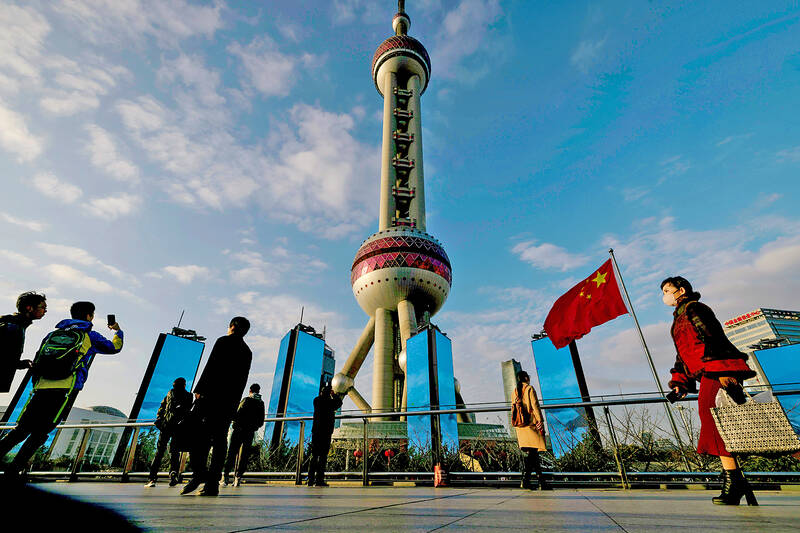
People walk around the Oriental Pearl Tower in Shanghai on Jan. 16, 2024.
Photo: EPA-EFE
The Mainland Affairs Council (MAC) said the increase in trips to China was part of a broader rise in outbound travel, which grew 15.24 percent year-on-year over the same period.
It attributed the trend partly to Taiwan’s economic growth and rising stock prices, which have boosted people’s wealth and made them more willing to spend on overseas travel, it said.
The MAC urged people planning to visit China to carefully assess the risks and keep up with official travel safety updates, citing changes to China’s national security laws and entry-exit regulations.
The rise was in line with overall growth in outbound travel, and business trips might also have contributed to it, Providence University Department of Tourism associate professor Huang Cheng-tsung (黃正聰) said yesterday.
Some Taiwanese might judge the risks based on previous visits, said Hung Pu-chao (洪浦釗), director of the Center for Global Strategy and Democratic Resilience at the University of Taipei.
However, past trouble-free trips do not guarantee the same experience in the future, he said, citing cases in which Taiwanese have been questioned, detained or had their freedom of movement restricted in China.
The government faces challenges in communicating travel risks, as the orange warning has been in place for more than two years and might have limited influence on people who need to travel across the Taiwan Strait, Hung said.
He called for more specific information tailored to travelers’ backgrounds and purposes, including guidance on seeking help if they are questioned or prevented from leaving.
KioskNews shows a cleaned-up reading view extracted from the publisher’s page — the original always lives on their site, not ours.