Haze-hit Singapore parents call for Hong Kong-style school air con
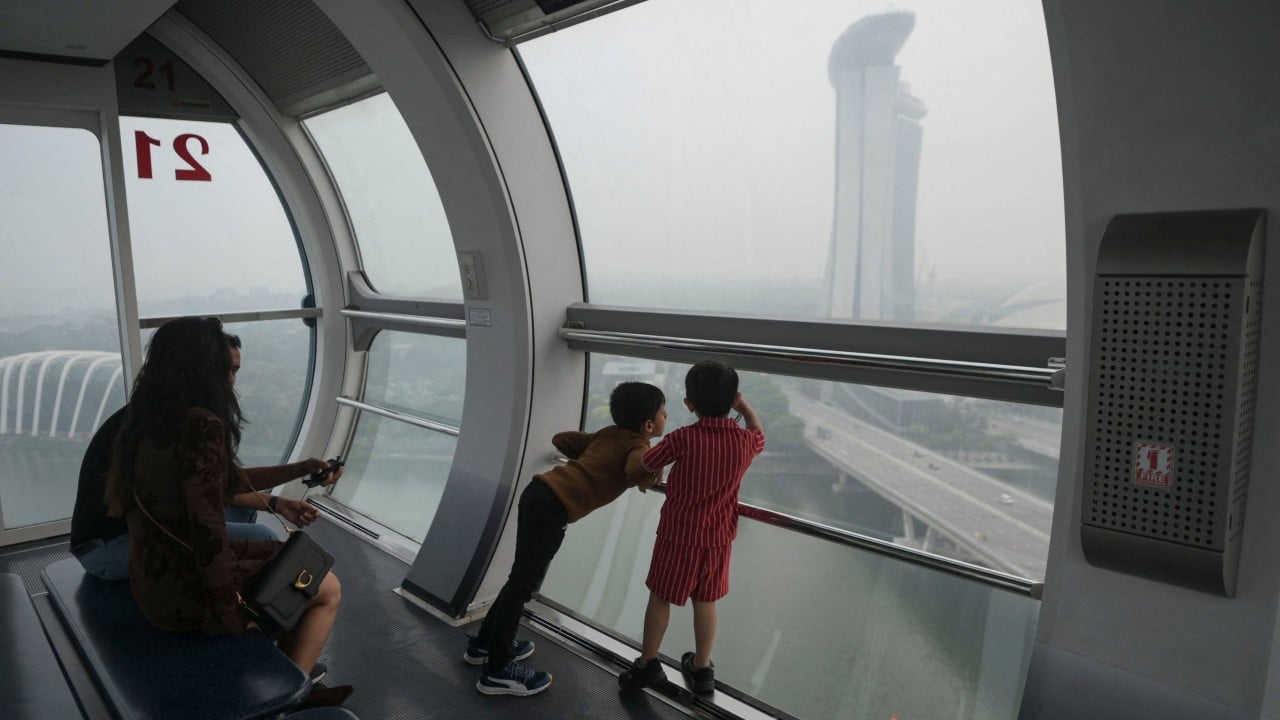
Salon manager Alice Pang says her 10-year-old daughter has likened the visibility inside her classroom in Singapore to Malaysia’s high-altitude resort Genting Highlands, but while the mountain resort is often shrouded in fog caused by water particles, her child’s active imagination may have been triggered by worsening haze plaguing the city state.
Pang told This Week in Asia that her daughter, whose classroom did not have air conditioning, was already suffering from bad sinus, and the haze had made her eyes water.
While Pang would prefer her Primary 4 daughter to stay home as the pollutant standards index (PSI) climbs beyond 200 in some parts of the city state, the child is in the middle of exams.
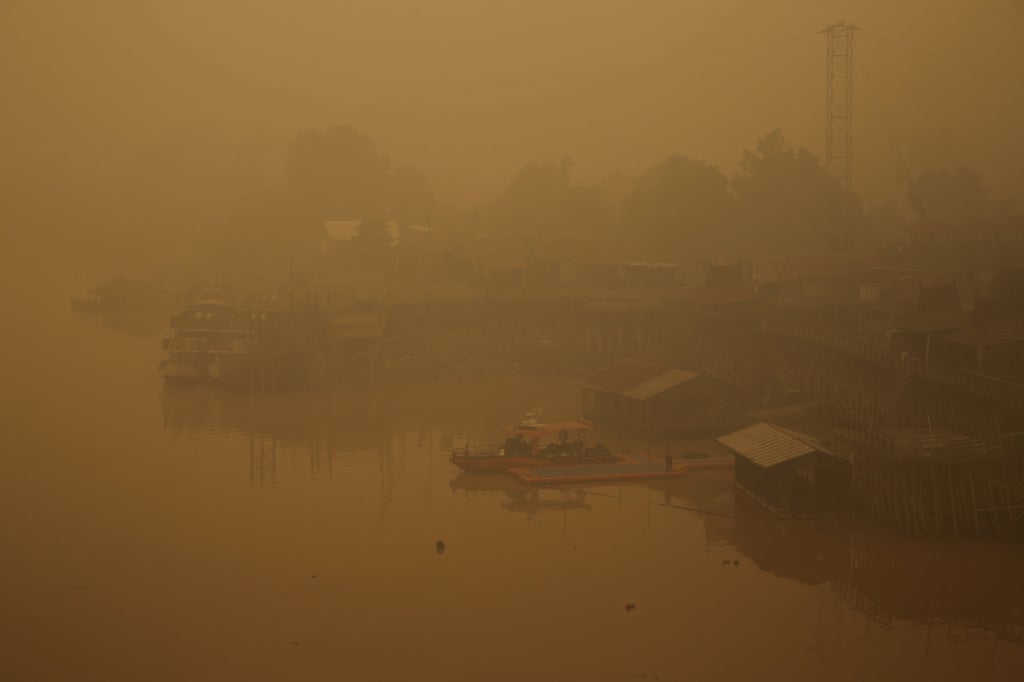
Pang is among several parents who are increasingly worried about the open-air classroom environments in Singapore amid the transboundary haze fuelled by fires across Indonesia, particularly in Sumatra and Kalimantan.
“They have an air purifier in the classroom, but she says it isn’t working. It’s also too hot for the students. I think the government needs to step up and take action,” Pang said.
She argued that schools should roll out air-conditioning in classrooms to complement the air purifiers. Currently, her daughter’s school has air-conditioning only in certain facilities such as the music room.
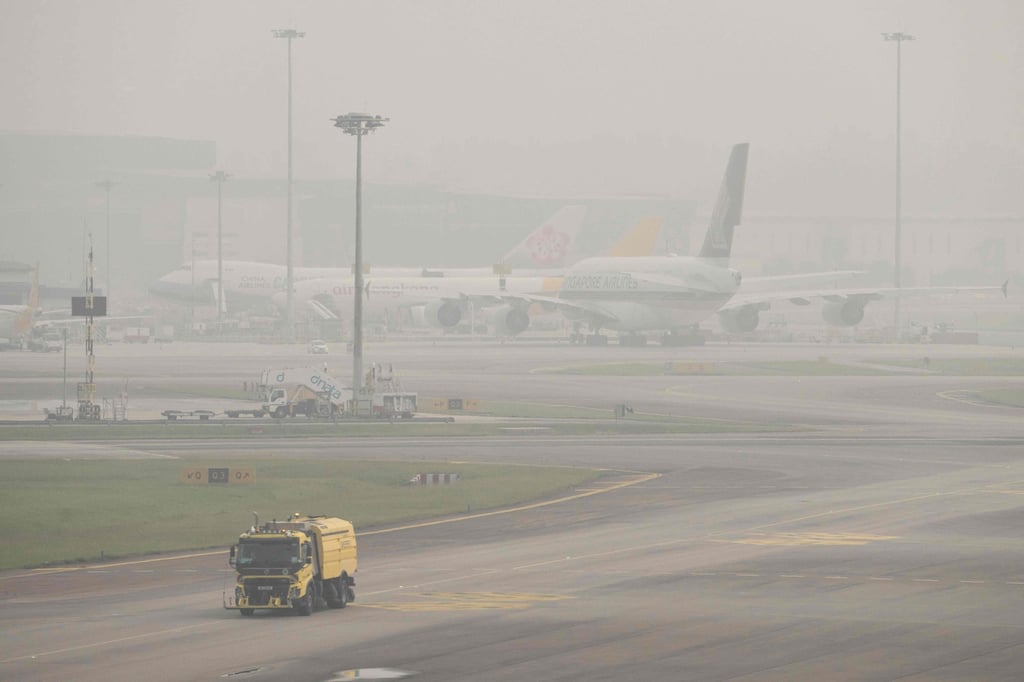
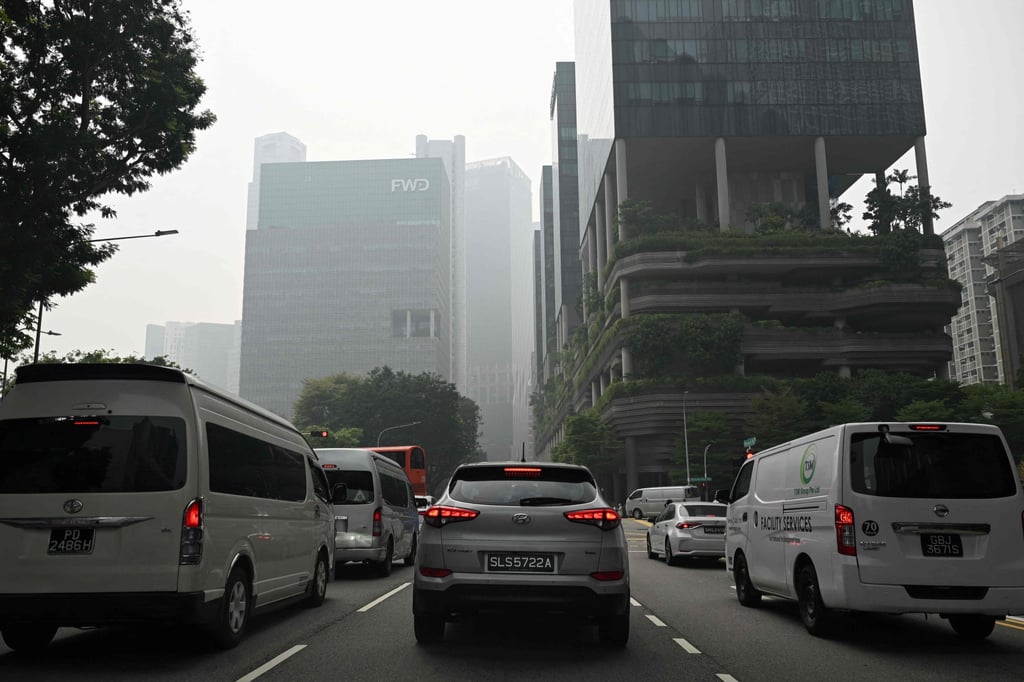
On Wednesday afternoon, the PSI one-hour reading hit 288 in the west of Singapore. The same day, Singapore began distributing N95 masks to vulnerable Singaporeans, including children aged between seven and 16, and providing air-conditioned rooms in shelters in community clubs and some residents’ committee centres.
On Saturday, Education Minister Desmond Lee said in a social media post that lessons and national examinations had continued in enclosed venues with air purifiers, and that his ministry might consider school closures if the next-day forecasts entered the hazardous range with a 24-hour PSI exceeding 300.
Across the 1km causeway in Malaysia, schools in several states have been shut until at least Friday. Under federal guidelines, educational institutions must close when the Air Pollutant Index (API) exceeds 180, or remains above 150 for three consecutive days. Both levels fall within the “unhealthy” range.
General practitioner Lawrence Ng said that common conditions triggered by haze included upper respiratory infections, bronchitis, conjunctivitis, allergic rhinitis, known as hay fever, and asthma.
“Children have smaller airways which are more susceptible to airway narrowing from pollutants,” Ng said.
Asked if implementing air-conditioning in classrooms was being considered to tackle the haze, Singapore’s Ministry of Education directed This Week in Asia to its haze management measures.
These include avoiding physical activities if the PSI is between 200 and 300, placing students in an enclosed indoor space with air purifiers and having those who are unwell temporarily placed in an air-conditioned room with an air purifier before they are brought to get medical attention.
Opposition MP Kenneth Tiong, who reiterated his call to provide air-conditioning in classrooms this week, told This Week in Asia he was not advocating for the air-conditioning to be on at all times but to have the option when needed.
In March, he advocated in parliament for air-conditioning in classrooms to help students and teachers handle the heat.
“The recent haze makes it more urgent. It has been very difficult for the kids: many are coughing, and I can see the toll it is taking on their health,” said Tiong, who is a Workers’ Party MP for the Aljunied constituency.
He noted that the National Environment Agency’s guideline said a purifier might not work as intended unless the doors and windows were closed, and that a closed, crowded room could build up heat.
“MOE’s haze plan says students who are unwell ‘will be temporarily accommodated in an air-conditioned room with an air purifier’. I believe a child should not have to fall ill first,” Tiong argued.
In March, then senior minister of state David Neo said Singapore had been careful not to rush into air conditioning, as the technology was not as energy efficient and instead relied on passive cooling solutions, such as cool paint, more breathable uniforms and school buildings designed for maximum natural ventilation.
Neo stressed there was a need to balance other considerations, such as long-term heat resilience, acclimatisation, energy consumption and impact on the environment.
Tiong told This Week in Asia that while sustainability was very important, air-conditioning in every classroom could be an insurance. “It has to be in place before the haze or the next heatwave arrives. Switched on only when needed, it uses far less power than air-conditioning left on all day,” he said.
He noted that in Hong Kong, the government had moved to air-conditioned classrooms for all public sector schools since 2017 for a more comfortable teaching and learning environment in hot weather.
A recurrent air-conditioning grant was provided from 2018 for Hong Kong schools to cover related daily expenses, including electricity charges and maintenance.
A mother of a six-year-old who previously lived in Hong Kong said she was shocked to learn that her child’s Primary 1 classroom in Singapore would not be air-conditioned.
Currently, her child’s kindergarten class is air-conditioned and has an air purifier, but she expressed concern about whether it had been serviced.
“I’m not asking them to have the air conditioning turned on every day,” she said, speaking on condition of anonymity. She questioned if some people underestimated the haze, given “this haze situation has been there for 20 years”.
07:39
What’s behind Indonesia’s decades-long wildfire problem?
Flynn Lee, a 50-year-old stay-at-home Singaporean mother of three children aged 11 to 16, however, said she trusted the government’s current measures. Only her daughter in Secondary 1 has air conditioning in her classroom.
“Air con is good to have, but I guess not all schools can afford it. It’s also not cheap to maintain, and this situation is not forever, so I guess we just have to get through this period,” Lee said, noting that her children’s schools had stopped all outdoor recess playing, moved co-curricular activities and physical education lessons indoors and reminded children to drink more water.
“It’s not really a fair statement to request for air con just because of the haze situation, which probably will last like weeks to a month and to have schools suddenly have to request to put up air conditioning.”
KioskNews shows a cleaned-up reading view extracted from the publisher’s page — the original always lives on their site, not ours.