EXPLAINER: What makes a transaction ‘covered’ or ‘suspicious’ under AMLA?

Already have Rappler+?
to listen to groundbreaking journalism.
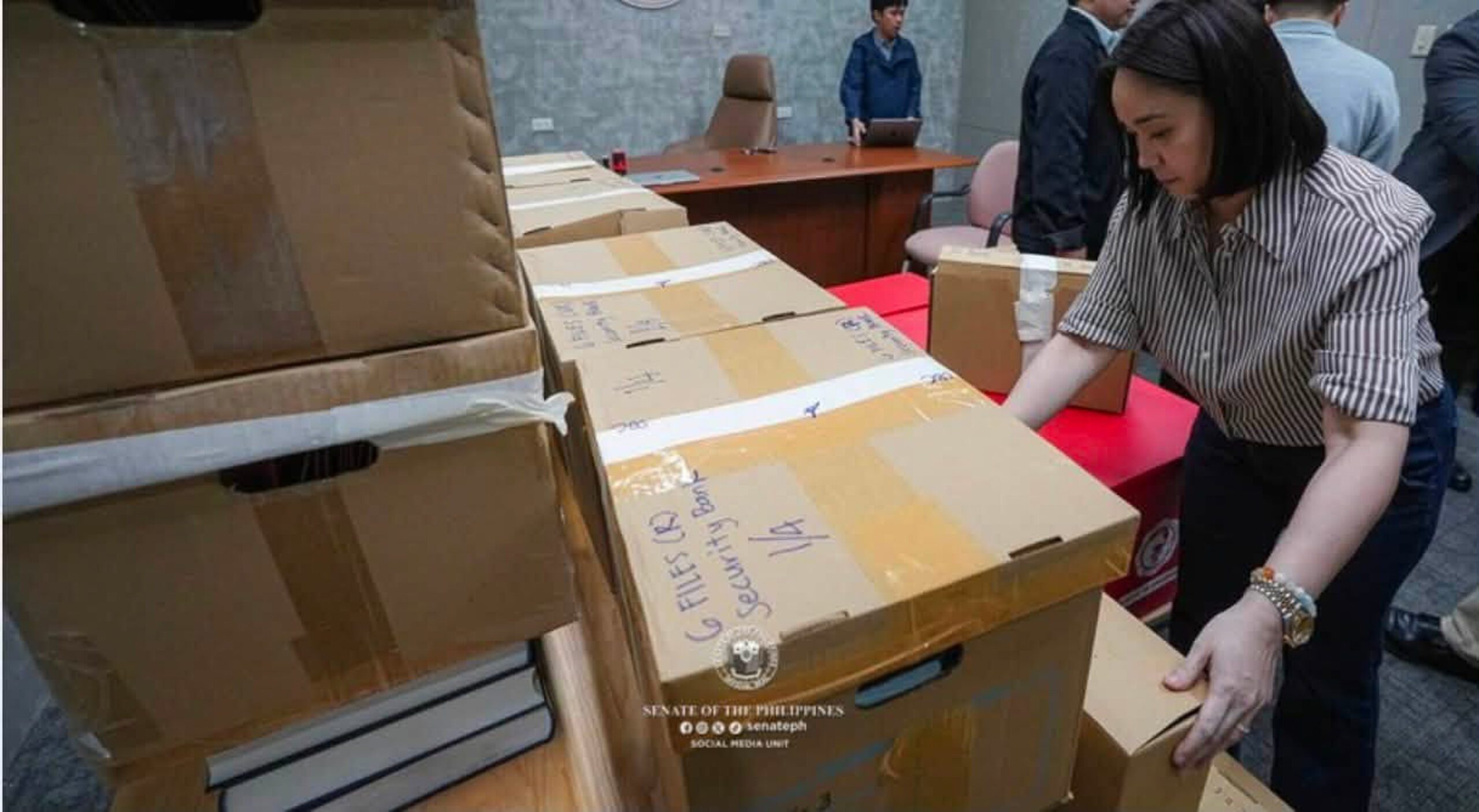
The Senate Clerk of Court received the remaining documents required under the issued subpoenas in the impeachment trial of Vice President Sara Duterte on August 13, 2026. All the subpoenaed banks, as well as the BIR and AMLC, also provided the additional certified true copies required under the Court’s August 3 order which supplemented its July 20 ruling.
Senate Social Media Unit
A transaction appearing in an AMLC report does not, by itself, mean that the money was illicit or that a crime was committed
AT A GLANCE
- The prosecution is presenting Vice President Sara Duterte's financial records to the Senate impeachment court, with key evidence coming from the Anti-Money Laundering Council (AMLC) regarding transactions linked to her and her husband.
- AMLC reports include covered transactions, which are automatically reported due to their size, and suspicious transactions, which are reported based on specific circumstances that raise concerns.
- The interpretation of AMLC reports requires careful analysis, as not all transactions flagged indicate illicit activity; context and the nature of the transactions are crucial for determining legality.
This is AI-generated. Read the article for full context. Report any errors.
MANILA, Philippines – As the Senate impeachment court conducts hearings on the presentation of Vice President Sara Duterte’s financial records in relation to her alleged unexplained wealth, some of the key pieces of evidence will come from reports submitted to the Anti-Money Laundering Council (AMLC) covering potentially billions of pesos in transactions linked to Duterte and her husband, Manases Carpio.
The records, along with testimonies and records from the associated banks, could make or break the prosecution’s case on the allegations of unexplained wealth and inaccurate asset declarations against the Vice President. But the evidence presented by AMLC needs to be read carefully.
A transaction appearing in an AMLC report does not, by itself, mean that the money was illicit or that a crime was committed.
There are generally two types of transactions that the AMLC would look into. These are covered transactions, which automatically trigger reporting because of their size, and suspicious transactions, which are reported because of the circumstances surrounding them.
For banks and most financial institutions, a covered transaction report (CTR) is automatically triggered when a cash transaction or its equivalent above P500,000 is made within one banking day. The threshold serves as a reporting trigger, not a judgment that the money is illicit.
A suspicious transaction report is different. There is no automatic threshold. Instead, banks and other covered institutions check transactions based on circumstances defined under the Anti-Money Laundering Act. If the institution determines that a transaction meets any of these, it is required to file an STR with the AMLC.
The law identifies several criteria that can raise suspicion, including when there is no apparent legal, business, or economic purpose; the customer cannot be properly identified; the amount is inconsistent with the person’s known business or financial capacity; transactions appear structured to avoid reporting requirements; or the transaction appears connected to an unlawful activity, among others. (READ: Why didn’t banks flag large check encashments by Sara Duterte staff?)
A more comprehensive list of reasons for STR filings is shown in the graphic below:
In practice, this means banks look beyond the size of a transfer. AMLC guidance says a transaction may be considered unusual when its amount, origin, destination or type is inconsistent with the customer’s known legitimate activities.
A large payment can have a perfectly ordinary explanation, such as the sale of property or an investment redemption. Conversely, a much smaller payment can prompt an STR if its source, recipient, or purpose raises concerns.
The questions investigators would typically want answered include who sent and received the money, where it came from, where it ultimately went, what the transaction was for, whether there are documents supporting that explanation, and whether the amount fits the customer’s known income, assets and usual financial activity.
AMLC records have figured in several high-profile cases. During the 2012 impeachment trial of then-chief justice Renato Corona, Ombudsman Conchita Carpio-Morales testified on an AMLC report detailing hundreds of transactions in accounts attributed to Corona.
In the pork barrel cases, AMLC testimony and bank records helped trace the movement of government funds through NGO accounts linked to Janet Lim Napoles. – Rappler.com
KioskNews shows a cleaned-up reading view extracted from the publisher’s page — the original always lives on their site, not ours.