China's waste-to-energy plant draws visitors with art, coffee and striking design
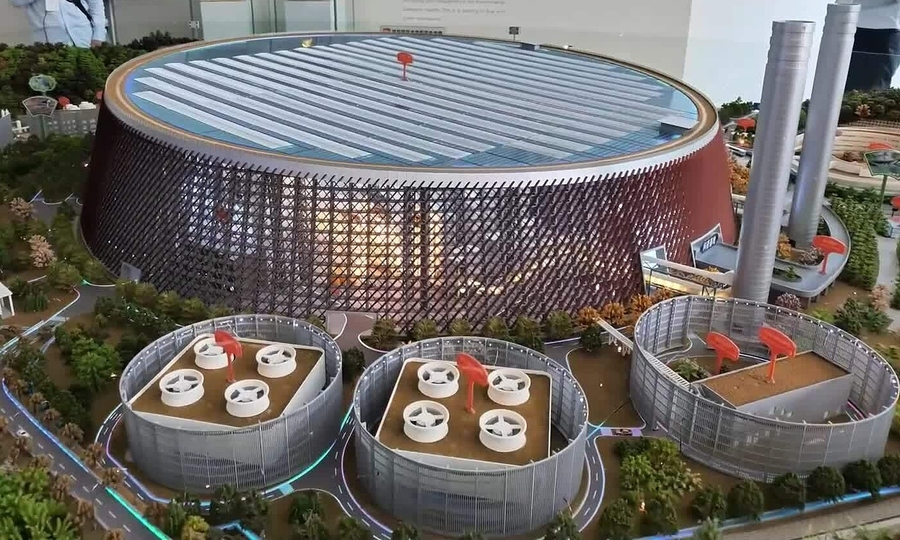
A waste-to-energy plant capable of processing 5,100 tonnes of rubbish a day has become an unlikely tourist attraction in Shenzhen, China, complete with a coffee shop, art exhibitions and public spaces, as the city gears up to host world leaders for the APEC Summit.
Operated by Shenzhen Energy Environment Co., Ltd., the plant is designed to handle roughly a quarter of Shenzhen's household waste, generating approximately 3.85 million kilowatt-hours of electricity daily.
The futuristic Longgang Energy Ecological Park, with its orange circular design inspired by traditional Hakka walled villages. Video by Viory
Household waste is weighed and unloaded, then left to ferment for five to seven days before being incinerated. The heat produces steam that drives turbines to generate electricity, while the remaining slag is sent for recycling and reuse.
The sprawling 542,000-sq.m park also features leisure facilities, turning an industrial site into an unusual destination for visitors.
"Drinking a cup of coffee at a waste-to-energy plant would have been almost unimaginable 20 years ago, but today it is a reality," said Zhang Jiali, a commentator at the company.
China has developed several waste-to-energy parks that double as visitor attractions, following earlier examples such as Vienna's Spittelau incinerator, which became a landmark after its colorful redesign in the 1990s.
The 33rd APEC Economic Leaders' Meeting is being held in Shenzhen, China, from Nov. 18 to 19, with the sideline CEO Summit and related high-level weeks running from Nov. 17 to 18.
KioskNews shows a cleaned-up reading view extracted from the publisher’s page — the original always lives on their site, not ours.