The campaign ends with Iran, and the question of trust - analysis
At least narrowly. More broadly, as Israelis go to the polls on Tuesday, it is about trust.
Do they trust Prime Minister Benjamin Netanyahu, who presents himself as the one leader capable of preventing an Iranian-inflicted second Holocaust?
Or do they accept the change bloc’s argument that Netanyahu can no longer be trusted, including to distinguish between what the country needs for security and what he needs for his own political survival?
Do they trust the military leadership reportedly questioning his judgment? Do they trust the media reporting those questions?

October 7 hovering over Israel's elections
And hovering over all of this is October 7, which makes each question considerably more complicated.
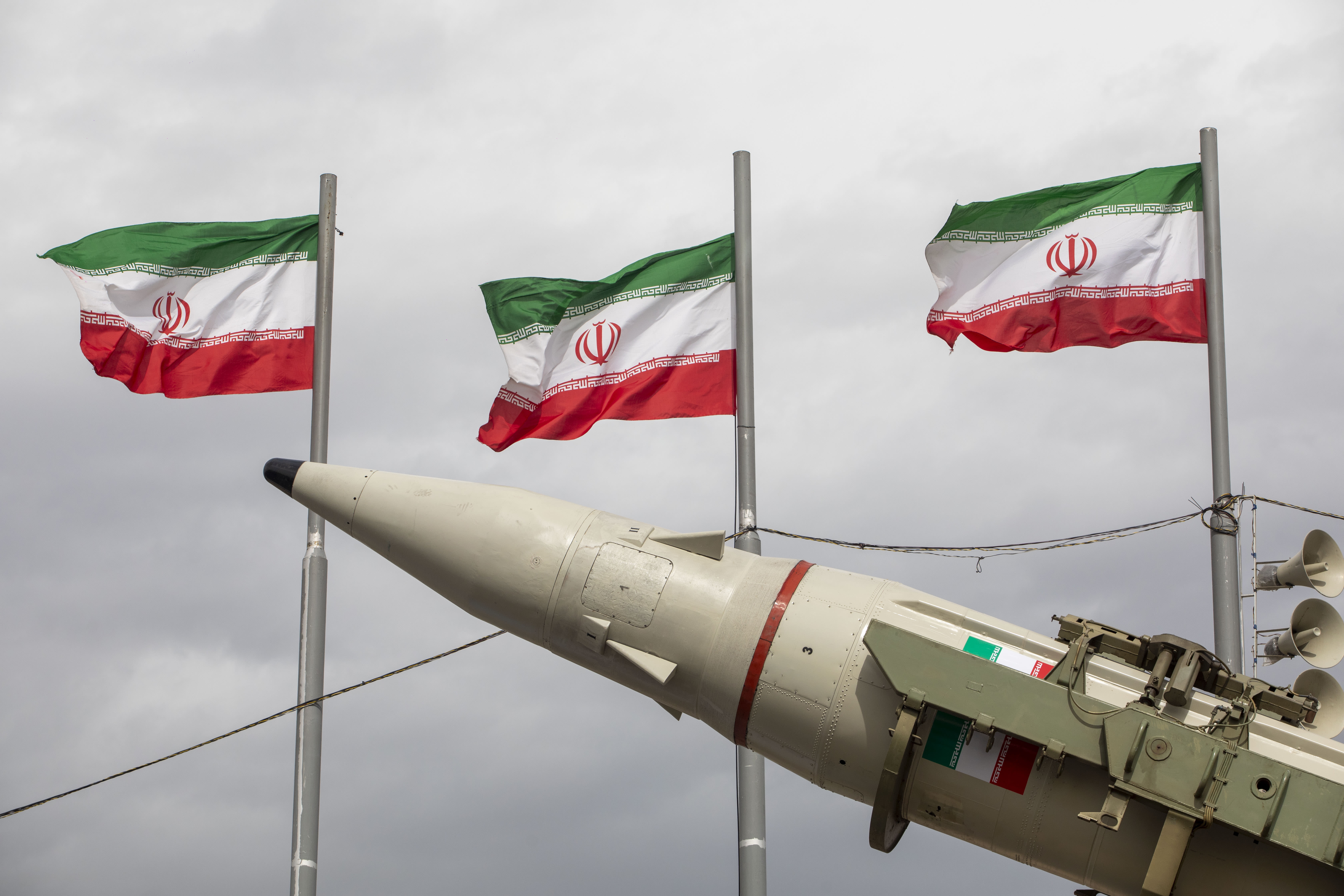
It seems fitting that Iran should be the campaign’s closing issue. The Iranian threat, and Netanyahu’s claim to have the experience, determination, and international standing to confront it, have framed his reelection case. As the campaign ends, that same issue is being used to argue against giving him yet another term.
For Netanyahu, Iran is the reason he must remain. For his opponents, the way he is handling Iran embodies the reason he must go.
That divide came into sharp focus on Sunday when the prime minister shared an AI-generated image of a nuclear explosion over Tel Aviv, accompanied by a warning suggesting that his defeat could expose Israel to a second Holocaust.
The message went well beyond the familiar argument that one party’s security policies are better than another’s. It linked the country’s very survival to the continued tenure of one man.
That is an enormous claim. It asks voters to believe that the institutions, capabilities, and alliances Israel has built over decades cannot adequately protect it without Netanyahu at the helm.
For supporters who believe Netanyahu identified the Iranian danger early and showed a willingness to act against it, the message may reinforce an existing conviction: this is not the time to change leaders.
His opponents see a prime minister turning a real national threat into a claim that he is indispensable.
Iran is dangerous. It does not automatically follow that replacing Netanyahu increases that danger. Yet his campaign is asking voters to make that leap.
Sunday night’s N12 News site report about a confrontation between Netanyahu and IDF Chief of Staff Lt.-Gen. Eyal Zamir gave his rivals an opportunity to challenge that leap.
Zamir reportedly avoided Iran war-triggering action
According to the report, Zamir resisted an instruction for an undisclosed military operation that defense officials feared could trigger a confrontation with Iran. He reportedly sought further deliberations and signed documentation concerning its legal authorization.
Netanyahu denied any such confrontation or tension with the military’s top brass over Iran.
The political significance was clear. Netanyahu wants voters to ask whether they can entrust Iran policy to his rivals. The report invited them to ask whether even the military’s leadership trusts his judgment.
But before voters get to that question, they must ask another: Do they believe the report?
For some, N12’s account will be evidence that military professionals are trying to restrain a prime minister whose political considerations are shaping his security decisions.
For others, it will look like another anonymously sourced story – like the subsequently contradicted report that Egyptian intelligence chief Abbas Kamel visited Israel shortly before October 7 to warn of an attack – appearing at precisely the moment it could do the most electoral damage.
Anonymous sources are essential to security reporting. They can expose disagreements the public has a legitimate interest in knowing about.
But sources can also be motivated by institutional interests, personal grievances, and political preferences. Anonymity does not make their information false. Neither does it shield their motives or the timing of their disclosures from scrutiny.
Likewise, suspecting a media agenda does not make an uncomfortable report untrue.
The details matter. Zamir’s request for written authorization does not, by itself, establish that an operation is unlawful. Nor does a disagreement between Netanyahu and the chief of staff establish that the prime minister is acting for electoral reasons.
But in a deeply polarized country, people often consider the messenger before the message. Those who distrust Netanyahu may readily credit the account. Those who distrust the broadcaster may dismiss it just as readily.
Regardless, the political significance is clear.
Then October 7 enters the picture.
The instinct to view the military’s leadership as a professional counterweight to political calculation is understandable. But assuming military judgment deserves automatic deference – which the change bloc seems to be doing in this instance – is much harder to sustain after that catastrophic day.
The military and intelligence establishments failed disastrously in their assessments and preparations, and in protecting the communities overrun by Hamas.
For voters who remember those failures, a report that military officials oppose a prime minister’s proposed action may prompt a blunt response: Why should we trust their judgment now?
That is a legitimate question. This does not mean Zamir’s judgment is wrong. It does mean that just because the military says one thing, we should automatically treat it as settled.
But the question runs both ways.
Netanyahu was prime minister on October 7 and bore ultimate political responsibility for the country’s security. If the military’s failure undermines its claim to unquestioned trust, the political leadership cannot emerge from the same disaster with its own claim intact.
October 7 damaged confidence in both the political leadership and the security establishment. That is what makes this election’s trust question so difficult: voters are being asked to choose whom to believe among leaders and institutions whose credibility has been badly shaken.
And there is no simple formula.
Military leaders can be wrong. Political leaders can correctly overrule them. Yet the decisions of elected officials – especially just days before an election – can be clouded by those electoral considerations.
The Iran controversy has brought all this into focus.
Netanyahu is asking voters to trust his experience. The change bloc is asking them to trust that different leaders can manage the same threats more responsibly. Both are making their case against the backdrop of October 7, which exposed the limits of experience and expertise.
When Israelis go to the polls on Tuesday, they will choose a party and help determine the coalition and government that will have to address many issues beyond Iran.
But the competing closing arguments about Iran sharpen the choice: whose judgment do they trust, whose warnings do they credit, and whose motives do they trust?
Netanyahu says the danger is too great to replace him. His opponents say it is too great to leave him in place.
On Tuesday, Israelis will decide which warning they believe.
KioskNews shows a cleaned-up reading view extracted from the publisher’s page — the original always lives on their site, not ours.